Remarkable 40-Year Journey of Historic Iceberg A-23A Captivates Scientists
After an extraordinary four-decade odyssey, iceberg A-23A continues to fascinate researchers with stunning blue meltwater patterns that reveal secrets about Antarctica's ancient ice. Scientists celebrate the wealth of knowledge gained from tracking this remarkable natural wonder throughout its unprecedented journey.
In a stunning display of nature's beauty, iceberg A-23A has transformed into a breathtaking vision of blue and white as it completes one of the most remarkable journeys ever documented by polar scientists. First breaking away from Antarctica's Filchner Ice Shelf in 1986—the same year "Top Gun" soared at the box office—this massive tabular iceberg has given researchers an unprecedented 40-year window into understanding how Earth's largest ice formations behave.
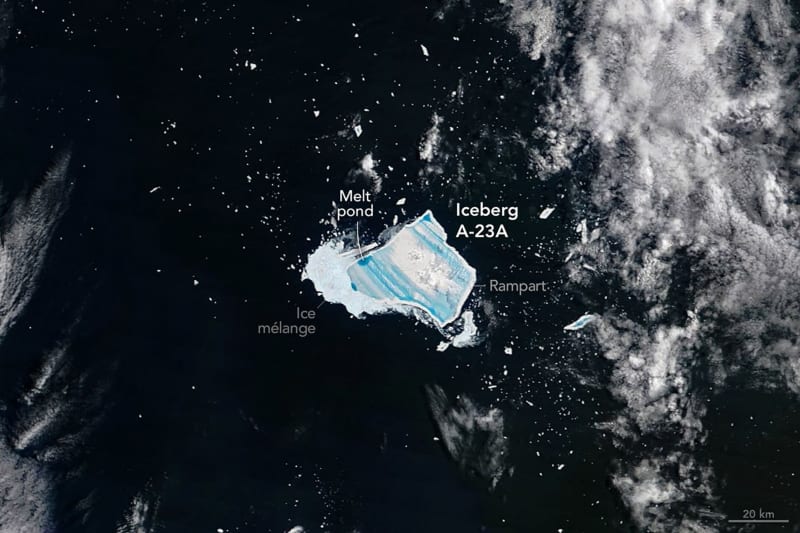
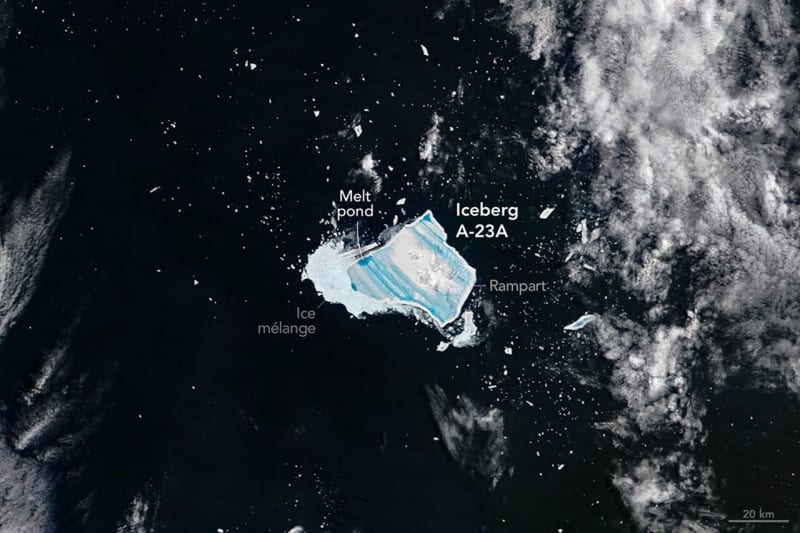
NASA's Terra satellite recently captured spectacular images showing extensive pools of brilliant blue meltwater decorating the iceberg's surface, creating patterns that scientists describe with fascination and wonder. What makes these images particularly special is that they reveal ancient striations—grooves carved hundreds of years ago when this ice was part of an Antarctic glacier—still visible after decades at sea.
"It's impressive that these striations still show up after so much time has passed," notes Chris Shuman, a retired scientist from the University of Maryland Baltimore County, marveling at how these ancient patterns continue to direct meltwater flow across the berg's surface.
The iceberg's journey has been nothing short of extraordinary. After spending more than 30 years grounded in the shallow waters of the Weddell Sea, A-23A broke free in 2020 and embarked on an adventure that included spinning in an ocean vortex called a Taylor column, nearly visiting South Georgia island, and providing scientists with invaluable data about how these massive ice structures interact with ocean currents and warming waters.
Ted Scambos, a senior research scientist at the University of Colorado Boulder, explains that the striking "blue-mush" patterns visible on satellite images result from ongoing natural processes that researchers have been thrilled to observe in such detail. The images also show a fascinating "rampart-moat" pattern—a thin white line around the berg's edge caused by upward bending as it melts at the waterline.
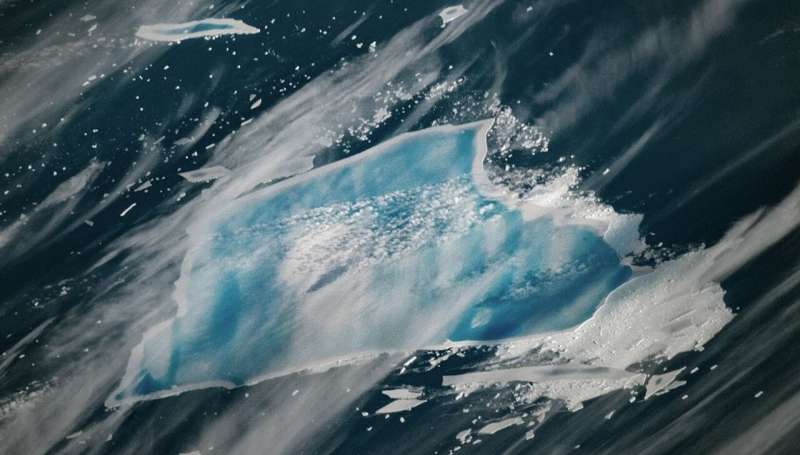
While A-23A is much smaller than its original size of twice Rhode Island's area, what remains still covers an expanse larger than New York City, making it among the largest icebergs currently floating in our oceans. Astronauts aboard the International Space Station have captured stunning photographs showing even more extensive melt pools, demonstrating the continuing scientific value of monitoring these natural wonders from space.
For scientists who have dedicated their careers to studying polar ice, A-23A represents an invaluable research opportunity. "I'm incredibly grateful that we've had the satellite resources in place that have allowed us to track it and document its evolution so closely," says Shuman, reflecting on the wealth of knowledge gained.
The insights gathered from A-23A's four-decade journey have significantly enhanced our understanding of how massive icebergs behave, move, and interact with ocean systems. This knowledge helps scientists better predict the behavior of other large bergs currently waiting along Antarctica's shoreline, including A-81, B22A, and D15A, each exceeding 1,500 square kilometers.
As A-23A's remarkable story nears its natural conclusion, the scientific community celebrates the extraordinary contribution this single iceberg has made to polar research, demonstrating the power of long-term satellite monitoring and international scientific collaboration.
More Images

Based on reporting by Phys.org - Earth
This story was written by BrightWire based on verified news reports.
Spread the positivity! 🌟
Share this good news with someone who needs it
More Good News
 🌍 Planet Wins
Stunning Antarctic Emperor Penguins Photographed in Their Icy Paradise
 🌍 Planet Wins
Scientists Marvel at Spectacular Natural Wonder: Giant Iceberg Creates Stunning Blue Pool
%2Fhttps%3A%2F%2Ftf-cmsv2-smithsonianmag-media.s3.amazonaws.com%2Ffiler_public%2F1f%2F96%2F1f966e8c-d14a-4d67-88ae-d38f45396042%2Fnasa_satellite_view_of_southern_ocean_phytoplankton_bloom_crop.jpg) 🌍 Planet Wins
🌍 Planet WinsAntarctic Earthquakes Create Spectacular Blooms That Nourish Ocean Life
Joke of the Day
Why did the dog apply for a job at the bank?
Explore Categories
Quote of the Day
"The greatest thing you'll ever learn is just to love and be loved in return."
— Moulin Rouge (from the film, popularized by Ewan McGregor)