
Root Canals May Lower Heart Disease and Diabetes Risk
Getting a root canal might do more than save your tooth. A groundbreaking two-year study shows the common dental procedure could lower inflammation, improve blood sugar, and protect your heart.
Your dentist might be protecting more than just your smile during your next root canal.
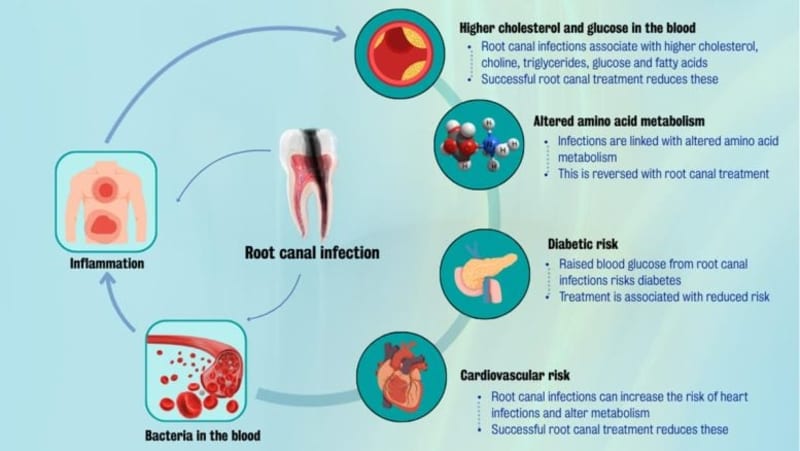
Researchers at King's College London made a stunning discovery after tracking 65 patients for two years following root canal treatment. The common dental procedure didn't just fix infected teeth. It also lowered inflammation linked to heart disease and improved blood sugar and cholesterol levels in ways scientists had never measured before.
The study focused on apical periodontitis, a dental infection that happens when bacteria invade a tooth's root and surrounding tissue. When left untreated, these bacteria can sneak into the bloodstream and cause problems far beyond the mouth.
Over two years, patients who received successful root canal treatment showed meaningful drops in blood glucose levels, bringing them closer to healthy ranges and lowering their diabetes risk. Their cholesterol and fatty acid levels improved too, both crucial for maintaining a healthy heart.
The research team used nuclear magnetic resonance spectroscopy to analyze blood proteins and track how patients' bodies processed sugar, fat, and other substances after treatment. They watched as inflammation markers, often tied to cardiovascular disease and chronic health conditions, gradually decreased.
Dr. Sadia Niazi, the study's lead author and Senior Clinical Lecturer in Endodontology at King's College London, emphasized the bigger picture. Root canal treatment doesn't just improve oral health. It may also help reduce the risk of serious conditions like diabetes and heart disease, she explained.
The findings reveal something doctors have long suspected but couldn't prove: oral health connects deeply to overall health. The bacteria from infected teeth created measurable shifts in patients' entire metabolic processes, not just their mouths.
The Ripple Effect
This research opens an exciting door for preventive medicine. Dr. Niazi and her team suggest that dentists and general practitioners should work together, using blood markers like glucose, triglycerides, and the protein tryptophan to monitor recovery after dental treatment.
Early diagnosis and treatment of root canal infections could become a powerful tool for preventing serious health problems down the road. What starts as a toothache might be an early warning sign your whole body needs attention.
The study, funded by the Faculty of Dental Surgery of the Royal College of Surgeons England, represents the first clinical investigation of its kind. While researchers say larger studies are needed to confirm these effects across different populations, the initial results point toward a future where your dental checkup plays a bigger role in your overall health plan.
Taking care of your teeth might just be taking care of your heart too.
More Images

Based on reporting by Google News - Health
This story was written by BrightWire based on verified news reports.
Spread the positivity!
Share this good news with someone who needs it