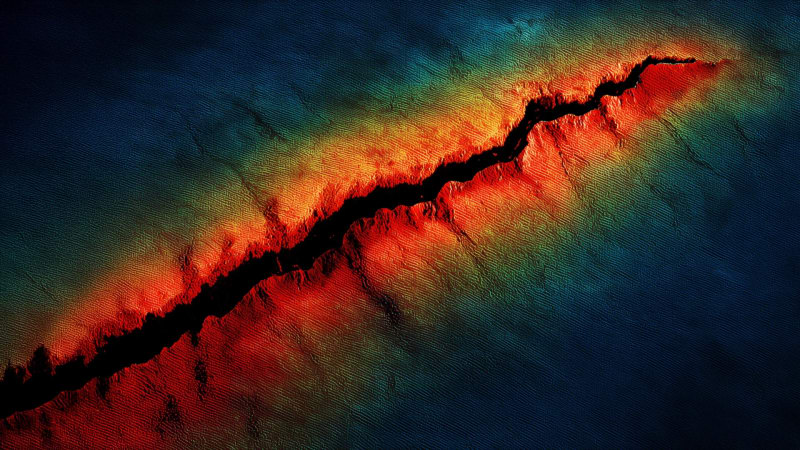
Scientists Achieve Major Breakthrough in Earthquake Safety Planning
Researchers have developed an innovative mathematical approach that speeds up earthquake risk simulations by 1,000 times, opening doors to better community preparedness and protection. This exciting advancement could help cities worldwide build safer futures, even though predicting earthquakes remains impossible.
A groundbreaking collaboration between mathematicians and seismologists is bringing us closer to understanding—and preparing for—earthquake risks in our communities. While the ability to predict exactly when earthquakes will strike still eludes scientists, this innovative research offers something equally valuable: a remarkably faster way to assess how vulnerable different areas are to seismic activity.
Kathrin Smetana, Assistant Professor in the Department of Mathematical Sciences at Stevens Institute of Technology, led an international team that developed a computational method reducing simulation time by approximately 1,000 times. This isn't just an incremental improvement—it's a transformation that makes continuous earthquake monitoring and risk assessment practical and affordable for communities worldwide.
The key lies beneath our feet. Different underground materials—solid rock, sand, clay, and various geological formations—cause seismic waves to behave differently. Understanding these subsurface structures helps scientists determine how strongly the ground will shake during an earthquake, which directly impacts how we design buildings, infrastructure, and emergency response plans.
Traditionally, scientists use Full Waveform Inversion to map underground layers. This technique creates computer-generated earthquakes and compares the simulated seismic waves with data from real earthquakes recorded by seismographs. Through many iterations, researchers refine their understanding of what lies beneath. While incredibly effective, this process has been prohibitively time-consuming and expensive—until now.
Working with computational seismologists Rhys Hawkins and Jeannot Trampert from Utrecht University, along with Matthias Schlottbom and Muhammad Hamza Khalid from the University of Twente in the Netherlands, Smetana's team created a streamlined model that maintains accuracy while dramatically reducing computational demands.
"Essentially we reduced the size of the system that you need to solve by about 1000 times," Smetana explains enthusiastically. "It was a very interdisciplinary project, and we found a clever way to construct the reduced model while still maintaining the accuracy of the prediction."
This collaborative spirit exemplifies how different scientific perspectives can create innovative solutions. "I really enjoy interdisciplinary collaborations and this one in particular because you learn to see things with a new perspective, which, in my opinion, ultimately helps finding creative and novel approaches," Smetana shares.
The implications are profoundly positive for communities living in earthquake-prone regions. With simulations that previously took hours on advanced computing clusters now completing in minutes or even seconds, cities can conduct more frequent and comprehensive risk assessments. This means better-informed building codes, more effective emergency preparedness plans, and ultimately, safer communities.
While approximately 20,000 earthquakes occur globally each year—about 55 daily—with varying magnitudes, the financial and human costs of major quakes remain significant. A 2023 report estimated earthquake damage costs the United States $14.7 billion annually. As more people settle in seismically active areas, the need for better risk assessment grows increasingly urgent.
This mathematical breakthrough, detailed in the SIAM Journal on Scientific Computing, represents hope for the future. Though we cannot yet predict when earthquakes will strike, we're becoming remarkably better at understanding their potential impact and protecting the people and places we love. That's progress worth celebrating.
Based on reporting by Science Daily
This story was written by BrightWire based on verified news reports.
Spread the positivity! 🌟
Share this good news with someone who needs it
More Good News


Joke of the Day
Why did the librarian get kicked out of class?
Explore Categories
Quote of the Day
"Do not go where the path may lead, go instead where there is no path and leave a trail."
— Ralph Waldo Emerson