Scientists Crack Cell Cleanup Code That Could Treat Disease
Japanese researchers discovered how cells identify and remove damaged proteins, solving a major mystery in cellular health. The breakthrough could lead to treatments for neurological disorders and diseases caused by toxic protein buildup.
Your cells have a cleanup crew working around the clock to keep you healthy, and scientists just figured out how this crew knows exactly what to throw away.
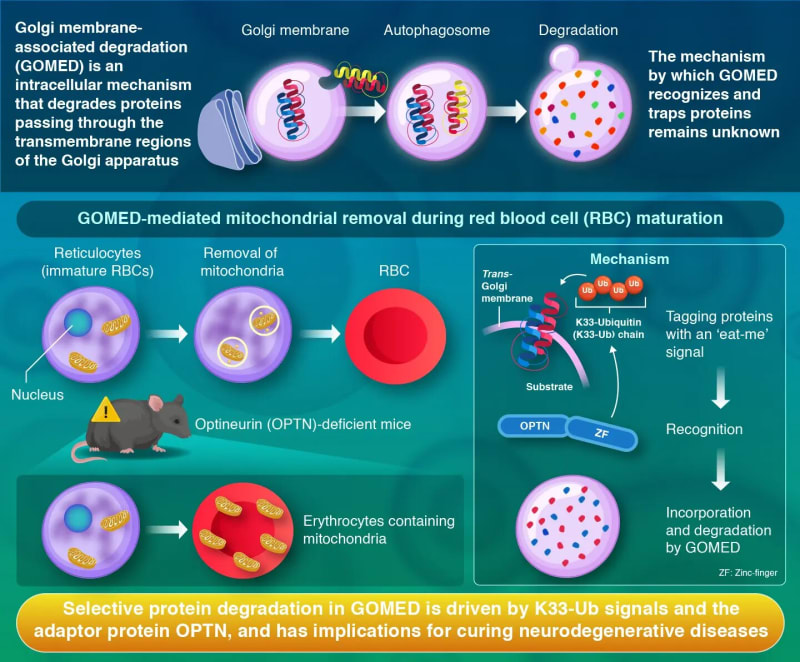
Researchers at the Institute of Science Tokyo uncovered how a cellular process called GOMED identifies and destroys defective proteins. This discovery fills a crucial gap in understanding how our bodies prevent disease at the microscopic level.
GOMED works like a highly selective garbage disposal system inside cells. It specifically targets proteins passing through the Golgi apparatus, a key structure that processes and packages proteins. Until now, scientists knew GOMED existed but couldn't explain how it chose which proteins to eliminate.
The research team, led by Project Assistant Professor Yoichi Nibe-Shirakihara and Distinguished Professor Shigeomi Shimizu, focused on finding the molecular "tags" that mark proteins for destruction. They discovered that damaged proteins get labeled with a special marker called K33-linked polyubiquitin, which acts like an "eat-me" signal.
A protein called optineurin (OPTN) reads these signals and delivers tagged proteins to GOMED structures for breakdown. The team confirmed their findings using genetically modified cells and mice, demonstrating that this mechanism is essential for living organisms.
In mice lacking OPTN, cells couldn't properly remove damaged mitochondria from developing red blood cells. This proved the system isn't just important in laboratory dishes but critical for real biological processes.
Why This Inspires
This discovery matters because when cellular cleanup systems fail, proteins accumulate and cause serious health problems. GOMED malfunction has been linked to neurological disorders and other diseases that currently have no cure.
Understanding exactly how GOMED works opens doors to potential treatments. Doctors might one day restore proper cellular cleanup in patients, slow disease progression, or prevent toxic protein buildup before it causes damage.
The research represents years of painstaking work by international collaborators from Japan and Australia. Their persistence in solving this cellular mystery demonstrates how fundamental science advances our ability to fight disease.
For the millions living with conditions caused by protein buildup, this breakthrough offers something precious: a pathway toward treatments that address the root cause rather than just managing symptoms.
More Images


Based on reporting by Phys.org
This story was written by BrightWire based on verified news reports.
Spread the positivity! 🌟
Share this good news with someone who needs it


