
Scientists Discover 72 New Species from Sea Slugs to Sunflowers in 2025
Researchers at California Academy of Sciences described an incredible 72 new species in 2025, including a fuzzy wildflower found by a volunteer in Texas and a commonly seen bird that turned out to be its own unique species. These exciting discoveries span six continents and remind us how much wonder still awaits in our natural world.
The California Academy of Sciences had an absolutely remarkable year, with researchers and their global collaborators describing 72 brand new species from across our planet. From the depths of unexplored oceans to national parks we thought we knew inside and out, 2025 proved that nature still has countless secrets waiting to be discovered.
Among the year's most delightful finds was the woolly devil, a tiny fuzzy wildflower spotted by volunteer Deb Manley in Big Bend National Park, Texas. This adorable plant, covered in white hairs and sporting dark maroon petals, represents something truly special. It's the first time in nearly 50 years that both a new genus and species of plant have been described from a U.S. national park. Botanists affectionately call it a "belly plant" because you have to lie on the ground to properly appreciate its miniature beauty.
The Galápagos Islands offered up their own surprise. The Galápagos lava heron, a bird that locals and tourists have been seeing for generations, turned out to be its own distinct species rather than just a variety of South American heron. Thanks to modern DNA analysis, scientists finally solved this long-standing mystery about a creature hiding in plain sight.
Beneath the waves, researchers made equally thrilling discoveries. Marine expeditions uncovered 11 colorful new sea slug species and a shy perchlet with beautiful red spots in the Maldives. Among the fish species was a cardinalfish originally collected during a 1997 Cuban expedition that Fidel Castro himself joined. The specimen waited patiently in the academy's collection for nearly 30 years before advancing technology allowed scientists to formally identify it as new to science.
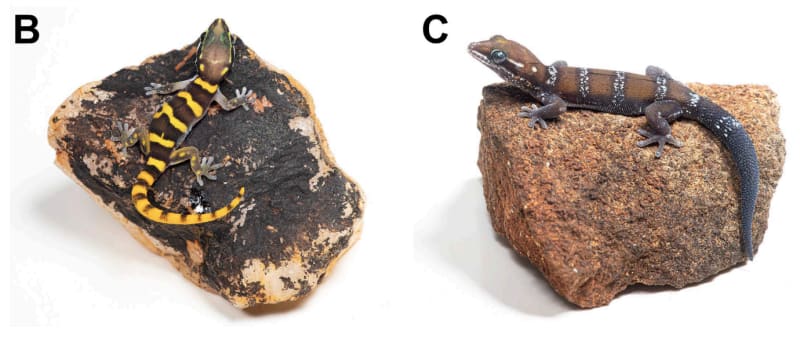
The discoveries spanned an impressive range, from beetles in Central and South America to geckos in Angola and Namibia, including three endangered species now recognized for the first time. Scientists described bush crickets, lizards, and even a goby fish playfully named after Darth Vader. The variety represents life thriving in every corner of our planet.
The Bright Side
These discoveries carry profound hope for conservation efforts. Each newly described species helps scientists better understand the intricate web of life on Earth. While researchers estimate that less than 20% of all species on our planet have been documented so far, every identification represents a step forward in protecting biodiversity. The California Academy of Sciences houses 46 million specimens, and as technology continues advancing, these preserved treasures keep revealing new insights.
"Discoveries like these remind us that much of life on Earth remains undocumented," said CAS virologist and chief of science Shannon Bennett. Each species adds a crucial piece to understanding our world's magnificent diversity.
What makes these findings especially heartwarming is how they happened. Citizen scientists using apps like iNaturalist contributed to discoveries, proving that everyone can participate in scientific exploration. From park volunteers to professional researchers, the collaborative spirit of discovery shows humanity at its best, working together to document and protect the incredible variety of life sharing our planet.
More Images



Based on reporting by Mongabay
This story was written by BrightWire based on verified news reports.
Spread the positivity! 🌟
Share this good news with someone who needs it
More Good News
 Innovation
Philippines Spider Looks and Smells Like Bird Poop to Survive Predators
 Innovation
Scientists Unveil Incredible Elephant Sniffing Powers and Butterfly Migration Feat
 Innovation
Ancient Greenland Sharks Keep Perfect Vision for 400 Years, Unlocking Longevity Secrets
DAILY MORALE
What did the thermometer say to the graduated cylinder?
EXPLORE INTEL
DAILY INSPIRATION
Hope is the thing with feathers that perches in the soul and sings the tune without the words and never stops at all.
Emily Dickinson