
Scientists Discover Surprisingly Energetic Young Galaxy Cluster in Early Universe
Astronomers have made an exciting discovery that's challenging our understanding of cosmic evolution. A young galaxy cluster called SPT2349-56 is radiating extraordinary heat, opening up fascinating new possibilities about how the universe developed in its early stages.
In a thrilling development that's pushing the boundaries of astronomical knowledge, researchers have discovered a remarkable galaxy cluster that's rewriting what we know about the early universe. The cluster, designated SPT2349-56, is demonstrating properties that scientists never expected to see so early in cosmic history.
Using the powerful Atacama Large Millimeter/submillimeter Array (ALMA) in Chile, a team led by Dazhi Zhou at the University of British Columbia has observed something truly extraordinary. The gas filling this ancient cluster is radiating at temperatures reaching tens of millions of degrees – far hotter than our own sun's surface, which sits at a comparatively cool few thousand degrees Celsius.
What makes this discovery particularly exciting is the cluster's age. Located in a region of space we observe as it existed just 1.4 billion years after the Big Bang, SPT2349-56 is essentially a cosmic infant. Yet it's displaying characteristics that researchers expected to see only in much more mature structures billions of years later.
"What this really does is open a new window showing a phase of cluster evolution that we have never seen before," Zhou explains enthusiastically. The discovery suggests that young galaxy clusters may be far more dynamic and energetic than previously imagined.
The exceptional heat radiating from SPT2349-56 could be attributed to the vibrant activity of several particularly energetic galaxies within the cluster. At least three of these galaxies are producing enormous jets of energy, while frequent bursts of star formation throughout the region may be contributing to heating the surrounding gas much faster than theoretical models suggested was possible.
This finding is especially significant because SPT2349-56 is currently the only cluster of its kind that scientists have identified. Its unique properties make it an invaluable natural laboratory for studying how massive cosmic structures form and evolve.
Rather than viewing this as a mystery that contradicts existing knowledge, researchers are approaching it as an exciting opportunity to expand our understanding of the universe. The discovery demonstrates how much there still is to learn about cosmic evolution and how galaxies organize themselves into these massive clusters.
Zhou and his team are already planning follow-up observations, hoping to discover more hot, young clusters like SPT2349-56. Finding additional examples will help astronomers determine whether this cluster is a rare cosmic oddity or if it represents a previously unknown but common phase of cluster development.
This groundbreaking research, published in the prestigious journal Nature, exemplifies the best of modern astronomy – using cutting-edge technology to make unexpected discoveries that inspire us to think differently about our universe. Each new finding like this brings us closer to understanding the magnificent cosmic story of how the universe transformed from its earliest moments into the rich, complex tapestry of galaxies and clusters we observe today.
As astronomers continue to peer deeper into space and further back in time, discoveries like SPT2349-56 remind us that the universe still holds countless surprises, waiting to inspire the next generation of cosmic explorers.
Based on reporting by New Scientist
This story was written by BrightWire based on verified news reports.
Spread the positivity! 🌟
Share this good news with someone who needs it
More Good News
 🚀 Innovation
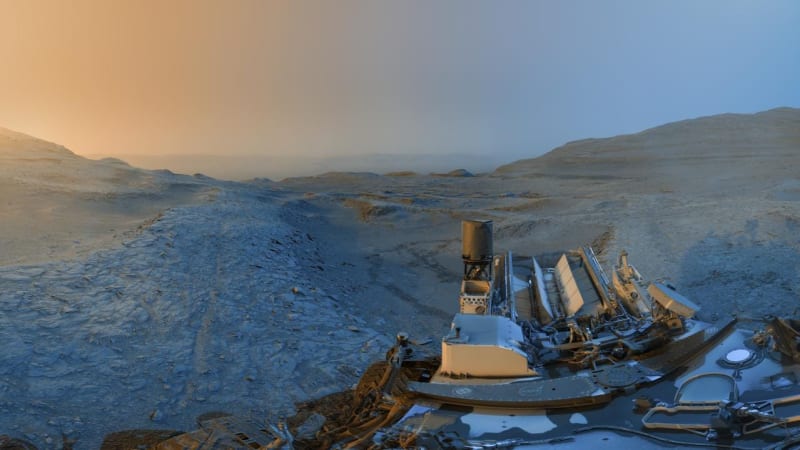
NASA's Curiosity Rover Shares Breathtaking Mars 'Postcard' That Looks Just Like Home
 🚀 Innovation
Philanthropists Launch Revolutionary Space Telescope to Democratize Cosmic Discovery
 🚀 Innovation
New Observatory Makes Stunning Discovery in First Week of Stargazing!
Joke of the Day
Why did the librarian get kicked out of class?
Explore Categories
Quote of the Day
"Do not go where the path may lead, go instead where there is no path and leave a trail."
— Ralph Waldo Emerson