Scientists Pave Way for Greener Future of Life-Saving Wearable Health Devices
Groundbreaking research from leading universities reveals exciting pathways to reduce the environmental impact of wearable health monitors by up to 30%, ensuring these life-saving devices can help people while protecting our planet for generations to come.
The health technology revolution is getting an eco-friendly makeover, thanks to pioneering research that's showing us how to make wearable medical devices better for both people and the planet.
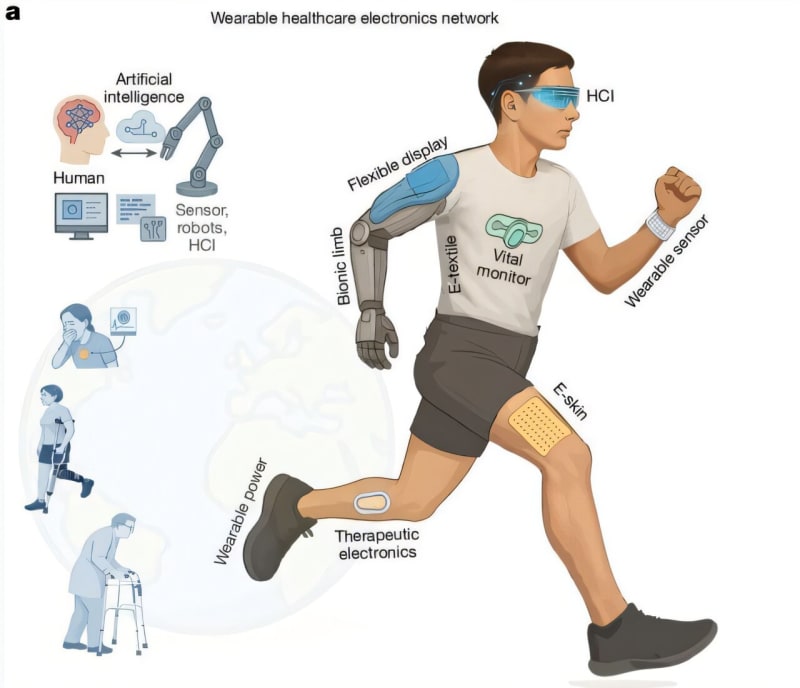
Researchers from the University of Chicago and Cornell University have accomplished something remarkable: they've created the first comprehensive roadmap for making wearable health care electronics—like glucose monitors, heart rate trackers, and blood pressure devices—significantly more sustainable. Their findings, published in the prestigious journal Nature, offer genuine hope for balancing technological advancement with environmental responsibility.
These incredible devices are already transforming lives around the world. From helping people with diabetes manage their condition in real-time to enabling elderly individuals to live independently with continuous health monitoring, wearable electronics represent one of health care's most promising frontiers. The technology allows patients, athletes, and health-conscious individuals to track their wellbeing continuously, catching potential problems early and enabling better health outcomes.
Now, scientists are ensuring this life-saving technology can grow sustainably. The research team analyzed four key devices spanning the wearable health spectrum and discovered actionable solutions that could dramatically reduce their environmental footprint.
The most exciting finding? Simple design changes can yield outsized environmental benefits. By substituting critical metals like gold with alternatives such as silver, copper, or aluminum in the circuit boards that power these devices, manufacturers could reduce carbon emissions by an impressive 30 percent while simultaneously cutting toxicity-related impacts by even more.
The researchers also identified modular design as a game-changing approach. Rather than discarding entire devices, future wearables could feature replaceable components, extending device lifespans and significantly reducing waste. This smart engineering approach mirrors the circular economy principles that are revolutionizing industries worldwide.
Another promising pathway involves transitioning manufacturing to renewable energy sources. Since over 95 percent of a typical glucose monitor's carbon footprint comes from the energy-intensive process of creating printed circuit boards and semiconductors, greening the energy grid powering these facilities could transform the industry's environmental profile.
The study's comprehensive approach—combining life-cycle assessment with forecasting models—provides manufacturers with clear, data-driven targets for improvement. This isn't just theoretical research; it's a practical blueprint that the rapidly growing wearable health industry can implement today.
As global adoption of these devices is projected to expand dramatically by 2050, approaching nearly 2 billion units annually, the timing of this research couldn't be better. The insights give innovators and manufacturers the tools they need to scale responsibly, ensuring that as more people gain access to life-enhancing health monitoring technology, we're simultaneously protecting the environment that sustains us all.
This research represents the best of human ingenuity: scientists working proactively to solve tomorrow's challenges today. By identifying environmental hotspots before they become crises and offering concrete solutions, these researchers are helping ensure that the wearable health revolution benefits everyone—present and future generations alike.
The message is clear and hopeful: we don't have to choose between advancing health care technology and protecting our planet. With smart design, sustainable materials, and renewable energy, we can have both.
Based on reporting by Phys.org - Technology
This story was written by BrightWire based on verified news reports.
Spread the positivity! 🌟
Share this good news with someone who needs it
More Good News
 🌍 Planet Wins
America Proves Economic Growth and Environmental Protection Go Hand in Hand
 🌍 Planet Wins
Major Green Energy Investment to Bring Thousands of Jobs to India
 🌍 Planet Wins
Adorable Compostable Soy Sauce Fish Revolutionizes Sustainable Sushi Takeout
Joke of the Day
Why did the librarian get kicked out of class?
Explore Categories
Quote of the Day
"Do not go where the path may lead, go instead where there is no path and leave a trail."
— Ralph Waldo Emerson