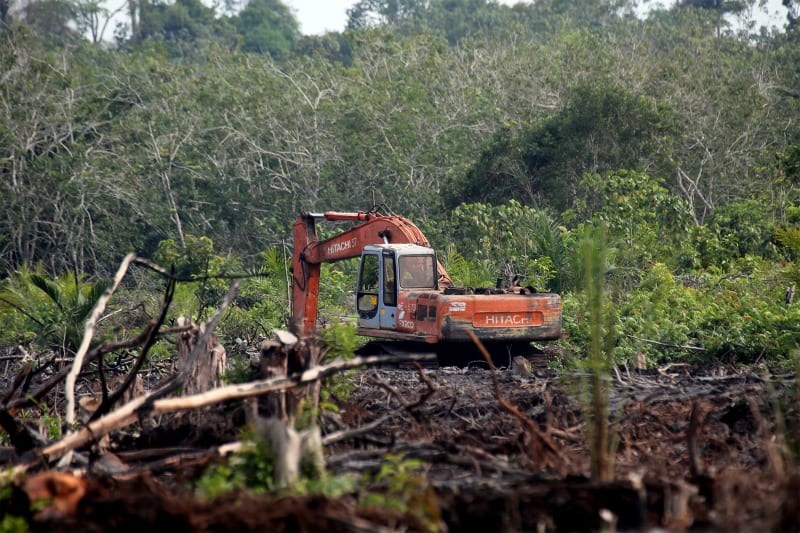
Scientists Uncover Hidden Climate Impact of Oil Palm Drainage Ditches
A groundbreaking study reveals that drainage canals in oil palm plantations emit significantly more greenhouse gases than previously understood. Researchers found these narrow waterways contribute disproportionately to global methane emissions.
In the lush, tropical landscapes of Sarawak, Malaysia, an environmental mystery has been quietly unfolding beneath the surface of oil palm plantations. Researchers have discovered that the narrow drainage ditches crisscrossing these agricultural zones are releasing far more methane than anyone realized, potentially challenging our understanding of climate change emissions.
Professor Kuno Kasak from Estonia's University of Tartu led a pioneering study published in Scientific Reports that uncovered a startling revelation: these small waterways account for up to 10% of total greenhouse gas emissions from a hectare of plantation, despite covering just 4% of the total area. This finding represents a significant breakthrough in understanding how human agricultural practices impact global climate dynamics.
Methane, though shorter-lived in the atmosphere than carbon dioxide, is an incredibly potent greenhouse gas - more than 20 times more effective at trapping heat. It's responsible for nearly a third of global temperature rise since the industrial revolution, making precise measurement critically important for climate scientists and environmental policymakers.
The research delves deep into the complex world of peatlands, extraordinary carbon reservoirs that hold approximately 30% of terrestrial carbon - double the amount found in forests - while occupying just 3% of Earth's land surface. When these peatlands are drained for agriculture, their delicate ecological balance is disrupted, transforming them from carbon sinks into significant emission sources.
What makes these drainage ditches particularly fascinating is their unique microenvironment. With warm temperatures, minimal oxygen, and abundant organic material, they become perfect breeding grounds for methane-producing microorganisms. As Chris Evans, a peatland biogeochemist from the U.K. Centre for Ecology and Hydrology, colorfully described it, drainage effectively moves methane emissions from the peat itself into an extensive canal network.
The study's implications extend far beyond academic curiosity. By highlighting these previously overlooked emission sources, researchers are providing critical data that could help refine global carbon accounting methods. Previous estimates likely underestimated greenhouse gas contributions from drained agricultural landscapes, particularly in regions like Southeast Asia with extensive oil palm cultivation.
While the findings might seem discouraging, they actually represent an important step toward more sustainable agricultural practices. By understanding exactly how and where emissions occur, scientists and policymakers can develop more targeted strategies to mitigate environmental impact. The research offers hope that with careful study and innovative approaches, we can balance agricultural needs with environmental preservation.
Based on reporting by Mongabay
This story was written by BrightWire based on verified news reports.
More Good News
 🌍 Planet
Global Communities Resilient in Face of Unprecedented 2025 Flooding Challenges
 🌍 Planet