
Scientists Unlock Sky-High Clean Energy with Bird-Inspired Flying Kites
Researchers are bringing airborne wind energy closer to reality using artificial intelligence inspired by soaring birds. This breakthrough could make renewable energy cheaper, easier to install, and far more powerful than traditional turbines by harvesting the stronger winds high above the ground.
Imagine a future where clean energy comes not from massive turbines anchored to the ground, but from graceful kites dancing through the sky like birds riding thermal currents. Thanks to innovative research from scientists at the University of Trieste and the Abdus Salam International Centre for Theoretical Physics in Italy, this inspiring vision is moving closer to reality.
The research team, led by Antonio Celani along with colleagues Lorenzo Basile and Maria Grazia Berni, has discovered a promising solution to one of renewable energy's most exciting challenges: airborne wind energy, or AWE. These power-generating kites represent a remarkable leap forward in sustainable technology, offering advantages that could transform how we harvest clean energy.
Unlike their earthbound cousins, airborne wind energy systems are dramatically lighter and less expensive to produce. They leave a gentler footprint on landscapes and can be installed in remote areas without extensive road infrastructure. Most thrilling of all, these aerial energy harvesters can access wind speeds many times greater at high altitudes, unlocking significantly more power than ground-based turbines could ever capture.
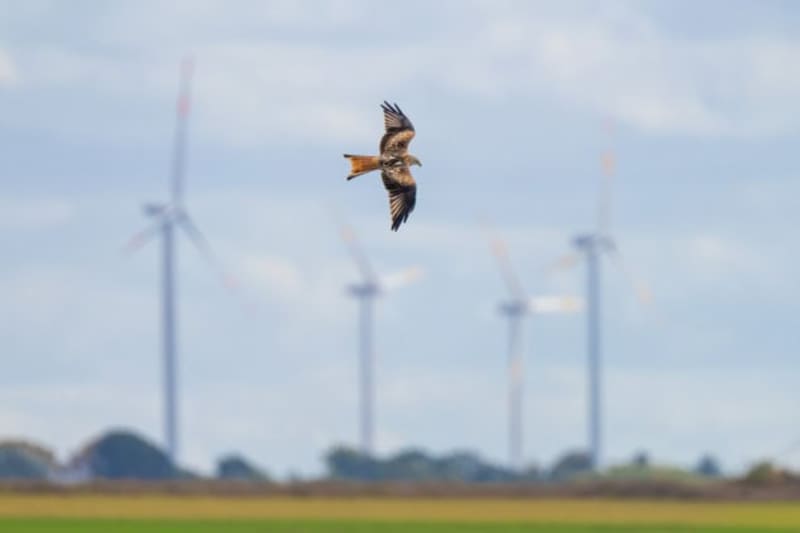
The breakthrough centers on an ingenious approach inspired by nature itself. Celani's team studied how birds like frigatebirds and gulls ride atmospheric currents for hours or even weeks without flapping their wings, expertly adapting to turbulent, unpredictable air flows. This observation sparked a question: could machines learn the same adaptive intelligence?
The answer is yes. Using reinforcement learning, a form of artificial intelligence where systems learn through trial and error, the researchers successfully trained virtual kites to navigate turbulent skies and generate energy efficiently. The AI controller learns to make smart decisions by receiving feedback rewards for good performance, much like how birds instinctively adjust their flight paths moment by moment.
What makes this approach particularly exciting is its adaptability. Traditional control methods struggle when wind conditions change rapidly, but reinforcement learning allows kites to autonomously adjust their maneuvers in response to ever-fluctuating atmospheric conditions. The system requires only minimal sensors and discovers efficient strategies through interaction with its environment, without needing complex predetermined models.
While the technology is still being refined in virtual environments, the team has already successfully applied similar techniques to train real toy gliders for soaring. The path forward involves bridging the gap between simulation and reality through techniques like offline reinforcement learning, which combines field experiments with extensive computer optimization.
This research represents more than just technical innovation. It embodies the creative problem-solving spirit driving the renewable energy revolution. By looking to nature for inspiration and leveraging cutting-edge artificial intelligence, scientists are opening new frontiers in clean energy that seemed like science fiction just years ago.
As the airborne wind energy community embraces these promising alternatives to traditional control methods, we move closer to a future where energy generation is not only cleaner and more sustainable, but also more efficient, accessible, and harmonious with the natural world that inspired it.
More Images


Based on reporting by Google News - Wind Energy
This story was written by BrightWire based on verified news reports.
Spread the positivity! 🌟
Share this good news with someone who needs it
More Good News
 🚀 Innovation
Four Sisters Build Europe's First Electric Tractor, Win National Energy Award
 🚀 Innovation
MIT Scientists Use AI to Create Breakthrough Antibiotics That Defeat Superbugs
 🚀 Innovation
California's New Solar Bill Could Save Renters $450/Year on Power Bills
Joke of the Day
Why don't scientists trust atoms?
Explore Categories
Quote of the Day
"The only way to do great work is to love what you do."
— Steve Jobs