
Scientists Use Light to Create Promising New Treatment for Depression and PTSD
Researchers at UC Davis have discovered an innovative way to create new therapeutic molecules using light and amino acids. These compounds could help treat depression, PTSD, and other brain disorders while avoiding the hallucinogenic effects of traditional psychedelics—opening doors to safer, more accessible mental health treatments.
In an exciting breakthrough that could transform mental health treatment, scientists at UC Davis have developed a remarkably elegant method to create potentially life-changing medications using nothing more than light, amino acids, and scientific ingenuity.
The research team from the UC Davis Department of Chemistry and Institute for Psychedelics and Neurotherapeutics has discovered how to transform ordinary amino acids—the fundamental building blocks of proteins in our bodies—into therapeutic molecules that could help millions suffering from depression, PTSD, and substance-use disorders.
What makes this discovery particularly promising is that these new compounds offer the healing benefits associated with psychedelics without causing hallucinations. "The question that we were trying to answer was, 'Is there a whole new class of drugs in this field that hasn't been discovered?'" explained Joseph Beckett, a Ph.D. student involved in the research. "The answer in the end was yes."
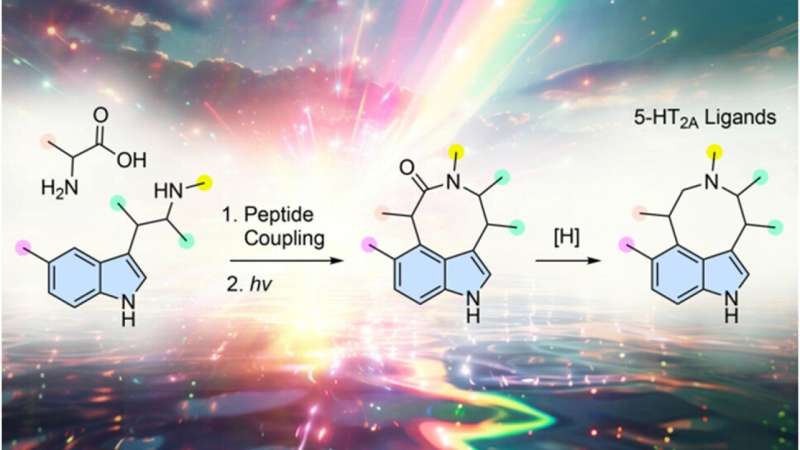
The innovative process involves coupling various amino acids with tryptamine, then using ultraviolet light to transform them into entirely new therapeutic compounds. This environmentally friendly approach represents a streamlined path to discovering medications that activate the brain's serotonin receptors, promoting healthy neuron growth and potentially healing damaged neural pathways.
The research team's breakthrough came when they tested a compound they labeled D5. Despite fully activating the same brain receptors as traditional psychedelics, D5 didn't produce hallucinogenic effects in animal studies. This unexpected result opened up thrilling possibilities for creating accessible treatments that patients could potentially use in everyday settings without experiencing perception-altering side effects.
"Completely new scaffolds are incredibly rare in the psychedelic field," noted fellow Ph.D. student Trey Brasher. "And this is the discovery of a brand-new therapeutic scaffold." Their work, recently published in the prestigious Journal of the American Chemical Society, represents a significant leap forward in psychiatric medicine.
The team created an extensive library of potentially therapeutic molecules and used sophisticated computer simulations to test how well these compounds interact with brain receptors. Five promising candidates emerged, with efficacies ranging from 61% to an impressive 93%. The most effective compound demonstrated the ability to produce maximum biological response, suggesting powerful therapeutic potential.
What's particularly hopeful about this research is its potential to make mental health treatment more accessible. Traditional psychedelic therapy typically requires intensive clinical supervision due to the hallucinogenic experience. These new compounds could potentially be administered with fewer restrictions, helping more people access needed treatment.
The researchers are now conducting follow-up studies to better understand exactly how these molecules work and why they successfully avoid triggering hallucinations while still activating healing pathways in the brain. Each answer brings them closer to developing practical treatments that could reach patients within years rather than decades.
This discovery exemplifies how creative scientific thinking can unlock entirely new approaches to age-old problems. By combining simple biological components with light in innovative ways, these dedicated researchers are illuminating a brighter path forward for mental health treatment—offering hope to countless individuals seeking relief from debilitating conditions.
More Images



Based on reporting by Phys.org
This story was written by BrightWire based on verified news reports.
Spread the positivity! 🌟
Share this good news with someone who needs it
More Good News



Joke of the Day
Why don't scientists trust atoms?
Explore Categories
Quote of the Day
"The only way to do great work is to love what you do."
— Steve Jobs