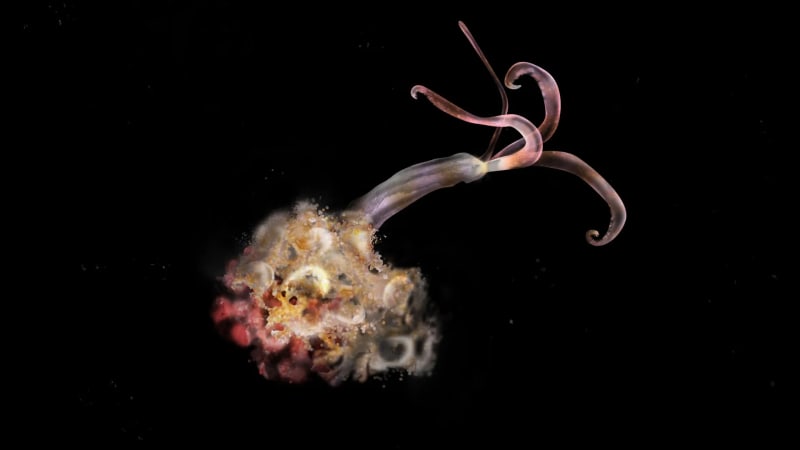
Silent Ocean Mystery: How Missing 'Zombie Worms' Could Signal Deeper Environmental Changes
Scientists uncover a mysterious absence of 'zombie worms' in deep-ocean research, potentially signaling significant marine ecosystem changes. This groundbreaking study reveals how tiny creatures can provide massive insights into environmental shifts.
Beneath the Pacific Ocean's dark depths, an extraordinary scientific detective story is unfolding—one that could have profound implications for marine ecosystems worldwide. Researchers from Ocean Networks Canada have discovered a puzzling absence of 'zombie worms,' remarkable creatures that play a critical role in oceanic nutrient cycling, potentially signaling broader environmental shifts.
Fabio De Leo, a senior scientist with Ocean Networks Canada and adjunct assistant professor at the University of Victoria, has been tracking these unusual organisms through a decade-long deep-sea experiment off British Columbia's coast. By strategically placing humpback whale bones on the ocean floor and monitoring them with high-resolution underwater cameras, De Leo's team expected to observe the distinctive bone-drilling behaviors of Osedax worms—but instead encountered a scientific mystery.
Osedax worms, nicknamed 'bone devourers,' represent a biological marvel. Despite lacking a mouth, anus, or digestive tract, they survive by drilling root-like structures into whale bones, with internal microbes extracting essential nutrients. These extraordinary creatures are considered ecosystem engineers, helping recycle marine nutrients and creating habitats for other species. Their absence in a decade-long study suggests potentially significant environmental disruptions.
The research site in Barkley Canyon, located nearly a thousand meters below the ocean's surface, sits within a naturally low-oxygen zone along whale migration routes. When whales die from natural or human-related causes, their bodies create 'whale falls'—critical food sources that typically support rich biodiversity. However, the team's observations indicate that expanding oxygen minimum zones might be fundamentally altering these complex marine ecosystems.
De Leo emphasizes the potential broader consequences of this phenomenon. Osedax larvae typically travel vast ocean distances, colonizing new whale falls hundreds of kilometers apart. If these habitats become compromised, the connectivity between whale fall sites could break down, potentially leading to declining species diversity across entire marine regions. The research also revealed similar stress patterns in wood-boring Xylophaga bivalves, suggesting a potentially systemic ecological challenge.
While the findings might seem alarming, they represent a crucial scientific opportunity. By understanding these intricate marine interactions, researchers can develop more comprehensive strategies for marine conservation. The zombie worms' mysterious disappearance isn't just a scientific curiosity—it's a potential early warning system for broader environmental changes happening in our planet's most profound and least understood ecosystem.
As climate change continues to reshape marine environments, studies like De Leo's become increasingly vital. They transform seemingly abstract scientific observations into tangible insights about our planet's delicate ecological balance, offering hope through deeper understanding and potential intervention.
Based on reporting by Science Daily
This story was written by BrightWire based on verified news reports.
More Good News
 🚀 Innovation
Boomerang Mysteries Unveiled: Science Explores Unique Flight Dynamics
 🚀 Innovation
The Future of Science in 2050: Transformative Breakthroughs and Global Challenges
 🚀 Innovation