
Solar Scientists Make Breakthrough in Next-Generation Panel Durability
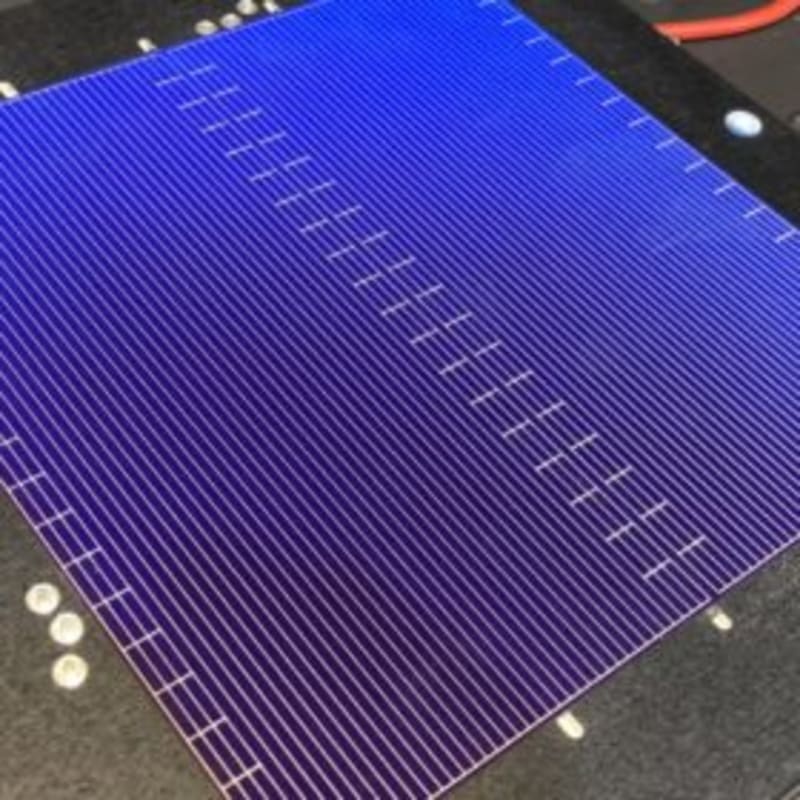
Researchers at the University of New South Wales have discovered an elegantly simple solution to improve the longevity of advanced TOPCon solar cells—using slightly thicker protective layers. This breakthrough brings us closer to more reliable, longer-lasting solar panels that will power our sustainable future.
In exciting news for the renewable energy sector, Australian scientists have uncovered a promising way to make next-generation solar panels more durable and reliable for decades to come.
A dedicated team at the University of New South Wales has been working to understand how ultraviolet light affects TOPCon solar cells, one of the most promising technologies in solar energy. Their efforts have paid off with a discovery that could significantly extend the lifespan of these advanced panels through a surprisingly straightforward solution.
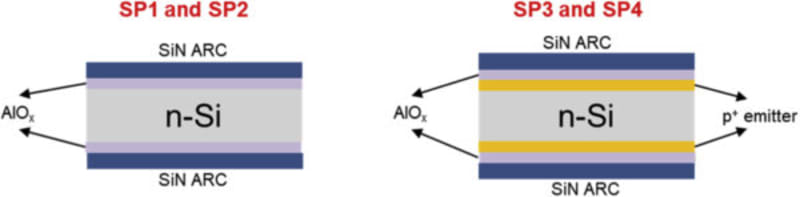
Lead researcher Bram Hoex and his team found that increasing the thickness of a protective aluminum oxide layer by just a few nanometers can dramatically reduce UV-related wear and tear. This means solar panels could maintain their efficiency longer, providing clean energy for extended periods and offering better value for homeowners and businesses investing in solar technology.
"Our new work provides a comprehensive, experimentally validated model for UV-degradation in TOPCon devices," Hoex shared enthusiastically when discussing the breakthrough, which was presented at the prestigious European PVSEC meeting in Bilbao, Spain. The research represents years of dedicated effort to understand how these advanced solar cells age under real-world conditions.
The team's innovative approach involved testing industrial-grade TOPCon cells with aluminum oxide layers of different thicknesses, ranging from four to seven nanometers. What they discovered was both fascinating and practical: the slightly thicker seven-nanometer layers acted as superior barriers, protecting the delicate silicon interfaces from hydrogen-related degradation caused by UV exposure.
Through sophisticated analysis techniques, the researchers developed a complete understanding of how UV light interacts with the materials in solar cells. They found that while some degradation effects are temporary and reversible, the thicker protective layers prevent more serious long-term damage from occurring in the first place.
What makes this discovery particularly encouraging is its practical applicability. The solution doesn't require completely new manufacturing processes or exotic materials—it's about optimizing what's already being used in industrial production. The seven-nanometer layer remains thin enough to avoid impacting the panel's light absorption while providing significantly better protection.
"This work establishes a unified physical model," Hoex explained, noting that it provides "clear design guidance for more UV-robust TOPCon passivation stacks." In simpler terms, solar manufacturers now have a roadmap for building panels that will stand the test of time in harsh outdoor environments.
The implications extend beyond just manufacturing. Better understanding of how solar panels age means improved testing protocols, more accurate lifetime predictions, and ultimately greater confidence for consumers and investors in solar energy infrastructure.
This breakthrough is part of UNSW's broader commitment to advancing solar technology reliability. Their ongoing research continues to solve real-world challenges, bringing us closer to a future where solar energy is not just clean and renewable, but also incredibly durable and cost-effective.
As the world transitions toward sustainable energy sources, discoveries like this remind us that scientific innovation is constantly making green technology better, more reliable, and more accessible. The future of solar energy is looking brighter—and longer-lasting—than ever.
More Images

Based on reporting by PV Magazine
This story was written by BrightWire based on verified news reports.
Spread the positivity! 🌟
Share this good news with someone who needs it
More Good News
 🚀 Innovation
Game-Changing Battery Breakthrough Promises Safer, Affordable Energy for All
 🚀 Innovation
Beautiful Solar Windows: New 3D-Printed Technology Brings Colorful Energy to Buildings
 🚀 Innovation
Breakthrough Detection Method Set to Revolutionize Semiconductor Technology
Joke of the Day
Why did the dog apply for a job at the bank?
Explore Categories
Quote of the Day
"The greatest thing you'll ever learn is just to love and be loved in return."
— Moulin Rouge (from the film, popularized by Ewan McGregor)