South Africa's School-Sharing Model Expands Mother-Tongue Ed
A simple but revolutionary idea is breaking through South Africa's language education deadlock: multiple schools sharing one building. Each keeps its own language, leadership, and identity while sharing facilities.
South Africa has found an elegant solution to a problem that's paralyzed education policy for decades: how to expand mother-tongue learning without taking anything away from anyone.
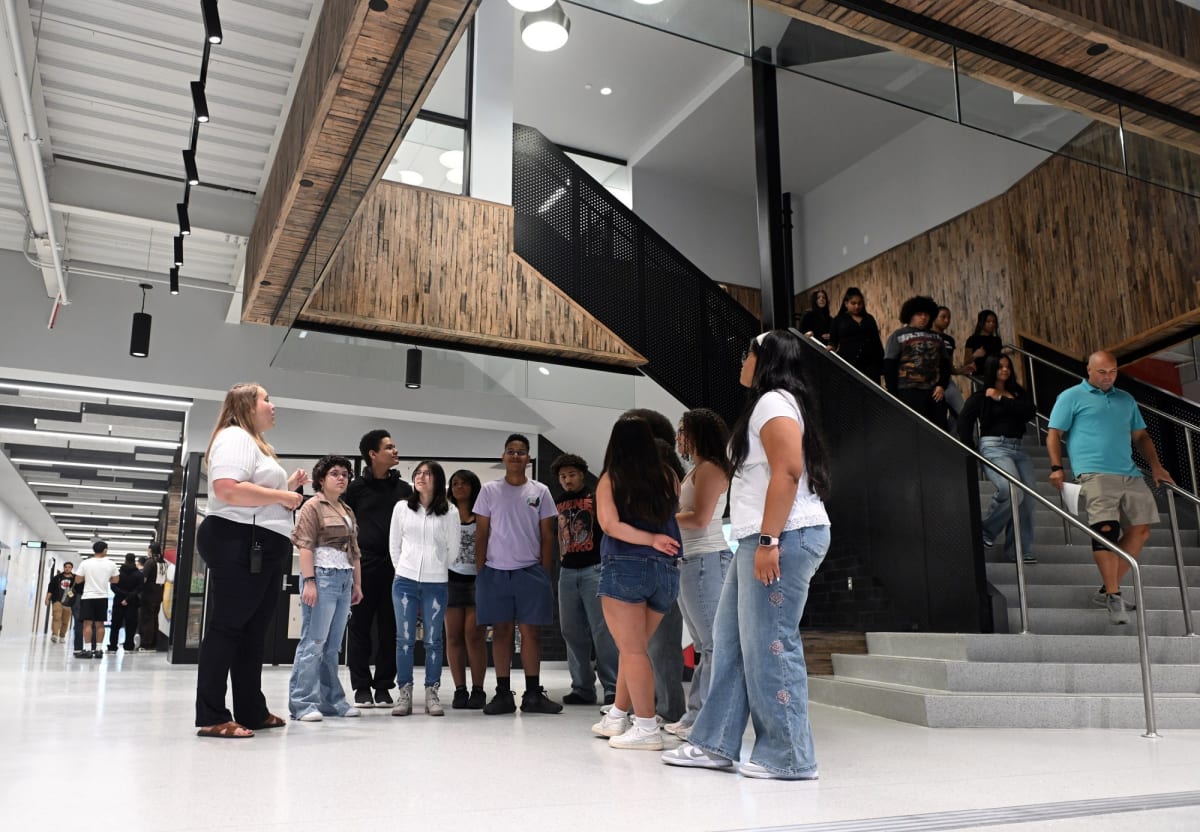
The "one facility, two or more schools" model separates what schools are from where they meet. Multiple independent schools, each teaching in a different language, operate from the same physical building. They share the playground and library, but nothing else.
The brilliance lies in what it doesn't require. No new construction. No school closures. No communities losing their institutions.
For years, South Africa's language education debate has been stuck in zero-sum thinking. Everyone agrees that children learn better in their mother tongue. The Constitution guarantees it, international research proves it, and teachers see it daily in their classrooms.
But whenever anyone proposes expanding African language instruction, fear takes over. Communities with well-functioning Afrikaans schools worry they'll lose what they've built. Parents wanting mother-tongue education for their children hit walls of resistance and litigation.
The shared-facility model sidesteps this entire conflict. School buildings are public assets: bricks, halls, science labs, sports fields. They belong to everyone, not to one linguistic community forever.
What makes this work is the complete institutional independence. Each school has its own principal, its own governing body, its own teaching approach, its own culture. Students learning in Xhosa don't become part of an Afrikaans school. They attend their own Xhosa school that happens to use the same facilities.
The model challenges an assumption so deeply buried we barely notice it: that quality school infrastructure must be exclusive. That if one group benefits, another must lose.
The Ripple Effect
This approach could reshape access to quality education across South Africa. Hundreds of well-resourced school buildings currently serve single language communities while nearby children attend overcrowded, under-equipped schools.
The model doesn't just solve a language problem. It tackles educational inequality without triggering the defensive politics that usually block progress. Communities keep their schools while sharing the advantages of good infrastructure.
It transforms scarcity thinking into abundance thinking. Instead of fighting over limited resources, communities multiply what those resources can accomplish. One excellent science lab can serve students learning in three different languages.
The constitutional promise of mother-tongue education has been real for decades, but the practical path forward has been clouded by conflict. This model offers something rare in polarized debates: a solution that genuinely creates more for everyone.
South Africa's children are finally getting a pathway to learn in their home languages without anyone having to lose theirs.
More Images

Based on reporting by AllAfrica - Innovation
This story was written by BrightWire based on verified news reports.
Spread the positivity!
Share this good news with someone who needs it
%2Ffile%2Fattachments%2Forphans%2FIMG_6399_134346.jpg)
%2Ffile%2Fattachments%2F2996%2FGroundUp-NIH-funding_260278.jpeg)