Students From 5 Countries Launch Satellites From Space Station
Shoebox-sized satellites designed by students from Mexico, Italy, Thailand, Malaysia, and Japan just launched from the International Space Station into Earth orbit. The CubeSats will conduct Earth observations and test new technologies as part of a growing movement making space exploration more accessible.
Students from five countries just watched their dreams float into orbit from the International Space Station, proving that space science is no longer reserved for superpowers with billion-dollar budgets.
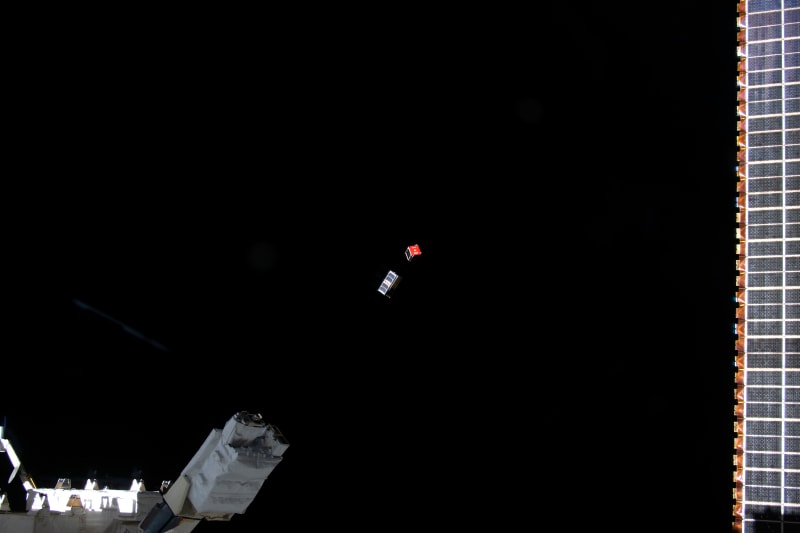
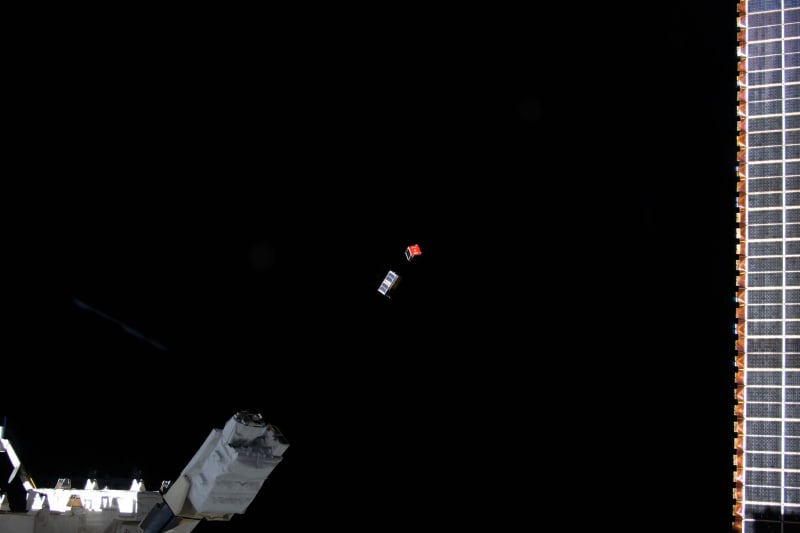
NASA astronaut Chris Williams captured the moment from the station's cupola window as the student-designed CubeSats deployed from the Kibo laboratory module on February 10, 2026. The small satellites, each about the size of a shoebox, will spend their time in orbit observing Earth and testing cutting-edge technologies.
The international team behind these missions spans the globe. Young engineers and scientists from Mexico, Italy, Thailand, Malaysia, and Japan each designed their own CubeSat for specific research goals.
CubeSats represent a revolution in how we access space. These nanosatellites weigh just 1 to 10 kilograms and follow a standard size format, making them far cheaper and faster to build than traditional satellites.
What started as an educational concept has grown into its own thriving industry. Government agencies, private companies, and universities now work together to push the boundaries of what these tiny spacecraft can accomplish.
The technology has opened doors that were previously locked to all but the world's wealthiest space programs. Universities can now launch real space missions with budgets that once wouldn't have covered a single component of a traditional satellite.
The Ripple Effect
These student missions represent more than just technical achievements. They're training the next generation of space scientists and engineers while giving young people hands-on experience with actual orbital missions.
The CubeSat platform has democratized space exploration in ways unimaginable just two decades ago. Countries building their first space programs can now launch meaningful scientific missions without decades of infrastructure development.
Students who design these satellites gain experience that would have required years of career progression in traditional space programs. They see their work launch into orbit while still in school, creating a feedback loop of inspiration and expertise.
The growing collaboration between nations, industries, and academic institutions shows how space exploration is evolving from competition to cooperation. These missions prove that the next great space discoveries might come from anywhere.
The next time you look up at the night sky, remember that some of those twinkling lights are shoebox-sized satellites built by students, quietly expanding human knowledge one orbit at a time.
More Images
Based on reporting by NASA
This story was written by BrightWire based on verified news reports.
Spread the positivity!
Share this good news with someone who needs it