Stunning 773,000-Year-Old Fossils Fill Missing Gap in Human Story
Remarkable ancient fossils discovered in Morocco are helping scientists piece together an exciting chapter of human history that was previously unknown. These precious remains, dating back 773,000 years, offer a thrilling window into understanding our shared ancestors and how we became who we are today.
In an extraordinary discovery that's lighting up the scientific community, researchers have unearthed precious fossils in Morocco that are helping solve one of humanity's most fascinating puzzles: understanding who our ancient ancestors were and how we came to be.
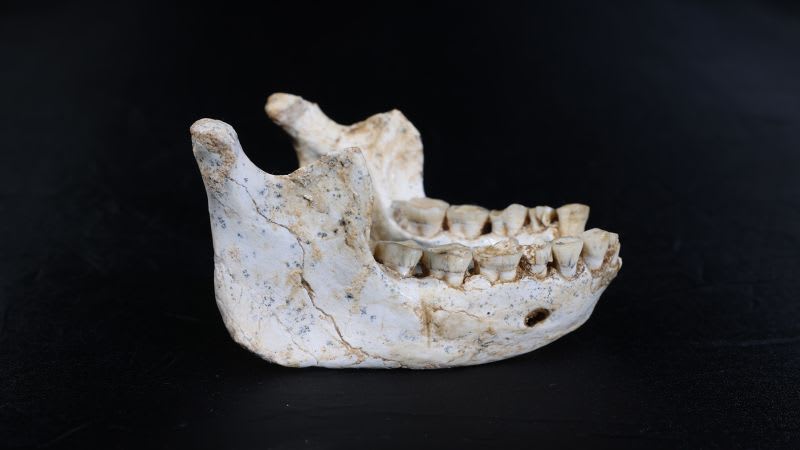
Three jawbones, including one from a child, along with teeth, vertebrae, and a femur were carefully excavated from the Grotte à Hominidés cave at Thomas Quarry in Casablanca. Dating back an impressive 773,000 years, these remains represent something truly special—they're filling a critical gap in our understanding of human evolution that scientists have been eager to explore.
"It is extremely exciting to have fossils right in the middle of this gap," shared Jean-Jacques Hublin, a paleoanthropologist at Collège de France and the Max Planck Institute for Evolutionary Anthropology. Previously, scientists had numerous fossils dating to about a million years ago, then a puzzling jump to around 500,000 years ago, with almost nothing in between. This discovery bridges that mysterious period beautifully.
What makes these fossils particularly fascinating is their unique blend of characteristics. Advanced CT scans revealed what scientists describe as a "mosaic" of both primitive and more evolved features. While these ancient humans didn't have the defined chin we see in modern humans, their teeth and dental features were remarkably similar to both our own species and Neanderthals. It's like finding a precious link in the chain connecting us to our distant past.
The team used an innovative dating technique called paleomagnetism, which detects geological signatures from when Earth's magnetic poles reversed. This allowed them to pinpoint the fossils' age with exceptional precision to the Matuyama-Brunhes transition, a well-known chronological marker from 773,000 years ago.
These remarkable finds are helping scientists understand the common ancestor shared by the three most recent types of humans: Neanderthals, Denisovans, and Homo sapiens—us! This ancestral figure, sometimes called "ancestor x," has long been an intriguing mystery for researchers worldwide.
Morocco continues to be a treasure trove for understanding human origins. The world's earliest known Homo sapiens remains were also found there at Jebel Irhoud, dating to 400,000 years ago. The region's unique geological conditions preserve fossils exceptionally well, offering us these priceless gifts from the past.
"Any hominin fossil from this critical time period makes for an exciting new window into human evolution," enthused Carrie Mongle, an assistant professor of anthropology at Stony Brook University. Ryan McRae from the Smithsonian National Museum of Natural History echoed this excitement, noting how these discoveries help trace observable changes in our ancestral lineage.
This groundbreaking research, published in the prestigious journal Nature, emphasizes Africa's central importance in understanding how modern humans emerged. Each discovery like this brings us closer to understanding our shared story and celebrating the incredible journey that led to humanity as we know it today. It's a reminder that we're all connected through this ancient, remarkable heritage.
More Images



Based on reporting by Reddit - Science
This story was written by BrightWire based on verified news reports.
Spread the positivity! 🌟
Share this good news with someone who needs it
More Good News
 🌍 Planet Wins
Revolutionary Plant-Based Material Could Transform Hygiene Products for Good
 🌍 Planet Wins
Brilliant Discovery Turns Coal Mining Waste Into Treasure Trove of Rare Earth Elements
 🌍 Planet Wins
Remarkable Moroccan Discovery Illuminates Our Shared Human Story
Joke of the Day
Why don't scientists trust atoms?
Explore Categories
Quote of the Day
"The only way to do great work is to love what you do."
— Steve Jobs