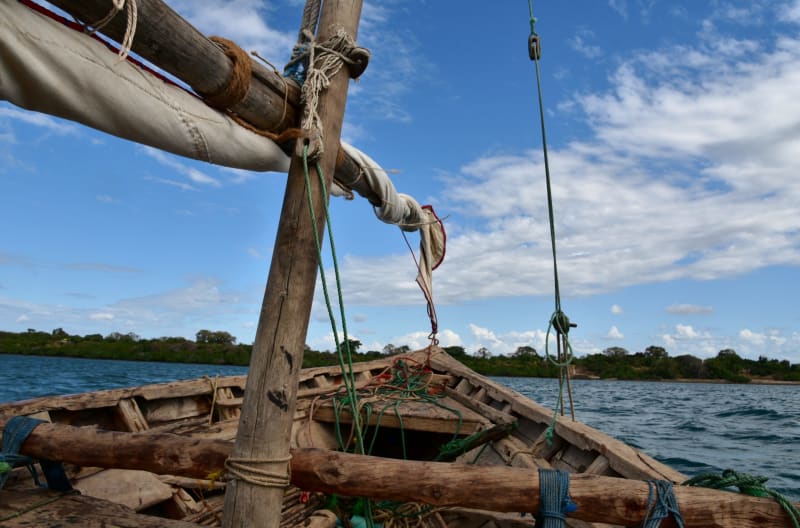
Tanzania's Bold Fishing Boat Initiative: Navigating Challenges in Maritime Modernization
Tanzania's innovative fishing boat program seeks to modernize small-scale maritime communities through strategic government investments. The initiative offers low-interest loans and advanced vessels to fishing cooperatives, addressing both economic and environmental challenges.
In the coastal district of Kilwa, Tanzania, a government-sponsored fishing boat program is testing the waters of maritime transformation, revealing both the promise and complexity of modernizing small-scale fishing communities.
President Samia Suluhu Hassan's administration launched an ambitious initiative in November 2023 to replace aging wooden vessels with modern fishing boats, aiming to revitalize a sector that supports approximately 4.5 million Tanzanians directly and indirectly. Through a partnership with the Tanzania Agricultural Development Bank (TADB), the program offers low-interest loans to fishing cooperatives, with boats valued around 80 million shillings ($32,200) and designed to improve productivity and sustainability.
Mohammed Sheikh, director of fisheries at the Ministry of Livestock and Fisheries, explained the program's selection process: cooperative groups apply through a national announcement, and approved applicants receive fully insured vessels ready for operation. The first phase distributed 160 boats among 3,163 beneficiaries, representing a significant 11.5 billion shilling ($4.6 million) investment in Tanzania's maritime future.
For fishing communities like the Fikirini Fishman Group in Kilwa Masoko, the program initially sparked immense hope. Mbwangali Twalha, the group's secretary, envisioned receiving deep-sea vessels equipped with advanced safety gear, generators, and proper lighting—a potential solution to longstanding challenges facing small-scale fishers.
However, the reality has proven more nuanced. Tanzania's fishing sector confronts multiple obstacles, including limited cold storage, unreliable markets, high fuel costs, and competition from industrial trawlers. Climate change further complicates matters, altering fish migration patterns and increasing extreme weather events. Twalha notes that severe wind occurrences have become increasingly frequent, disrupting fishing activities.
In February 2025, President Hassan expanded the program, distributing 120 large fishing boats and 118 dinghies, with the Tanga region receiving 30 large vessels and 60 smaller boats. The initiative aims to discourage destructive fishing practices like dynamite use and undersized netting, which threaten marine ecosystems by preventing fish populations from reproducing effectively.
Eligibility for the boat loans depends on several critical factors: applicants must be active in fishing, belong to a registered cooperative, and demonstrate both financial need and repayment capacity. With loans offering extended grace periods of five to ten years and extremely low interest rates, the program represents a sophisticated approach to supporting maritime communities.
As Tanzania continues to develop its fishing sector—which currently contributes approximately 1.7% to the national GDP along its expansive 1,400-kilometer coastline—the boat modernization program stands as a bold experiment in balancing technological advancement with community needs. While challenges remain, the initiative signals a progressive commitment to sustainable maritime development.
Based on reporting by Mongabay
This story was written by BrightWire based on verified news reports.
More Good News
 ✨ Good News
Five Surprising New Laws That Could Change Daily Life in 2025
 ✨ Good News
Malcolm Gladwell Reflects on 'The Tipping Point' in Candid Podcast Interview
 ✨ Good News
BYD Seagull Swoops into Australian Market, Promising Affordable Electric Adventure
Start Your Day With Good News
Join 50,000+ readers who wake up to stories that inspire. Delivered fresh every morning.
No spam, ever. Unsubscribe anytime.