Tech Leaders Clash with Rep. Ro Khanna Over Proposed California Billionaire Tax
A proposed California billionaire tax has sparked intense debate, with Rep. Ro Khanna defending the measure against Silicon Valley leaders who threaten to leave the state. The controversy highlights growing tensions around wealth inequality and taxation strategies.
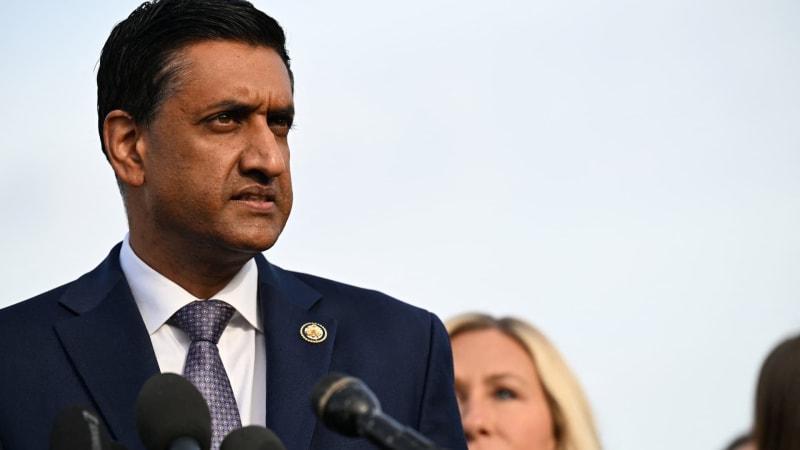
A proposed California ballot measure targeting billionaires' wealth has ignited a firestorm of controversy, pitting Silicon Valley titans against Democratic Representative Ro Khanna in an increasingly heated debate about economic inequality and taxation.
The 2026 Billionaire Tax Act, championed by the Service Employees International Union-United Healthcare Workers West, would impose a one-time 5% tax on billionaires' assets to address healthcare budget shortfalls. The proposal has sparked intense reactions from tech leaders, with some threatening to leave California if implemented and calling for Khanna to be challenged in a primary election.
Responding to potential backlash with historical bravado, Khanna invoked President Franklin Delano Roosevelt's dismissive attitude toward economic elites, posting on social media that he would 'miss them very much' if wealthy individuals chose to depart. This comment prompted sharp criticism from prominent tech investors, including Martin Casado from Andreessen Horowitz, who declared his intention to vote Khanna out, and Garry Tan, CEO of Y Combinator, who explicitly called for a primary challenge.
The proposed tax has particularly alarmed tech investors due to its potential application to unrealized gains, which would require startup founders with over $1 billion in paper stock value to pay taxes on illiquid assets. Reddit co-founder Alexis Ohanian argued that while society must address growing wealth disparities, taxing unrealized gains is not the solution.
Rep. Khanna's spokesperson, Sarah Drory, emphasized the congressman's commitment to technology and entrepreneurship, highlighting his role in crafting the CHIPS and Science Act. She noted that while Khanna supports a 'modest wealth tax' to combat inequality, he also advocates for practical considerations for startup founders with non-profitable, illiquid stock.
The debate reflects broader national trends, with a Pew Research Center poll revealing that 58% of Americans support raising taxes on those earning over $400,000, and 74% of Democrats backing higher tax rates on the wealthy. Meanwhile, California Governor Gavin Newsom has expressed skepticism about state-level billionaire taxes, warning against isolating California from other states' economic dynamics.
The controversy also signals shifting political landscapes, with Republicans making increasing inroads in Silicon Valley, traditionally a Democratic stronghold. Tech CEOs have been courting political favor, with some gravitating toward potential future administration opportunities.
As the ballot measure moves forward, it represents a critical test of California's approach to economic inequality, challenging long-standing assumptions about wealth, taxation, and the social responsibilities of billionaires in an era of unprecedented economic stratification.
Based on reporting by CNBC
This story was written by BrightWire based on verified news reports.
More Good News
 ✨ Good News
Federal Reserve's December Meeting Reveals Complex Rate Cut Deliberations
 ✨ Good News
Midterm Election Tensions Rise: Democrats Warn of Potential Voter Interference
 ✨ Good News