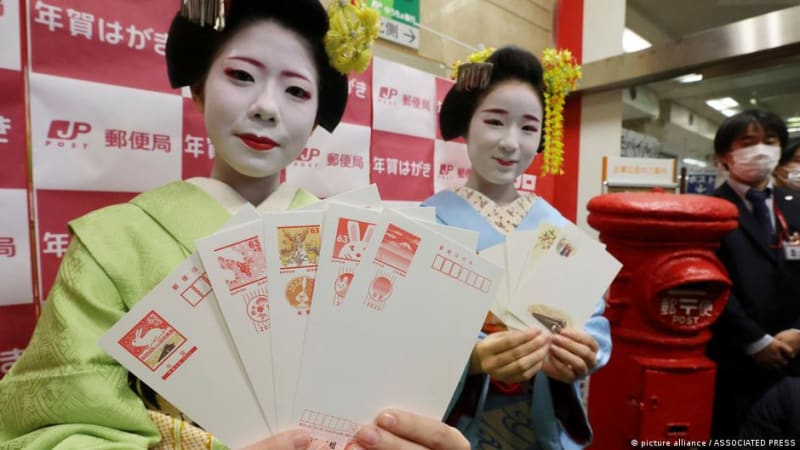
The Digital Era's Impact: How Technology is Transforming Japan's Cherished New Year Card Tradition
Japan's beloved New Year card tradition is transforming as digital communication replaces handwritten greetings. The shift reflects broader changes in social interaction and technology's growing influence on cultural practices.
In a quiet shift that reflects Japan's evolving social landscape, the centuries-old tradition of sending 'nengajo' New Year greeting cards is gradually fading, replaced by instant digital communication and changing workplace dynamics.
The once-ubiquitous practice of meticulously crafting and mailing decorative New Year cards has seen a dramatic decline, with card volumes plummeting from 4.5 billion in 2004 to just 1.07 billion in 2025, signaling a profound transformation in how Japanese people connect during the festive season.
Sumie Kawakami, an academic from Yamanashi Prefecture, exemplifies this cultural shift. Where she once diligently sent 200 cards annually to colleagues, friends, and family, she now opts for more streamlined communication methods. 'Instead of 'nengajo,' this year I wrote a few letters to my closest connections, sent Christmas cards overseas, and used social media for other greetings,' she explained, highlighting the changing interpersonal communication landscape.
Tracing its roots to the Heian period (794-1192), 'nengajo' began as a sophisticated communication method among aristocrats marking the lunar new year. The tradition expanded through societal layers, particularly during the Meiji era (1868-1912) when Japan's modern postal system emerged. Initially handwritten with intricate designs representing the Chinese zodiac animal of the year, these cards evolved with technology, incorporating personal photos and computer-generated designs.
Technology, ironically, has played a dual role in this tradition's transformation. While home computers and printers initially boosted 'nengajo' popularity by enabling personalized card creation, digital messaging platforms are now hastening its decline. Kiyoko Date, a corporate professional in Yokohama, candidly shared her perspective: 'I used to send about 100 cards yearly, but I've completely stopped because everyone I want to contact is already in my mobile phone.'
Privacy concerns and workplace culture changes have further accelerated this trend. Date noted that her company's once-accessible employee address database has been dismantled, reflecting increased personal information protection. Modern Japanese professionals increasingly maintain stricter boundaries between work and personal spheres.
The economic factor cannot be overlooked. Rising card production costs, coupled with limited disposable income, make traditional 'nengajo' less appealing. While some might view this tradition's decline with nostalgia, most Japanese seem to embrace the convenience of digital communication with a pragmatic acceptance.
As Japan moves forward, the 'nengajo' tradition serves as a poignant reminder of how cultural practices evolve. The 2026 zodiac year of the horse will likely see further reductions in physical card exchanges, symbolizing a broader narrative of technological adaptation and changing social connections in the digital age.
Based on reporting by DW News
This story was written by BrightWire based on verified news reports.
More Good News
 ✨ Good News
2025: A Year of Transformative Moments - From AI Breakthroughs to Political Pioneers
 ✨ Good News
2025: A Year of Transformative Change - From AI Revolution to Global Shifts
 ✨ Good News