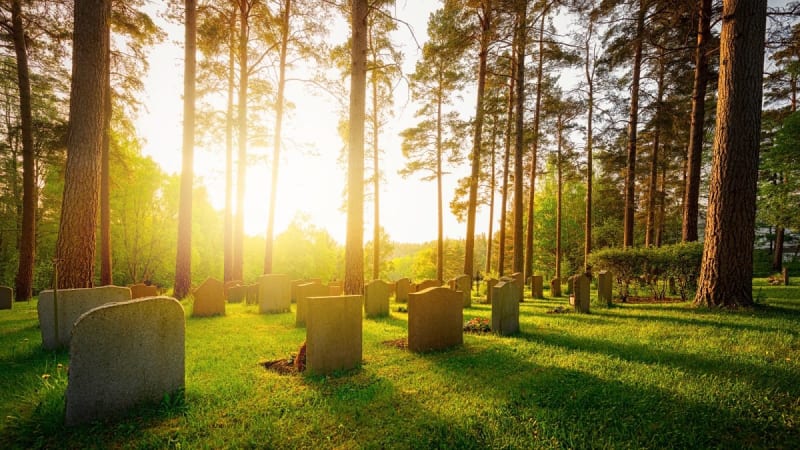
The Ultimate Green Goodbye: How Your Final Resting Choice Impacts Earth
Discover the most eco-friendly way to say goodbye, as experts reveal the surprising truth about burial methods and their environmental impact. Natural burial emerges as the clear winner in our quest for a responsible final farewell.
In the quest to minimize our environmental footprint, most of us meticulously sort recyclables, avoid fast fashion, and reluctantly sip from paper straws. But what about our final environmental act—how we handle our remains after life's journey concludes? Experts reveal a surprising answer that challenges our assumptions about eco-friendly burial methods.
Lee Webster, former president of Green Burial Council International, cuts through the complexity with a straightforward recommendation: natural burial is the most responsible choice for environmentally conscious individuals. 'Everybody wants something shiny, new and exciting,' Webster explains, 'but the simplest solution is usually the best.'
The United States currently offers five primary options for handling human remains, each with distinct environmental implications. Conventional burial, involving embalming chemicals, hardwood or metal caskets, and concrete vaults, represents a significant environmental burden. Webster highlights the 'warehousing of funeral furniture'—the permanent underground storage of materials that squanders natural resources and disrupts ecosystems.
Cremation, currently America's most popular choice, isn't the green solution many believe it to be. The process requires extreme temperatures between 1,400 and 1,900 degrees Fahrenheit, typically fueled by natural gas or oil. Moreover, cremation releases carbon dioxide and mercury vapor from dental fillings, with approximately 14 percent of U.S. mercury in waterways attributed to this practice.
Even cultures with deep-rooted cremation traditions are recognizing the environmental cost. A study from Nirma University in Ahmedabad, India, revealed that traditional Hindu open-air funeral pyres consume 880 to 1,100 pounds of wood per body, causing significant deforestation and releasing 500 to 600 kilograms of carbon dioxide. Researchers suggest that 'traditional rituals need not be abandoned, but thoughtfully adapted with green burial innovations.'
Emerging alternatives like aquamation (alkaline hydrolysis) offer promising developments. Currently legal in 30 states and available in 19, this method uses heated water and alkali to break down soft tissue, presenting a potentially less environmentally destructive option. However, experts like Webster emphasize that natural burial remains the gold standard for those seeking true ecological responsibility in their final disposition.
As we contemplate our environmental legacy, the choice of how we return to the earth becomes a profound statement of our values. Natural burial offers not just a sustainable solution, but a poetic reconnection with the natural cycles that sustain our planet—a final act of stewardship that honors both personal history and environmental consciousness.
Based on reporting by Popular Science
This story was written by BrightWire based on verified news reports.
Spread the positivity! 🌟
Share this good news with someone who needs it
More Good News
 🌍 Planet
Eden Project Founder Reveals Optimism: World is Improving, Not Declining
 🌍 Planet
Breakthrough Year: 7 Remarkable Environmental Victories Reshape US Conservation
 🌍 Planet