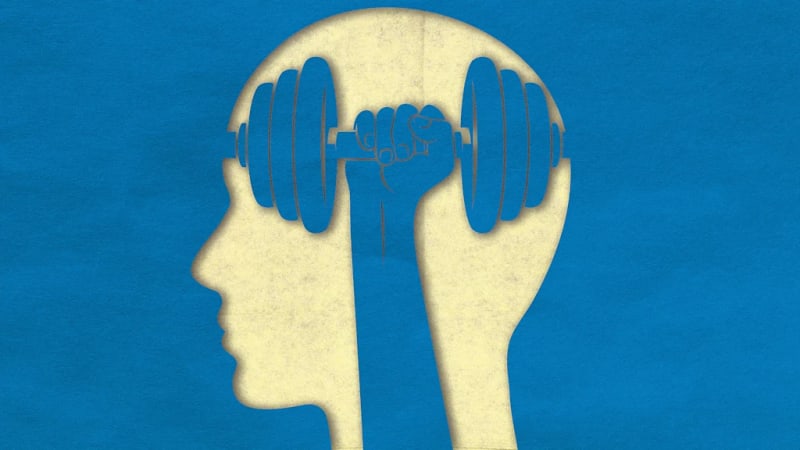
Transform Your Mind Like You Train Your Body: A Practical Guide to Mental Fitness
Just as we've learned to strengthen our bodies through structured exercise, we can now apply the same proven principles to build mental resilience and emotional strength at work. Thousands are discovering that treating the mind like a muscle—with assessment, targeted practice, and measurable progress—leads to remarkable improvements in how they show up professionally and personally.
Imagine approaching your mental well-being the same way you'd train for a marathon or build strength at the gym. Not as a crisis to manage, but as a capacity to develop. That's the exciting shift happening across workplaces today, and it's transforming how people think about personal growth.
For years, we've become experts at optimizing our physical health. We track our steps, monitor our heart rates, and celebrate personal records. Meanwhile, the part of us that truly shapes our experience—our thought patterns, emotional responses, and beliefs—has remained largely unmeasured and untrained. But that's changing, and the results are inspiring.
The breakthrough insight is beautifully simple: your mind responds to training just like your body does. With the right structure, you can develop mental fitness that makes a real difference in your daily life.
The approach mirrors physical training perfectly. First, you assess where you are. Instead of broad labels like "I'm terrible at handling stress," you identify specific patterns: "When deadlines shift unexpectedly, I rush to solutions without pausing to understand the full picture." This small reframe transforms self-judgment into something you can actually work with.
Next comes focused training. Just as you wouldn't expect to transform your physique in one gym session, mental fitness develops through consistent, targeted practice. The key is choosing one specific behavior that matters to you—perhaps staying calm when situations feel unclear, or speaking up confidently in meetings—and practicing it deliberately for several weeks.
What makes this approach so effective is tracking observable signals. Rather than asking vague questions like "Am I better at communication?" you notice concrete actions: "Did I pause three seconds before responding to that challenging message? Did I ask a clarifying question before jumping to conclusions?" These small checkpoints create momentum and prove progress is happening.
The beauty of this framework is its accessibility. Over four weeks, you can create meaningful change by establishing your baseline, practicing your chosen behavior, gradually increasing difficulty, and reviewing what worked. It's structured enough to provide direction, yet flexible enough to fit any schedule.
Forward-thinking leaders are discovering how to support this growth across entire teams. They're incorporating "capacity goals" alongside traditional objectives, designing meetings that give people space to practice new behaviors, and celebrating specific actions rather than vague personality traits. When someone pauses, asks a thoughtful question, or handles pressure differently, that recognition reinforces the positive pattern.
The most encouraging part? This isn't about fixing what's broken. It's about recognizing the incredible potential we all have to grow, adapt, and become more resilient versions of ourselves. Every day presents opportunities to practice, and every practice session builds capacity.
As companies invest billions in wellness programs, individuals are discovering something powerful: you don't need to wait for the perfect app, morning routine, or work environment to start building mental strength. You just need a clear target, consistent practice, and a way to notice when you're making progress.
The mind, it turns out, is remarkably trainable. And that might be the most hopeful news of all.
Based on reporting by Fast Company
This story was written by BrightWire based on verified news reports.
Spread the positivity! 🌟
Share this good news with someone who needs it
More Good News
 🧘 Health & Wellness
Discover the Brain-Boosting Skill That Makes Success Easier and More Achievable
 🧘 Health & Wellness
Simple Daily Habits Can Cut Dementia Risk Nearly in Half, Scientists Discover
Revolutionary Safe Health Zones Bring Hope to Millions of Night-Shift Workers Worldwide
Joke of the Day
Why did the librarian get kicked out of class?
Explore Categories
Quote of the Day
"Do not go where the path may lead, go instead where there is no path and leave a trail."
— Ralph Waldo Emerson