
UK Engineers Knit Revolutionary Space Antenna Using Textile Factory Machine
British aerospace engineers are making history by launching CarbSAR, a groundbreaking satellite featuring a radar antenna literally knitted from gold-coated tungsten wire on a modified textile machine. This ingenious fusion of traditional craftsmanship and cutting-edge technology positions the UK to reclaim its leadership in space radar innovation.
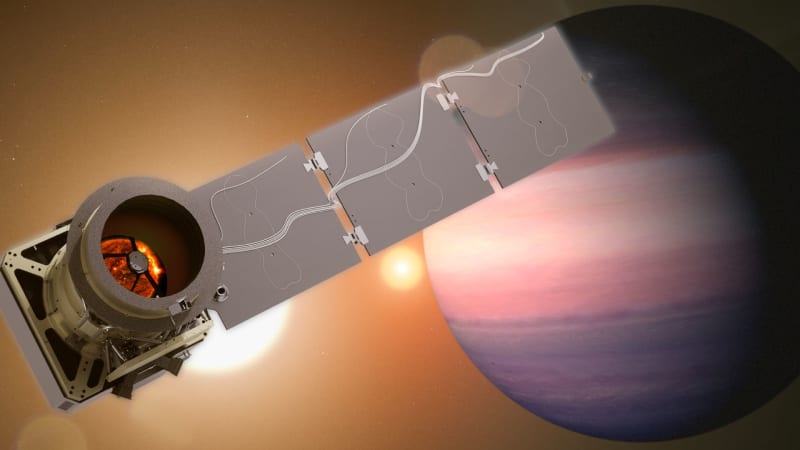
In a delightful marriage of everyday technology and space-age innovation, UK engineers are preparing to launch a satellite wrapped in what might be the most extraordinary knitwear ever created. The CarbSAR satellite, launching this Sunday, carries a radar antenna knitted on a machine typically used for making jumpers, proving that sometimes the most revolutionary solutions come from thinking outside the box.
"It's a very standard, off-the-shelf industrial machine used for knitting jumpers. All we've done is add some bells and whistles to let it stitch our special yarns," explains Amool Raina, production lead at Oxford Space Systems. Instead of ordinary wool, however, this remarkable machine works with ultra-fine tungsten wire coated in gold, creating metres of high-tech fabric that will help monitor Earth from space.
The innovative design represents a triumph of British engineering ingenuity. Oxford Space Systems partnered with Surrey Satellite Technology Limited to create a small, cost-effective spacecraft capable of capturing incredibly detailed images of Earth's surface. The knitted mesh sheets are cut into pizza slice shapes and sewn together to form a disc that, when stretched over 48 carbon fibre ribs, becomes a smooth parabolic dish perfect for radar imaging.
What makes this design particularly clever is its compact nature. The ribs wind radially around a central hub like 48 coiled tape measures, allowing the entire 140-kilogram satellite to collapse to just 75 centimeters in diameter for launch. Once in orbit, the bent carbon fibre naturally springs back into place, pulling the mesh antenna into its perfect parabolic shape with millimetre-level precision.
"But for the imaging we want to do, we also need to unfurl with precision, to get that perfect parabolic shape," says Sean Sutcliffe, the company's chief executive. "And that's the beauty of our design."
The Ripple Effect
This exciting development represents far more than just one satellite. CarbSAR's success will pave the way for Oberon, a future constellation of satellites for the British Ministry of Defence, helping the UK reclaim its position as a leader in space radar technology. After pioneering space radar development in Europe during the 1990s, Britain is now ready to reassert itself on the international stage.
The satellite's ability to capture images in all weather conditions, day or night, opens up tremendous possibilities for Earth observation. With the capability to see objects as small as 50 centimeters, the technology will prove invaluable for everything from environmental monitoring to disaster response.
Major General Paul Tedman, commander of UK Space Command, expressed his enthusiasm: "CarbSAR is a testament to the innovation and collaboration of one of the UK's most forward-thinking space companies. Space Command is excited to see CarbSAR in action."
The project has already generated significant international interest, with foreign governments expressing curiosity about adopting similar technology. This British innovation demonstrates how creative thinking, combining traditional manufacturing techniques with space technology, can lead to breakthrough solutions that benefit everyone.
As CarbSAR prepares for launch, it carries with it not just a knitted antenna, but the hopes of an entire aerospace community ready to show the world what UK engineering can achieve.
More Images




Based on reporting by New Scientist
This story was written by BrightWire based on verified news reports.
Spread the positivity! 🌟
Share this good news with someone who needs it
More Good News


DAILY MORALE
What did the thermometer say to the graduated cylinder?
EXPLORE INTEL
DAILY INSPIRATION
Hope is the thing with feathers that perches in the soul and sings the tune without the words and never stops at all.
Emily Dickinson