Volunteers Now Essential for Global Health Data Tracking
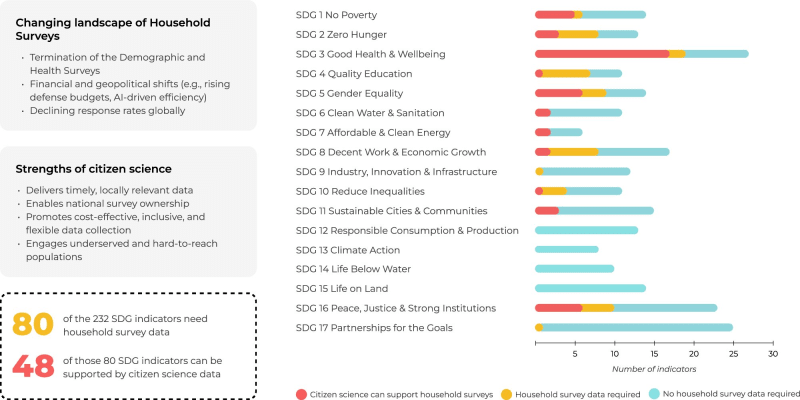
After a major data program shut down, everyday citizens are stepping up to fill critical gaps in tracking global health and wellbeing goals. Researchers say volunteer-collected data could support 60% of United Nations development indicators.
When a 30-year program tracking health data in 90 countries suddenly ended, researchers discovered an unexpected solution hiding in plain sight: everyday people collecting information about their own communities.
The Demographic and Health Survey provided vital data on population health, HIV, and nutrition across low and middle-income countries for three decades. Its termination left major gaps in tracking the United Nations Sustainable Development Goals, the global benchmarks for human progress.
Now scientists at the International Institute for Applied Systems Analysis have demonstrated that citizen science, where volunteers gather and share data, can fill these critical gaps. Their research shows this community-powered approach could support 60% of development indicators currently dependent on traditional household surveys.
"Citizen science offers a powerful way to fill this gap while engaging people directly in the issues that affect their lives," says lead researcher Dilek Fraisl. The approach provides timely, cost-efficient, and flexible data that strengthens official statistics when national budgets face growing pressure.
The potential reaches far beyond environmental research, where citizen science first gained popularity. In Ghana, volunteers measured satisfaction with public services, directly informing indicators on peace, justice, and strong institutions. The project demonstrated how everyday people can reach underserved groups and adapt to local contexts better than traditional top-down surveys.
This shift comes at a crucial time. Many high-income countries, particularly in Europe, are diverting statistical budgets to defense spending. The risk of depending on a single country or institution to provide global data has become painfully clear.
The Ripple Effect
The transformation goes beyond filling data gaps. By integrating citizen science into official statistical systems, countries can build more resilient and inclusive approaches to understanding community needs. Volunteers become active participants in shaping the information that guides policies affecting their own lives.
The research team, including experts from the Swiss Federal Statistical Office, the OECD, and the UN Statistical Commission, outlined a roadmap for making this integration work. They're addressing challenges like data quality, participation fairness, and sustainable funding to ensure citizen science becomes a reliable cornerstone of global statistics.
The approach works particularly well for health and wellbeing goals, where community knowledge and engagement matter most. Local volunteers can spot trends, reach isolated populations, and provide real-time updates that traditional surveys miss.
What started as a backup plan is becoming the future of how we understand global progress, powered by people who care most about their communities.
More Images


Based on reporting by Phys.org
This story was written by BrightWire based on verified news reports.
Spread the positivity! 🌟
Share this good news with someone who needs it


