
WashU Scientists Supercharge Antibiotics to Defeat Superbugs with Tiny Nanoparticles
Researchers at Washington University in St. Louis have discovered a groundbreaking way to restore the power of failing antibiotics by pairing them with innovative two-faced nanoparticles. This exciting breakthrough offers fresh hope in the fight against drug-resistant bacteria that threaten human health worldwide.
In a triumph of scientific ingenuity, researchers at Washington University in St. Louis have found a remarkable way to breathe new life into antibiotics that bacteria have learned to resist. By combining traditional medicines with cleverly designed nanoparticles, they've opened a promising new chapter in the battle against superbugs.
Professor Yan Yu, the Art Krieg Professor of Chemistry at WashU, led the international team that achieved this breakthrough. Their secret weapon? Tiny nanoparticles with two distinct faces, named after Janus, the Roman god of beginnings and endings. It's a fitting name for a discovery that could mark both the end of an era of antibiotic resistance and the beginning of renewed hope.
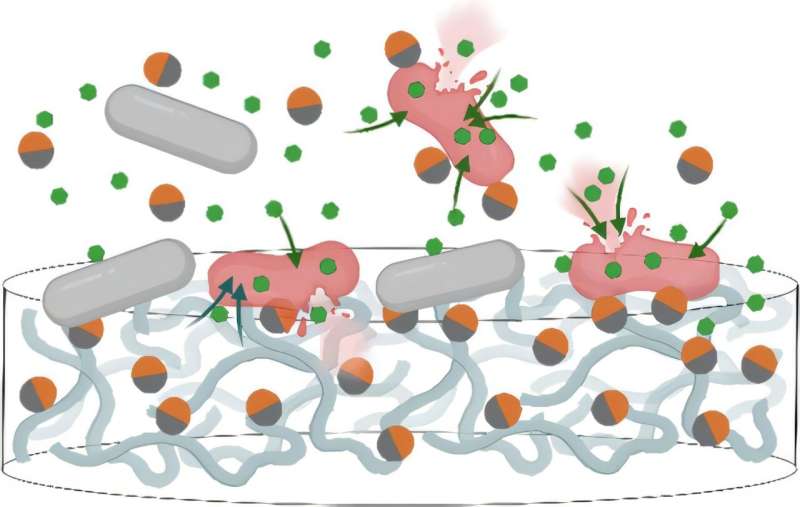
These remarkable nanoparticles work like a perfectly coordinated team. One side carries positively charged molecules that latch onto bacterial cell walls like a key finding its lock. The other side features water-repelling molecules that rupture those walls, creating openings for antibiotics to rush in and do their job. Yu describes it beautifully as delivering "two punches in one shot."
The results have been nothing short of impressive. Working with colleagues from Indiana University and Osaka University in Japan, the team tested their approach on drug-resistant strains of E. coli and A. baumannii, two bacteria that pose serious health risks. The combination of Janus nanoparticles and antibiotics proved far more effective than antibiotics alone. In one particularly encouraging test, they successfully targeted an antibiotic-resistant strain of A. baumannii collected from a hospital, the exact kind of real-world threat that healthcare workers face daily.
The Ripple Effect: What makes this discovery especially promising is its potential to stay effective over time. Unlike some previous approaches, bacteria would likely need a very long time to develop resistance to these two-pronged nanoparticles. And even if they eventually did, researchers can simply adjust the molecules on each side of the particles. It's like having an endless toolkit for fighting infections.
Yu, who joined WashU just last July, is already looking ahead with excitement. She envisions collaborations across the university to test these nanoparticles in hospital settings, perhaps helping wounds heal in patients who've run out of antibiotic options. She's also eager to work with engineering colleagues to manufacture these particles in large quantities for widespread clinical use.
"WashU has so many talented researchers to work with and learn from," Yu shared warmly. "This is the ideal place to move my group's research forward."
This research, published in the prestigious journal Nano Letters, represents more than just a laboratory success. It offers genuine hope to patients facing life-threatening infections, to healthcare workers watching their treatment options dwindle, and to families worried about a future where common infections might become untreatable. The superbugs may have evolved, but thanks to brilliant minds like Yu and her team, our defenses are evolving too, and perhaps even faster.
More Images
Based on reporting by Phys.org
This story was written by BrightWire based on verified news reports.
Spread the positivity! 🌟
Share this good news with someone who needs it
More Good News
 Health & Wellness
Cornell Scientists' Cancer-Fighting Particles Bring Hope Without Chemo Side Effects
 Health & Wellness
Natural Amino Acid Shows Promise in Preventing Cavities Before They Start
 Health & Wellness
Vanderbilt Study: Weight Loss Treatments Build Healthier Bodies Beyond the Scale
DAILY MORALE
What did the thermometer say to the graduated cylinder?
EXPLORE INTEL
DAILY INSPIRATION
Hope is the thing with feathers that perches in the soul and sings the tune without the words and never stops at all.
Emily Dickinson