
Why Gardening May Be the Best Habit for Kids
Two experts explain how getting children's hands dirty in soil builds responsibility, calms anxiety, and reconnects them with nature without needing a backyard. Even balcony pots and windowsill sprouts can transform screen time into wonder time.
In many Indian homes, childhood has moved indoors, with screens replacing soil and sunlight. Two experts say gardening offers a powerful antidote that works even in the smallest spaces.
Dr. Kaveri Subbiah, a developmental pediatrician in Chennai, and Asmita Purohit, a sustainability expert in Maharashtra, agree that gardening gives children something screens cannot: active participation in the natural world. Touching soil, pouring water, and watching insects stimulates developing senses in ways passive scrolling never will.
The benefits run deeper than many parents realize. Gardening helps regulate children's nervous systems, offering especially valuable calming effects for kids with ADHD or autism, Dr. Kaveri explains.
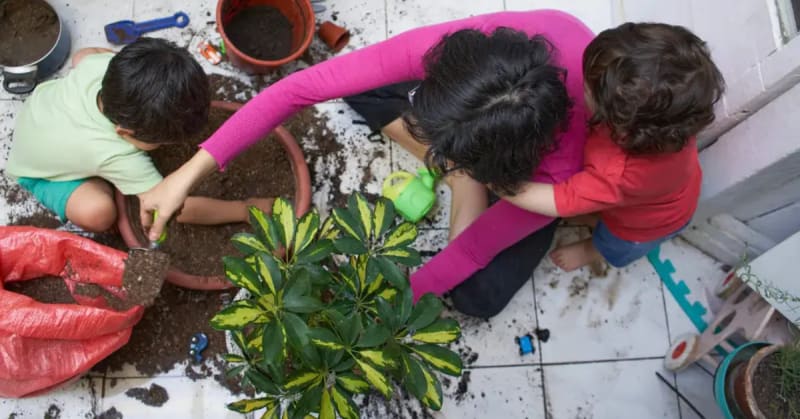
Parents often assume children need to understand gardening concepts before starting. Dr. Kaveri says that thinking gets it backward: "They may not understand, but they will enjoy it." Children as young as 18 months can splash water and touch dirt alongside adults, captivating their natural curiosity.
As kids grow, their role deepens. "They become the parent of that plant," Dr. Kaveri notes, building responsibility through ownership rather than lectures.
Asmita sees this transformation with her own daughter. Children fascinated by finding worms, snails, and butterflies turn gardens into exciting habitats to explore. They love the entire journey, not just harvesting, and often eat vegetables they grow themselves more eagerly than store-bought versions.
Safety concerns about sun exposure and soil germs make some parents hesitate. Dr. Kaveri points to the "hygiene hypothesis," which suggests early exposure to soil microbes actually strengthens immune systems. Simple precautions like gardening during cooler hours and routine deworming address most risks without eliminating benefits.
The space excuse does not hold up either. Asmita recommends starting with fast-growing options like microgreens (methi, fennel, mustard) that sprout in five to seven days on balconies or windowsills. Mint, tomatoes, and touch-me-not plants engage multiple senses and need minimal room.
The key is letting children lead without pressure for perfection. Give them lightweight tools with rounded edges, their own small pot to decorate, and freedom to experiment. When frustration appears, pause rather than push.
Why This Inspires
This approach flips conventional parenting wisdom. Instead of scheduled activities and structured learning, gardening invites children to slow down and notice. A seed becoming a sprout teaches patience better than any timer. A wilted plant teaches consequences more gently than punishment.
The magic happens in those unstructured moments: a child discovering a ladybug, tasting mint they grew, or proudly showing off painted pots. These experiences build not just knowledge but wonder, the foundation of lifelong curiosity.
Parents do not need gardens or expertise. They need only willingness to get dirty alongside their children and let nature do the teaching.
More Images
%2Fenglish-betterindia%2Fmedia%2Fmedia_files%2F2026%2F01%2F07%2Fgardening-with-kids-feature-image-1-2026-01-07-21-11-28.jpg)
%2Ffilters%3Aformat(webp)%2Fenglish-betterindia%2Fmedia%2Fmedia_files%2F2026%2F01%2F06%2Fteaching-kids-gardening-2026-01-06-14-30-51.jpg)
%2Ffilters%3Aformat(webp)%2Fenglish-betterindia%2Fmedia%2Fmedia_files%2F2026%2F01%2F07%2Fkids-planting-1-2026-01-07-21-42-13.jpg)
Based on reporting by The Better India
This story was written by BrightWire based on verified news reports.
Spread the positivity! 🌟
Share this good news with someone who needs it


