Wolf Pup's 14,400-Year-Old Meal Solves Ice Age Mystery
Scientists decoded the DNA of woolly rhino meat found in a perfectly preserved wolf cub's stomach, revealing surprising clues about what caused the species to vanish 14,000 years ago. The discovery shows the giant herbivores thrived until climate change struck suddenly.
A two-month-old wolf pup's last dinner just rewrote part of ice age history, thanks to Siberia's natural deep freeze.
The perfectly mummified wolf cub was discovered near Tumat village in northeastern Siberia in 2011. A landslide had collapsed her den 14,400 years ago, trapping her and her packmates inside and preserving them in the frigid permafrost for millennia.
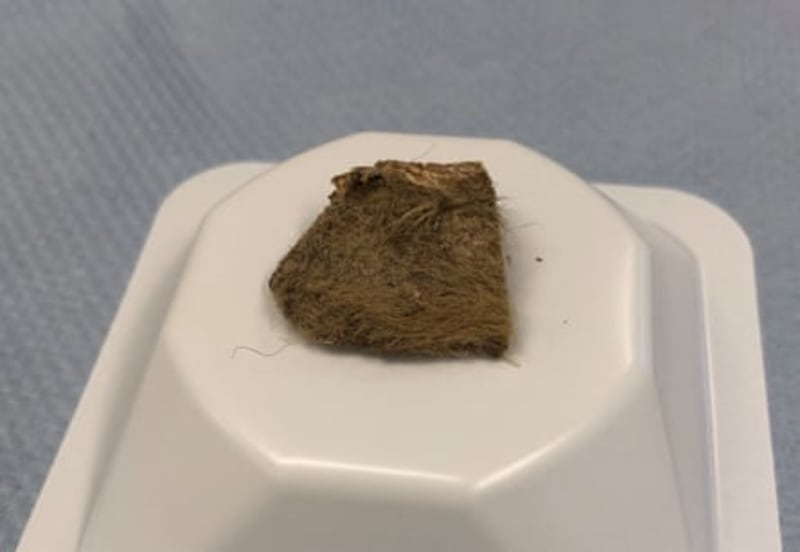
When scientists examined the pup's stomach contents, they found something remarkable: a chunk of woolly rhinoceros meat. The hairy, partially digested tissue gave researchers at Stockholm's Centre for Palaeogenetics an unprecedented opportunity to study a species that disappeared around 14,000 years ago.
Dr. Camilo Chacón-Duque and his team successfully decoded the woolly rhino's complete genome from the ancient meal. It's the first time scientists have achieved this feat with an ice age animal found inside another creature's stomach, and it represents the youngest woolly rhino genome ever recovered.
The team expected to find signs of "genomic erosion," where struggling species lose genetic diversity through inbreeding and population decline. That pattern typically makes animals more vulnerable to extinction.
Instead, they discovered something completely different. The woolly rhino's DNA showed a large, stable, and healthy population right up until the end.
After comparing this genome with specimens from 18,000 and 49,000 years ago, researchers concluded the species died out rapidly. Whatever killed the woolly rhinoceros struck in just 300 to 400 years, a blink of an eye in evolutionary time.
Why This Inspires
This discovery shows how modern science can unlock ancient mysteries in unexpected ways. A wolf pup's final meal, preserved by chance for thousands of years, just answered questions scientists have puzzled over for decades.
The findings also reveal something hopeful about nature's resilience. Woolly rhinos thrived for 15,000 years after humans arrived in Siberia, suggesting they coexisted successfully with our ancestors. Professor Love Dalén notes this means hunting probably didn't cause their extinction.
The real culprit appears to be an abrupt warming period called the Bølling-Allerød Interstadial, which transformed the landscape between 14,700 and 12,900 years ago. The climate shifted faster than the rhinos could adapt, changing their grassland habitat too quickly.
The discovery reminds us that understanding past extinctions helps protect species facing rapid change today, giving conservationists valuable insights for the challenges ahead.
More Images


Based on reporting by Google News - Science
This story was written by BrightWire based on verified news reports.
Spread the positivity! 🌟
Share this good news with someone who needs it