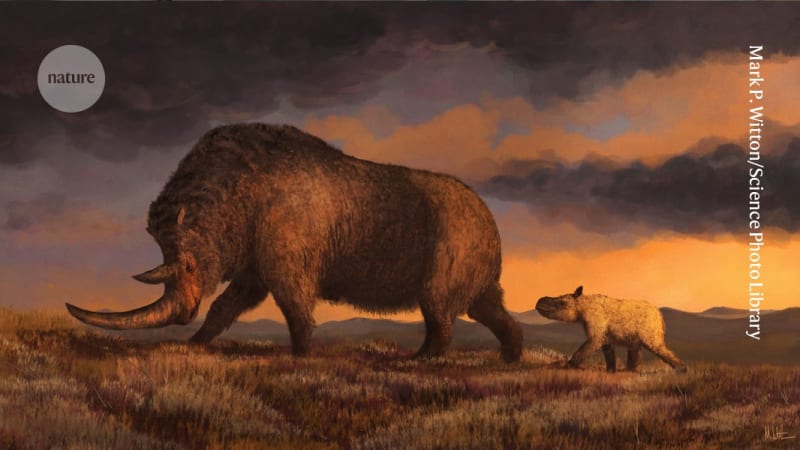
Wolf Pup's Last Meal Reveals Woolly Rhino's Final Days
A 14,400-year-old wolf pup found frozen in Russia had woolly rhino meat in its stomach, offering scientists a rare window into one of the last members of an extinct species. The discovery helps researchers understand how these ice age giants disappeared from Earth.
Scientists just got an unexpected glimpse into the final chapter of the woolly rhinoceros, thanks to a hungry wolf pup from 14,400 years ago. When researchers examined the frozen remains of an ice age wolf found in Russia, they discovered something remarkable in its stomach: tissue from one of the world's last surviving woolly rhinos.
The discovery happened almost by accident. Researchers initially thought the stomach tissue belonged to a cave lion, another extinct species they were studying. But when they extracted DNA and ran tests, they got a surprise: the genetic material matched a woolly rhinoceros instead.
What makes this find so special is its timing. The tissue dates to roughly 14,400 years ago, making it one of the youngest known woolly rhino samples ever found. That means this particular rhino lived just as its species was vanishing from Earth.
"Finding one of the last members of a species is very rare," says molecular ecologist Morten Allentoft from Curtin University in Australia. The discovery gives scientists direct access to the gene pool of a species right at the moment of its disappearance.
The genetic analysis, published in Genome Biology and Evolution, suggests woolly rhinos went extinct rapidly rather than gradually declining over thousands of years. The population collapse likely happened because of swift climate warming at the end of the ice age.
Why This Inspires
This frozen time capsule shows how nature preserves stories we never expected to read. A single wolf pup's meal, preserved for over 14,000 years, now helps scientists piece together one of evolution's mysteries.
The research also demonstrates how accidents and mistakes in science can lead to breakthroughs. What started as a case of mistaken identity became an important data point in understanding how species respond to rapid climate change.
Palaeoecologist Nic Rawlence from the University of Otago calls it amazing that researchers could generate a complete genome from stomach contents. "The study adds another important time point in the evolutionary story of woolly rhino," he says.
Today's scientists are using this ancient DNA to better understand how large mammals cope with environmental change. Those lessons might help protect endangered species facing similar rapid shifts in their habitats right now.
One wolf's dinner has become a gift to modern science, proving that even the smallest discoveries can unlock big answers about our planet's past and future.
More Images



Based on reporting by Google News - Science
This story was written by BrightWire based on verified news reports.
Spread the positivity! 🌟
Share this good news with someone who needs it


