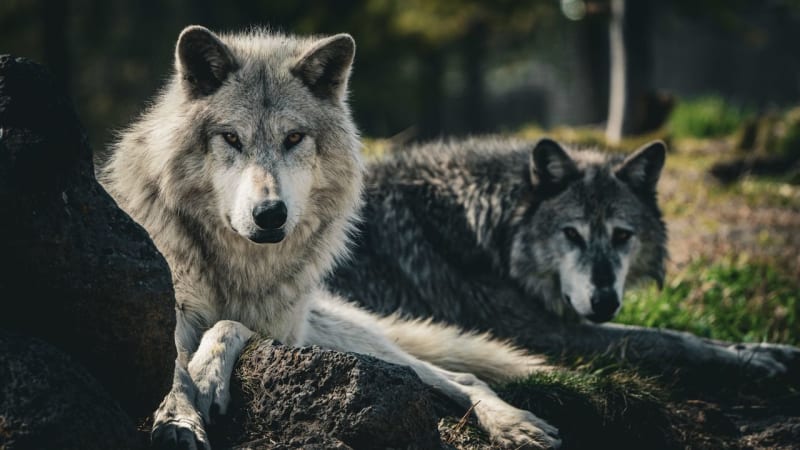
Wolf Reintroduction in Yellowstone: A Scientific Puzzle of Ecological Transformation
A groundbreaking scientific debate explores how wolf reintroduction in Yellowstone transformed the ecosystem. Researchers disagree on the exact mechanisms of ecological change, highlighting the complex interactions between predators and their environment.
In the sweeping landscapes of Yellowstone National Park, a fascinating scientific debate is unfolding about the dramatic ecological changes that followed wolf reintroduction in the 1990s. Researchers are carefully examining how these iconic predators may have reshaped an entire ecosystem, challenging long-held assumptions about environmental transformation.
When wolves were reintroduced to Yellowstone after being largely extinct since the 1920s, scientists observed remarkable changes: elk populations declined, willow and aspen trees flourished, and beaver populations increased. A landmark study published in January suggested that wolves triggered a comprehensive 'trophic cascade' - a complex chain reaction through the food web that benefitted multiple species.
The original research claimed that between 2001 and 2020, willow crown volume increased by an astounding 1,500%, directly linking this growth to wolf predation on elk. However, wildlife ecologist Daniel MacNulty from Utah State University and colleagues have challenged these conclusions, arguing that the methodology used to measure willow growth was fundamentally flawed.
MacNulty's team points out that the original study's analysis of willow measurements was problematic, essentially comparing data from different locations across various years in a way that could misrepresent actual ecosystem changes. While acknowledging that wolf recovery definitely impacted Yellowstone's ecosystem - such as increasing carrion for bears, coyotes, and eagles - he emphasizes that elk population decline cannot be attributed solely to wolves.
The original study's author, William Ripple from Oregon State University, strongly defends the research, maintaining that their methods are scientifically sound and that a significant trophic cascade did occur. Ripple argues that their modeling approach is standard and rejects claims of fatal methodological errors.
This scientific debate highlights the complexity of ecosystem dynamics. Wolves are not the only predators affecting elk populations; grizzly bears and mountain lions also play crucial roles in population control. The nuanced interplay between different species demonstrates that ecological transformations are rarely simple or straightforward.
What remains clear is that Yellowstone continues to be a living laboratory of ecological interactions. The reintroduction of wolves has undeniably sparked significant changes, even if the precise mechanisms are still being unraveled by dedicated researchers committed to understanding our natural world's intricate balance.
Based on reporting by Live Science
This story was written by BrightWire based on verified news reports.
More Good News
 🌍 Planet
Tanzania's Shifting Landscapes: Game Reserves Spark Community Tensions and Conservation Debates
 🌍 Planet
Breakthrough Year: 7 Remarkable Environmental Victories Reshape US Conservation
 🌍 Planet