
Hyundai's Electric Minivan Challenges Tesla's Market Gap
While Tesla struggles with the Cybertruck, Hyundai is filling a gap families actually need with the STARIA Electric minivan. The spacious, zero-emission vehicle launches in Korea and Europe this year, offering practical alternatives for families and small businesses.
📺 Watch the full story above
Hyundai just launched an electric minivan that solves a problem Tesla won't touch: giving families and small businesses a practical, zero-emission vehicle they can actually use every day.
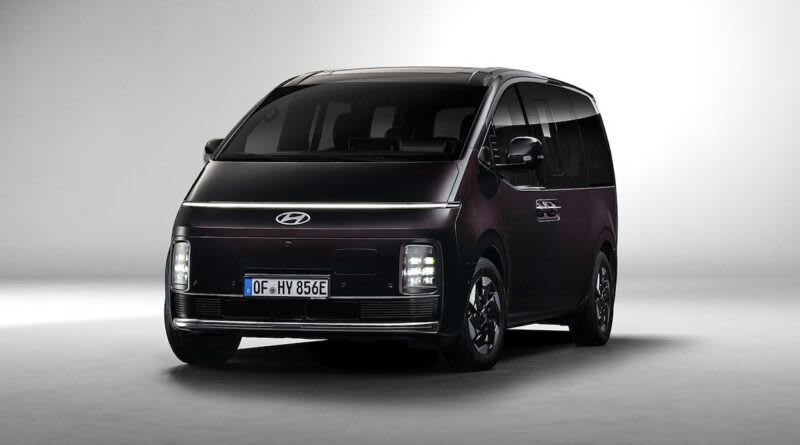
The STARIA Electric minivan debuted at the Brussels Motor Show in January 2025, designed for families, shuttle operators, and anyone who needs more than a cramped sedan or an oversized pickup truck. Hyundai is betting that people want space, comfort, and practicality over flashy features.
The vehicle's standout feature is simple but revolutionary: headroom. While the Cybertruck creates a tank-like environment with limited visibility, the STARIA offers a light, airy cabin with generous space across all rows. A flat floor and high roofline make it feel more like a comfortable lounge than a cramped car.
Hyundai borrowed proven technology from its successful IONIQ lineup, including the same 800-volt charging system used in the IONIQ 5, 6, and 9. This means fast charging with minimal heat generation, letting drivers recharge quickly on extended trips. The company is also listening to what drivers actually want: real buttons and knobs alongside touchscreen controls, not the touch-only interfaces that frustrated so many early EV adopters.
The minivan comes in multiple configurations, including a 7-seat luxury model with up to 435 liters of luggage space. Adjustable seating layouts let owners adapt the interior for daily commutes, family road trips, professional passenger transport, or weekend adventures. It's the kind of versatility that makes electric vehicles work for real life, not just test drives.
Hyundai is launching the STARIA in Korea and Europe later this year, directly competing with Volkswagen's ID. Buzz, which has found solid success in European markets. The company hasn't announced US plans yet, but there's reason for hope.
The Ripple Effect: This launch signals a broader shift in the EV market. Instead of chasing flashy designs or extreme performance specs, automakers are focusing on vehicles that solve everyday transportation needs. The STARIA proves that electric vehicles can be practical workhorses for families and businesses, not just luxury toys or statement pieces.
California's proposed $200 million EV rebate program could open doors for vehicles like the STARIA in US markets. Toyota is already bringing its electric C-HR crossover to America this year, and Ford launched a California-focused Mustang Mach-E, showing that practical electric vehicles still have a future in the US despite federal policy uncertainty.
The minivan segment has long been overlooked in the electric vehicle revolution, even though it's perfect for families making short trips, school runs, and weekend getaways. Hyundai is proving that sometimes the most exciting innovation isn't the flashiest product but the one that actually makes people's lives easier.
Practical electric vehicles are finally getting the attention they deserve.
More Images
Based on reporting by CleanTechnica
This story was written by BrightWire based on verified news reports.
Spread the positivity! 🌟
Share this good news with someone who needs it


