
Sweat Sensor Tracks Sleep Hormones Without Waking You Up
University of Texas researchers created a wearable sensor that tracks sleep hormones through sweat, eliminating the need to wake patients every few hours for testing. The device continuously measures cortisol and melatonin, offering a breakthrough for the millions struggling with sleep issues.
📺 Watch the full story above
Imagine improving your sleep without being jolted awake repeatedly for testing. That's exactly what researchers at the University of Texas at Dallas have made possible with a groundbreaking sweat-based sensor.
The wearable device tracks cortisol and melatonin, the two hormones that control when you feel awake and when you feel sleepy. Unlike current methods that require waking patients throughout the night to collect saliva samples, this sensor works continuously while you sleep naturally.
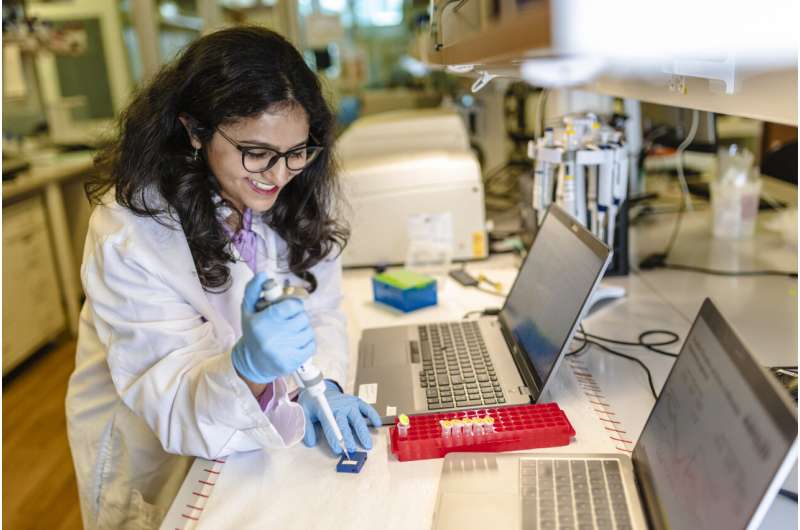
Annapoorna Ramasubramanya, a biomedical engineering doctoral student, led the validation study that tested 43 people wearing the sensor for 48 hours. The results matched traditional saliva testing, proving the device works just as accurately without any disruption.
The breakthrough comes at a critical time. Our constant exposure to screens and technology has drastically changed how much and how well we sleep, affecting mental health and overall wellness. Current fitness trackers can only estimate sleep quality based on movement and heart rate, but this new sensor measures the actual hormones responsible for sleep.
Dr. Shalini Prasad, who heads the bioengineering department, partnered with Texas biotech company EnLiSense to develop the CORTI device platform. The technology uses passive sweat, the moisture your body naturally produces without exercise or heat, to continuously monitor hormone levels.
The innovation earned Ramasubramanya a New Investigator Award at the World Sleep Congress in Singapore this past September. Her unique contribution was translating raw device data into meaningful thresholds that doctors and patients can actually use to improve sleep and manage stress.
Interestingly, Ramasubramanya credits her 16 years playing the veena, an Indian stringed instrument, for inspiring her approach to analyzing circadian rhythm data. The mathematical principles of rhythm and pattern in Carnatic music directly informed how she interpreted the hormone fluctuations the sensor detected.
The Ripple Effect
This technology could transform sleep medicine for everyone, not just people with diagnosed disorders. Shift workers, frequent travelers, and anyone struggling with technology-disrupted sleep patterns could use objective hormone data to make real improvements. Since sleep quality connects directly to mental health, the benefits extend far beyond just feeling more rested.
The CORTI sensor is moving toward commercialization through EnLiSense, bringing hope that better sleep might soon be just a wearable device away.
More Images



Based on reporting by Medical Xpress
This story was written by BrightWire based on verified news reports.
Spread the positivity! 🌟
Share this good news with someone who needs it


