10 Indian Homestays Where Nature and Culture Come First
Travelers seeking authentic experiences are finding a new kind of stay across India. These 10 eco-friendly homestays blend local traditions with sustainable practices that heal the land.
More travelers are saying no to cookie-cutter hotels and yes to places that feel real. Across India, a quiet movement of homestays is proving you can sleep well and do good at the same time.
These aren't just places with a recycling bin in the corner. From Assam to Rajasthan, hosts are building with mud, powering with sun, and feeding guests from gardens they tend themselves.
Near Kaziranga National Park, Medini Homestay introduces visitors to Assamese weaving traditions and cruelty-free silk. Solar panels power the rooms, and every meal showcases organic ingredients grown nearby.
In Uttarakhand, Aashraya on the Ganga sits among 1,000 trees, 45 kilometers from Rishikesh. The retreat composts food waste in just five days and uses recycled water to keep riverside gardens thriving.
A mother-daughter team runs Avabodha in Panchgani, Maharashtra, where rainwater harvesting and organic farming sustain the property. Guests wake to river views and fall asleep to the sounds of the Krishna flowing nearby.
The Nilgiris hills shelter O'land Plantation Stay, a 120-acre retreat combining colonial architecture with modern sustainability. Solar panels and compressed earth blocks blend seamlessly with tea tastings and wildlife walks.
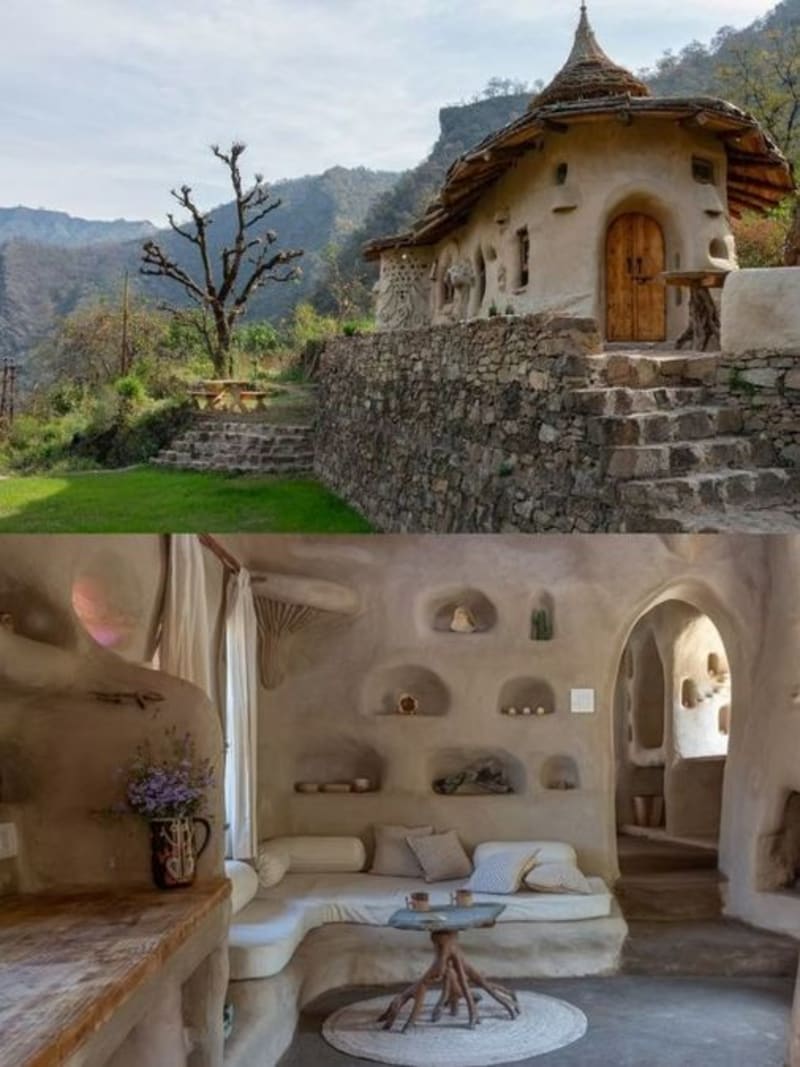
Down in Kanyakumari, Muthunandhini Palace was built entirely from mud and clay, featuring century-old artifacts and upcycled windows that naturally cool the rooms. The organic gardens honor farming methods passed down through generations.
Kerala's Greenara Mud Homestay tells perhaps the most hopeful story. What was once barren mining land is now a thriving forest surrounded by seven water bodies, proving damaged earth can heal.
In Nashik, Adiem Kaanan Farmstay welcomes guests to a six-acre property powered by solar energy and a 32,000-liter rainwater system. Visitors pick fruit, watch birds, and eat meals made from ingredients grown steps from the kitchen.
Ratnagiri's Ranade Homestay sits on a 40-acre Alphonso mango farm where guests sleep in mud rooms and learn organic farming firsthand. Every meal celebrates the golden fruit that makes the region famous.
Tiny Farm Fort in Rishikesh stands as a monument to community. Ninety volunteers from 18 countries built the forest retreat using cob, creating thick mud walls and rooftop gardens with zero waste.
Jaipur's Vinyasa Earth rounds out the list, built from mud, bamboo, lime, and cow dung. The cottages stay naturally cool and double as creative spaces hosting art residencies and workshops.
The Ripple Effect
These homestays do more than offer a bed for the night. They're teaching guests that comfort doesn't require concrete, that luxury can mean a meal from the garden, and that slowing down might be the most radical act of all.
Each property creates jobs for local communities, preserves traditional building methods, and shows other hosts what's possible. When mining land becomes forest and solar panels replace generators, the message spreads.
This isn't tourism that takes. It's tourism that gives back, one mud wall and composted meal at a time.
Based on reporting by The Better India
This story was written by BrightWire based on verified news reports.
Spread the positivity!
Share this good news with someone who needs it