100 Women Now Own the Waste System That Once Shamed Them
Women sanitation workers in Khowai, Tripura, went from being called "kachrawala" (trash people) to owning the entire waste management system they built. The town is now the first in northeast India with worker-owned waste infrastructure.
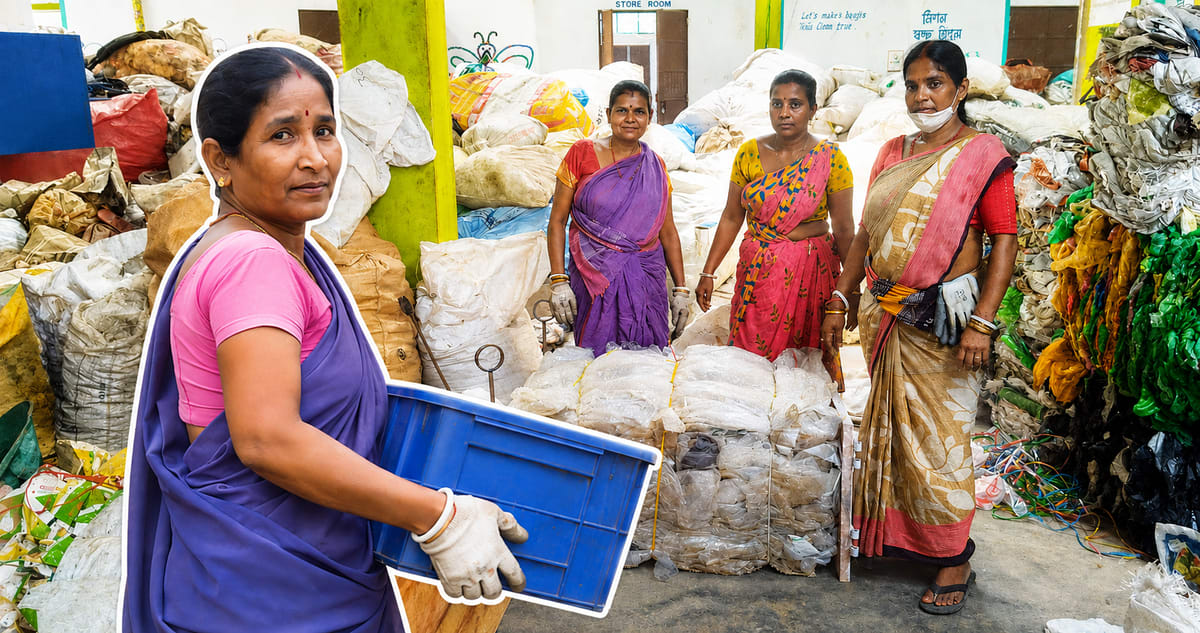
For nine years, Pinki Kar Deb sorted rotting garbage with her bare hands on a street corner in Khowai, Tripura, while townspeople called her "kachrawala" and quickened their pace to avoid the smell. Today, she owns and runs the waste management center where she works, eats lunch inside without a mask, and proudly calls herself "malik" (owner) instead of employee.
Pinki is one of a hundred women, affectionately called "didis," who now own and operate Khowai's entire waste system through the Khowai Waste to Wealth Producer Society. The cooperative, registered in April and May 2026, transformed contract workers with no job security into co-owners of the infrastructure that keeps their town clean.
The shift began when IAS officer Nirmal Kumar asked a simple question: why were the people keeping the town clean the ones with the least control over their work? After visiting an Amul dairy cooperative, he wondered if the same model could work for waste management.
Samir Agartala, a 31-year-old waste expert who spent 90 days training in Bengaluru, helped turn that vision into reality. Working in partnership with the municipal corporation, he brought city-scale waste science to a small hill town while ensuring the didis maintained full ownership.
The system works through careful teamwork. Every morning before seven, the hundred women sign in and split into teams: door-to-door collection, segregation at seven ward centers, final sorting at the tertiary facility Pinki heads, and truck routes to keep Khowai genuinely bin-free.
They collect nearly 1,500 kg of dry waste and 3,000 kg of wet waste daily from 4,500 homes across 15 wards. Uma Rani Deb Das leads the door-to-door team that visits every household each morning, teaching families to separate their waste into three categories before collection.
The Ripple Effect
Khowai became the first city in northeast India to introduce secondary segregation at this scale, proving that small towns can build waste infrastructure as sophisticated as major cities. The women who were once seen as untouchable now run a system that other municipalities study and hope to replicate.
The overflowing bins that once dotted street corners have disappeared. The smell that made people cover their noses is gone. The shame that came with the word "kachrawala" has been replaced with ownership, dignity, and a paycheck that reflects the value of their expertise.
Today, when Pinki walks down that same lane at seven in the morning, she sees something different: a town that learned to respect the work that keeps it running, and a hundred women who proved that the people closest to the problem often build the best solutions.
More Images
%2Fenglish-betterindia%2Fmedia%2Fmedia_files%2F2026%2F08%2F24%2F1-2026-08-24-08-12-24.png)
%2Ffilters%3Aformat(webp)%2Fenglish-betterindia%2Fmedia%2Fmedia_files%2F2026%2F08%2F24%2F2-2026-08-24-08-14-11.jpg)
%2Ffilters%3Aformat(webp)%2Fenglish-betterindia%2Fmedia%2Fmedia_files%2F2026%2F08%2F24%2F3-2026-08-24-08-15-15.jpg)
Based on reporting by The Better India
This story was written by BrightWire based on verified news reports.
Spread the positivity!
Share this good news with someone who needs it