1,000-Year-Old Chola Plates Return Home After 300 Years
After three centuries in a Dutch archive, ancient copper plates documenting India's ocean-spanning Chola Empire are finally home. Their inscriptions reveal a civilization so confident it supported Buddhist monasteries built by foreign rulers.
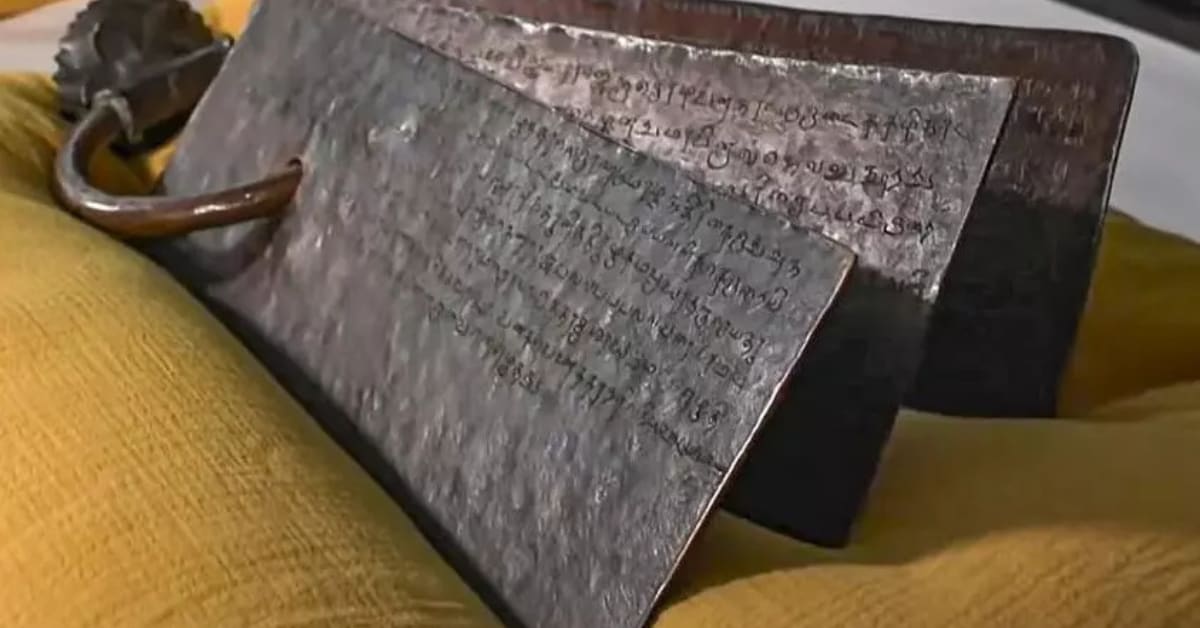
Someone in 18th-century Nagapattinam made a desperate choice: bury the most important documents of their vanished empire or lose them forever to Dutch colonizers. They chose burial, hoping someone would return for the 24 copper plates bound with a bronze royal seal.
That return took 300 years. On May 16, 2025, Prime Minister Narendra Modi received the ancient Chola copper plates in The Hague after a Dutch university committee confirmed they'd been taken without consent around 1712.
What came home wasn't just beautiful metalwork weighing 30 kilograms. These 11th-century plates tell the story of a civilization that commanded seas from Tamil Nadu to Sumatra with remarkable openness.
The inscriptions record something extraordinary: Hindu emperor Rajaraja Chola I granting land and tax revenue from the village of Anaimangalam to support a Buddhist monastery. The monastery's founder wasn't even Indian but Sri Mara Vijayottunggavarman, a ruler from the distant Srivijaya Empire in present-day Malaysia and Sumatra.
A Hindu king formalizing support for a Buddhist institution built by a Southeast Asian ruler reveals the Chola Empire's stunning cultural confidence. This wasn't tokenism but practical diplomacy in a port city where merchants from Arabia, China, Southeast Asia, and East Africa traded spices, textiles, and precious woods.
Nagapattinam thrived as one of the Indian Ocean's busiest ports, protected by the Chola navy. Maritime trade contributed over 30 percent of the empire's revenue at its peak, funding both local development and international relationships.
Why This Inspires
The plates capture a moment when power didn't demand cultural uniformity. The same dynasty that launched naval expeditions to protect trade routes also quietly ensured that foreign religious institutions received state support and legal protection.
Leiden University's restitution committee spent years verifying the plates' origins before recommending their return. Their decision reflects growing global recognition that cultural heritage belongs with the communities that created it, not in archives thousands of miles away.
The inscriptions detail land boundaries, irrigation responsibilities, and tax exemptions with administrative precision. They offer researchers a rare window into how the Chola state actually functioned beyond royal proclamations and temple inscriptions.
For modern India, these plates represent more than ancient glory. They document ancestors who saw diversity as strength, who built prosperity through openness rather than isolation, and who believed supporting others' institutions enhanced rather than threatened their own power.
After surviving burial, colonial extraction, and centuries of separation, the Anaimangalam copper plates are finally where they were always meant to be.
More Images
.png)
%2Fenglish-betterindia%2Fmedia%2Fmedia_files%2F2026%2F05%2F20%2F1-2026-05-20-12-27-30.png)

Based on reporting by The Better India
This story was written by BrightWire based on verified news reports.
Spread the positivity!
Share this good news with someone who needs it