11 Deaf Men Made NASA's Space Program Possible in 1958
Before humans could safely travel to space, NASA needed test subjects who wouldn't get motion sick. They found them at Gallaudet University, where eleven Deaf men became unsung heroes of space exploration.
In 1958, NASA faced a problem that threatened to ground the entire space program before it even started. Every test subject exposed to weightlessness and rotation became violently motion sick, making it impossible to gather the data needed to send humans safely into space.
Then someone had a brilliant idea. They turned to Gallaudet University in Washington, D.C., where they recruited eleven Deaf men whose unique physiology would change space exploration forever.
Most of these volunteers had lost their hearing to spinal meningitis as children. The same illness that took their hearing also damaged their vestibular system, the part of the inner ear that causes motion sickness. They were the perfect test subjects because their bodies simply couldn't be overwhelmed by the sensations that made everyone else sick.
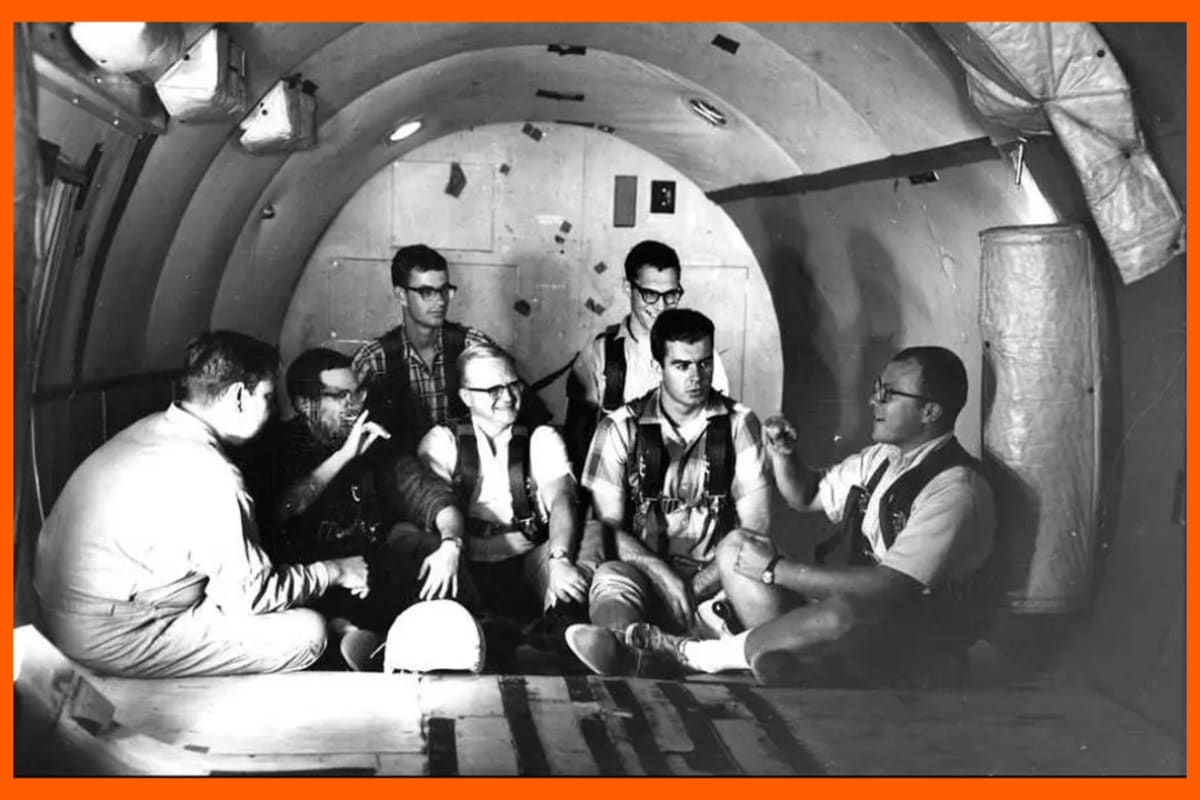
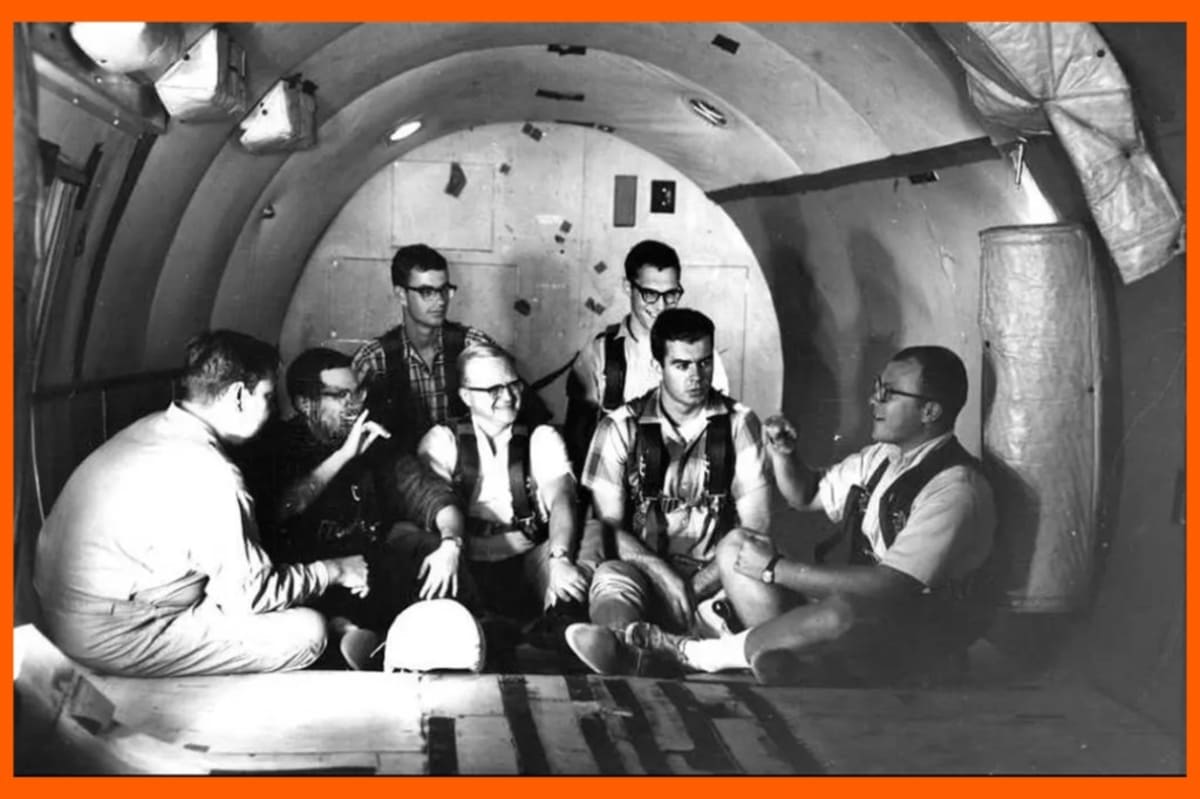
The Gallaudet Eleven, ranging in age from 25 to 48, included Harold Domich, Robert Greenmun, Barron Gulak, Raymond Harper, Jerald Jordan, Harry Larson, David Myers, Donald Peterson, Raymond Piper, Alvin Steele, and John Zakutney. What NASA asked of them sounds almost unbelievable today.
They spun in centrifuges that would make most people pass out. They flew in zero-gravity aircraft nicknamed the "Vomit Comet" for obvious reasons. Four of them spent twelve straight days in a room that rotated at ten revolutions per minute, never stopping.
The most telling experiment happened on a ferry in the choppy waters off Nova Scotia. While the Gallaudet volunteers played cards and chatted, the NASA researchers became so seasick they had to cancel the test. The men they were studying reported no discomfort at all and said they enjoyed the experience.
Actor and Deaf activist Nyle DiMarco recently brought their story back into the spotlight on social media. His post celebrating their contribution to the Artemis II mission has received nearly 400,000 likes.
The Ripple Effect
Without the Gallaudet Eleven, there would have been no Mercury program. Without Mercury, no Apollo moon landing. Without Apollo, no current Artemis missions sending humans back to the moon after fifty years.
Barron Gulak later reflected on the experience with characteristic humility. "In retrospect, yes, it was scary, but at the same time we were young and adventurous," he said.
Harry Larson's son recently shared that his father rarely talked about his role in space history. The eleven men were finally recognized with a plaque at Gallaudet University, a small tribute to volunteers who gave NASA the foundation it needed to reach the stars.
Sixty years later, when astronauts travel 252,000 miles from Earth and return safely, they're standing on the shoulders of eleven heroes most people have never heard of.
More Images


Based on reporting by Upworthy
This story was written by BrightWire based on verified news reports.
Spread the positivity!
Share this good news with someone who needs it