110-Pound Python Gets Human Cancer Treatment, Beats Tumor
A 23-year-old reticulated python at England's Chester Zoo became the first snake to receive electrochemotherapy, a cancer treatment typically reserved for humans. Jodie Foster is now cancer-free and back to her feisty self.
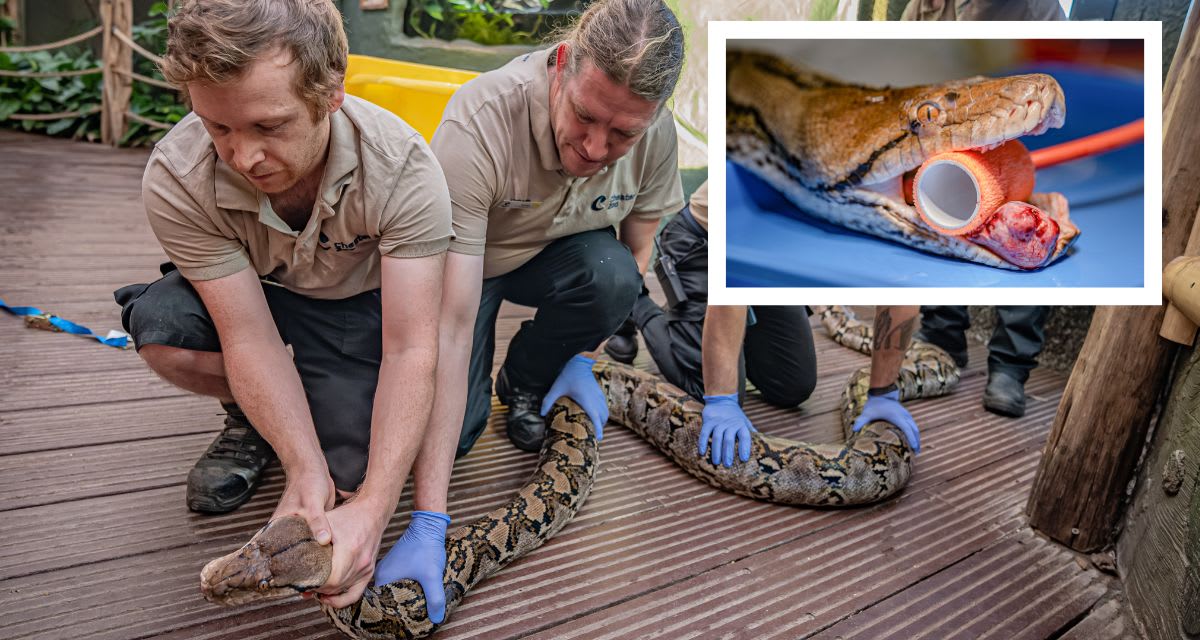
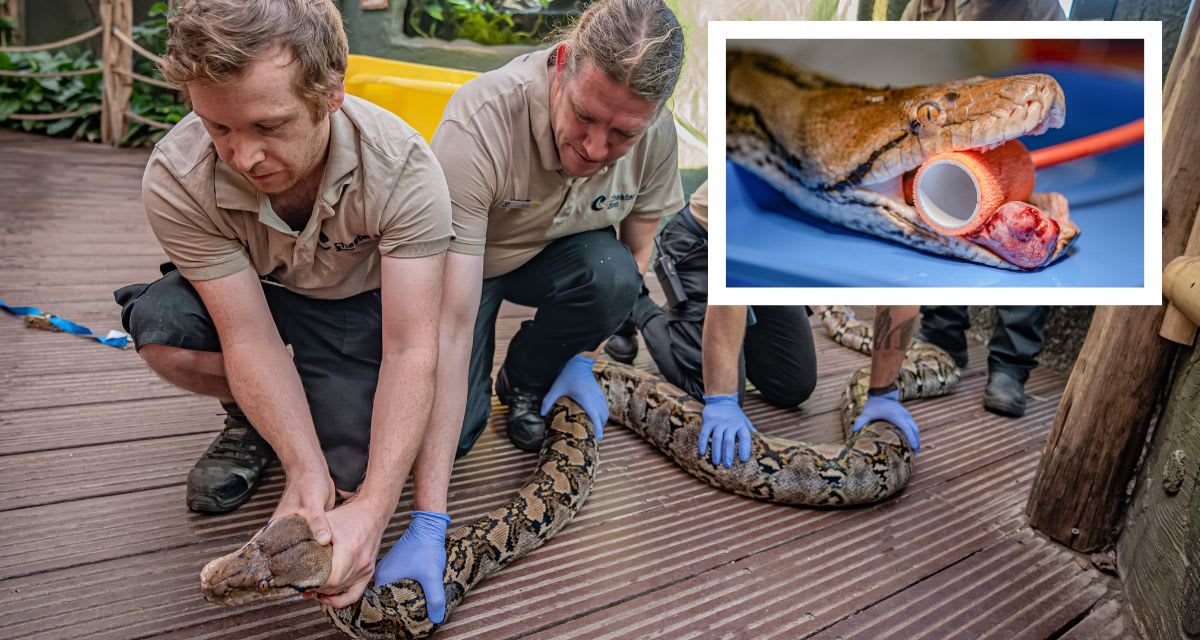
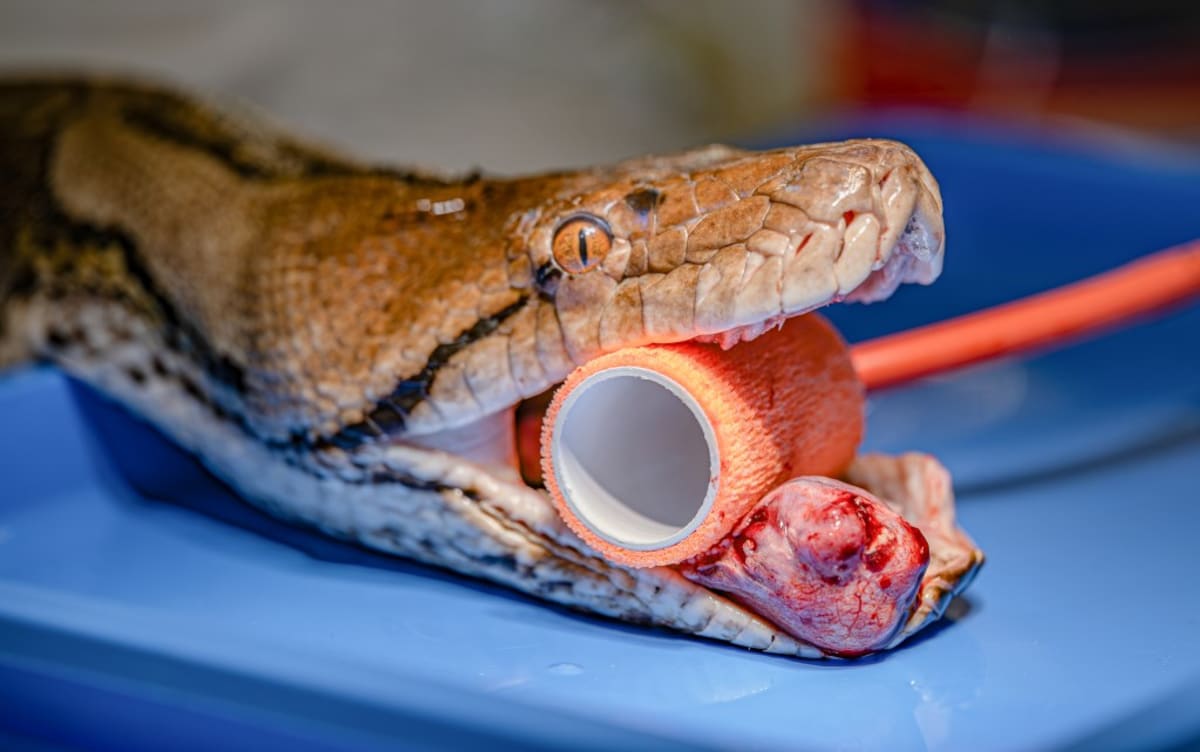
When a 110-pound python lost her appetite and became sluggish, veterinarians at Chester Zoo in England discovered something alarming: a malignant tumor in her jaw that prevented her from swallowing food.
Jodie Foster, a 23-year-old reticulated python nicknamed after her initials "JF" (which technically stand for "juvenile female"), was diagnosed with fibrosarcoma. The veterinary team removed the tumor surgically, but it came back.
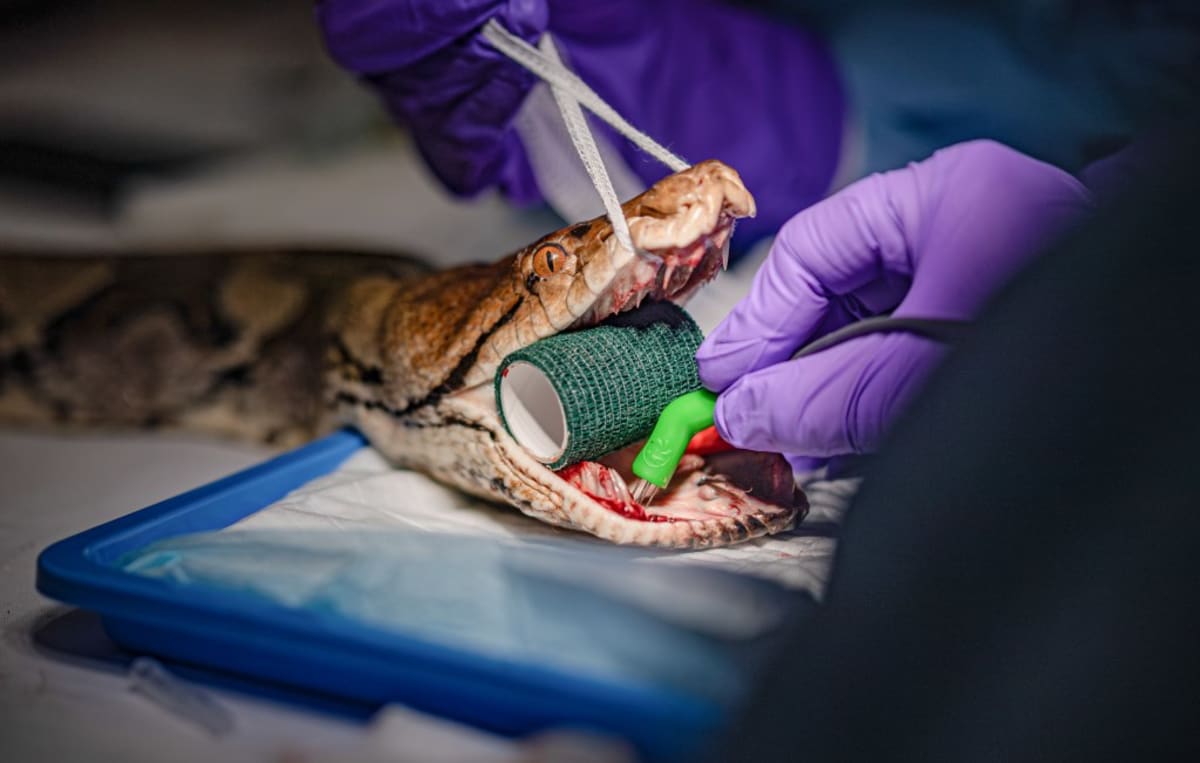
Knowing a second traditional surgery wouldn't solve the problem, the Chester Zoo team partnered with cancer specialists at the University of Liverpool to try something unprecedented. They decided to treat Jodie Foster with electrochemotherapy, a treatment commonly used in human cancer patients but never before attempted on a snake.
Electrochemotherapy combines a low dose of chemotherapy drugs with short, high-voltage electrical pulses to directly target and destroy cancer cells. "This was the first time it had been used in a snake," said Jose Alvarez Picornell of the University of Liverpool's department of small animal clinical science.
The ambitious procedure worked perfectly for the 15-foot-long python. After removing the tumor and applying the electrochemotherapy to target remaining cancer cells, Jodie Foster made a full recovery.
A few months later, Chester Zoo released a video showing Jodie Foster back to her "bright and feisty" self, with the feather of a recent meal visible near her healed mouth. The transformation was so dramatic that the University of Liverpool called it "a Hollywood ending for Jodie Foster" in their social media comments.
The Ripple Effect
Jodie Foster's successful treatment could change veterinary medicine for countless animals. If electrochemotherapy works safely on a reticulated python, it opens doors for treating cancer in other species whose options have historically been limited.
This isn't the first time human medical advances have saved animal lives. Pacemakers developed for people now regulate heartbeats in dogs and cats, while prosthetics designed for humans have been adapted into custom limbs for injured animals.
The key difference here is the willingness to innovate and collaborate across specialties. When veterinarians and human cancer specialists work together, they create possibilities that didn't exist before.
Chester Zoo even shared a lighthearted video of their team effort to transport Jodie Foster to surgery, showing multiple staff members carefully maneuvering the 110-pound snake onto the veterinary table. The caption referenced the famous "Friends" couch scene: "PIVOT! PIVOT! PIVOT!"
Jodie Foster's second chance at life proves that when experts dare to try something new, every creature gets a fighting chance.
More Images

Based on reporting by Upworthy
This story was written by BrightWire based on verified news reports.
Spread the positivity!
Share this good news with someone who needs it