12-Year-Old Discovers Asia's First Jurassic Amphibian Print
A curious kid hunting for fossils in Beijing just rewrote the scientific record books. His find revealed creatures walking the earth 160 million years ago that scientists never knew existed in Asia.
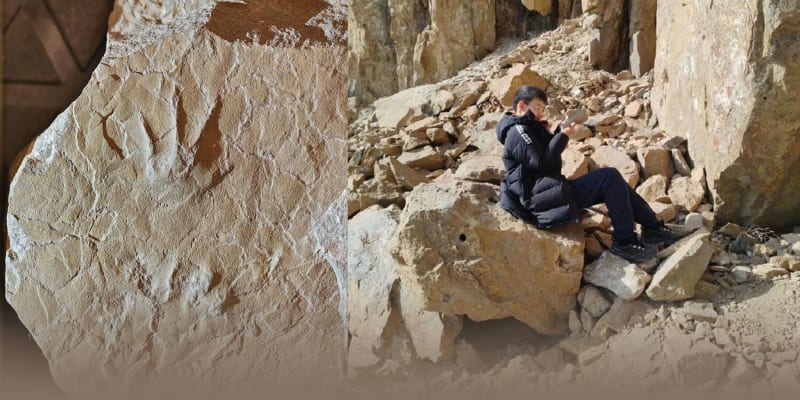
When Ni Jingchen went fossil hunting with his parents in Beijing's Mentougou District, he had no idea his discovery would fill a massive gap in our understanding of ancient life. The 12-year-old elementary student spotted something unusual in the rock and did what any excited kid would do: he posted pictures online.
That social media post caught the eye of Xing Lida, an associate professor at the China University of Geosciences. What Ni had found turned out to be the first confirmed amphibian footprint from the Middle Jurassic period ever discovered in Asia.
The fossil includes two tiny prints, likely from the same creature. The front footprint measures just 1.5 centimeters long and shows four distinct toes. Researchers believe these tracks were made by an early salamander ancestor around 160 million years ago.
Using 3D scanning technology, the research team created detailed digital models to analyze every ridge and depression in the tracks. They compared the prints to other known fossils and concluded they belonged to the Salamandroidea suborder, the diverse group that includes modern salamanders and axolotls.
Until now, scientists had only found dinosaur and turtle tracks from this period in Asia. This discovery proves that small, land-adapted amphibians were thriving alongside the giant reptiles that usually steal the spotlight.
These ancient amphibians lived in what was then a marshlike environment, surrounded by ferns, ginkgoes, and cycads. The ecosystem of ancient Beijing looked nothing like the bustling modern city that stands there today.
Why This Inspires
Ni's discovery shows that groundbreaking science doesn't require a PhD or fancy equipment. Sometimes it just takes curiosity, a keen eye, and the willingness to share what you find.
The research team published their findings last week in the peer-reviewed journal "Ichnos," giving Ni a place in scientific history. Professor Xing praised the discovery as "a vivid example of public participation in paleontological discovery."
The story is already inspiring young people across China to explore the natural world around them. It reminds us that the next big discovery could be hiding in plain sight, waiting for someone curious enough to look.
Every fossil hunter starts somewhere, and Ni's journey from curious kid to published researcher proves that age is no barrier to making a real difference in science.
Based on reporting by Sixth Tone
This story was written by BrightWire based on verified news reports.
Spread the positivity!
Share this good news with someone who needs it