1,200-Year-Old Nubian Murals Brought to Life in Fashion
Polish researchers transformed ancient cathedral paintings into wearable costumes using medieval fabrics and dyes, moving audiences to tears in performances across Europe. The project honors Christian Nubia's forgotten royalty and reveals a rich African culture that thrived for centuries.
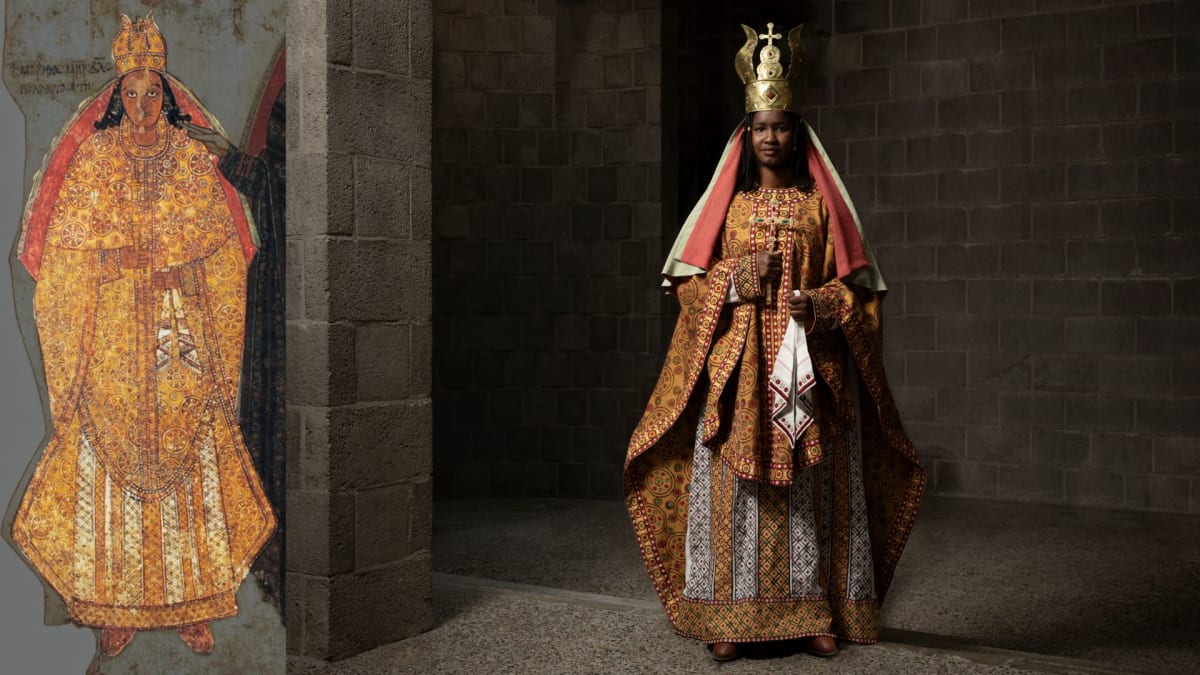
When Sudanese models stepped onto the stage wearing reconstructed royal garments from medieval Nubia, audiences in Paris, Berlin, and London wept. These weren't just costumes—they were time machines, bringing 1,200-year-old paintings to life with fabrics and dyes authentic to northeastern Africa.
The story began in 1960 when Polish archaeologists arrived at Faras, expecting to find an ancient temple before it disappeared under Egypt's new Lake Nasser. Instead, they discovered a Christian cathedral decorated with over 150 stunning murals from the 8th to 14th centuries, preserved in remarkable condition.
The paintings depicted kings, bishops, and royal mothers in lavish clothing, standing alongside Christ and the Virgin Mary. These weren't just pretty pictures—they were political statements cementing the authority of church and state in Christian Nubia, which covered parts of what are now Egypt and Sudan.
Most intriguing were the "royal mothers," who held special status in Nubian society. The throne passed not from father to son, but from king to his sister's son, making these women crucial to the kingdom's survival. The murals portrayed them as earthly versions of Mary, mother of the heavenly king.
Archaeologist Karel Innemée and his team at the University of Warsaw spent years studying every detail of the paintings. They identified exact fabrics, dyes, and decorative elements that would have been available in medieval Africa, rejecting anything that didn't match the historical record.
The reconstruction process revealed cultural evolution over centuries. Early costumes copied Byzantine fashion exactly, but by 1000 AD, Indigenous elements like bows appeared alongside Islamic-influenced garments like sashes and trousers, showing Nubia's connections across Africa and the Middle East.
When the costumes were finally complete and modeled at a church in The Hague, Netherlands, something magical happened. The Sudanese models naturally assumed aristocratic poses, embodying ancestors they'd never learned about in school. Observers found themselves crying at the beauty and dignity of a forgotten African Christian kingdom.
Why This Inspires
For too long, African history before colonization has been ignored or minimized in Western education. This project proves that sophisticated, powerful civilizations thrived in Africa for millennia, creating art and culture that still moves us today.
The reconstruction also demonstrates how material culture connects us across time—when we see someone dressed as a 10th-century Nubian queen, complete with bells announcing her presence, she becomes real in ways a static painting never could.
These performances aren't just academic exercises—they're reclaiming and celebrating African heritage that deserves recognition alongside Byzantine, Roman, and European medieval cultures.
The costumes now travel to museums and universities, teaching new generations about Nubia's thousand-year Christian tradition and its unique blend of African, Byzantine, and Islamic influences that created something entirely their own.
More Images


Based on reporting by Live Science
This story was written by BrightWire based on verified news reports.
Spread the positivity!
Share this good news with someone who needs it