140-Year-Old Museum Fossil Solves Ancient Fish Mystery
A fish skull forgotten in a London museum drawer since 1885 just filled a 50-million-year gap in evolution. The discovery proves that even dusty old collections can still rewrite science.
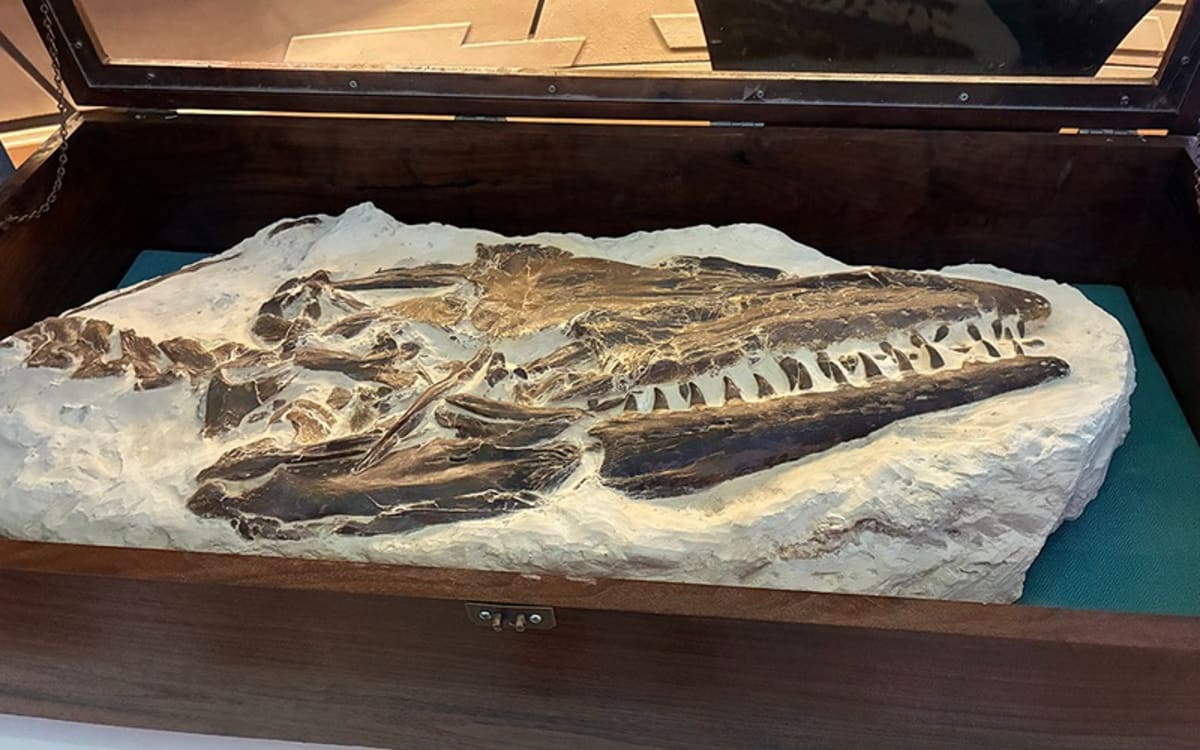
A fossil that sat ignored in a museum drawer for 140 years just rewrote the story of one of Earth's most mysterious fish.
The skull was purchased by London's Natural History Museum in 1885 from a Victorian fossil dealer and tucked away without much fanfare. Jack Norton, then a master's student, took a fresh look at it and realized what scientists had been missing: proof of how coelacanths evolved during a critical 50-million-year period that had stumped researchers for decades.
Coelacanths earned fame as "living fossils" after fishermen caught one alive in 1938, shocking scientists who thought they'd vanished with the dinosaurs. But the fossil record had a frustrating blank spot during the Early Cretaceous period, leaving everyone guessing about how these ancient fish changed over time.
The newly identified species, named Macropoma gombessae, fills that gap perfectly. It comes from the Gault Formation near Folkestone in Kent, dating back 100 to 113 million years ago.
What makes this fish special isn't just its age. The skull shows unique features that tell a story about how it lived: enlarged pores above the eyes that helped it hunt in dark, murky waters. Modern fish with similar pores thrive in low-light environments, suggesting this ancient coelacanth adapted to hunting where visibility was poor.
Why This Inspires
This discovery reminds us that treasures hide in plain sight, waiting for curious minds to find them. Norton and his supervisor Samuel Cooper used modern technology to examine details that Victorian scientists couldn't see, proving that yesterday's overlooked specimens can become tomorrow's breakthroughs.
The species name honors the Comoros fishermen who've long called these fish "gombessa." Their knowledge, passed down through generations, now connects to a creature that swam 100 million years ago.
Museum collections aren't just dusty archives but living libraries of discovery. Emma Bernard, a curator at the museum, says specimens held in trust for society can reveal new secrets as technology advances. Norton's find shows that the next generation of scientists, armed with fresh eyes and better tools, will keep unlocking mysteries hidden in drawers, cabinets, and storage rooms around the world.
Somewhere in the Indian Ocean today, living coelacanths swim on, their story now a little clearer thanks to a forgotten fossil and a student who looked twice.
Based on reporting by Google: fossil discovery
This story was written by BrightWire based on verified news reports.
Spread the positivity!
Share this good news with someone who needs it