160 Artists Paint India's Longest Mithila Artwork
In a small Bihar village, 160 artists spent days transforming a football-field-length canvas into a stunning visual retelling of the Ramayana. The 108-metre masterpiece weaves together ancient tradition with record-breaking ambition.
Imagine unrolling a canvas longer than a football field and asking 160 artists to turn it into one unified masterpiece. That's exactly what happened in Saurath village, nestled in Bihar's Madhubani district.
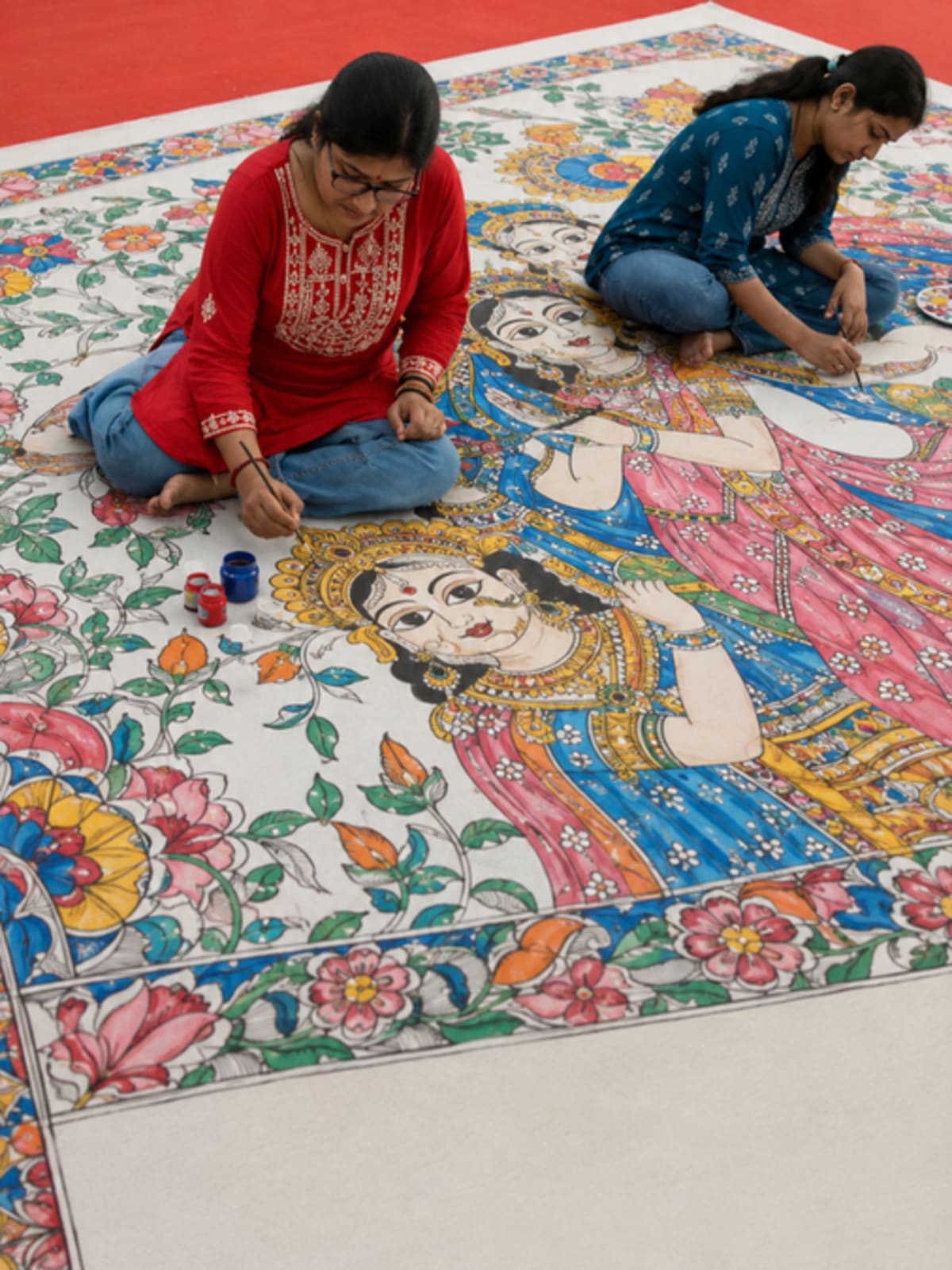
Nearly 160 artists and students gathered over several days to create what became India's longest Mithila painting. Working side by side, they transformed a continuous 108-metre strip of fabric into a breathtaking visual journey through the Ramayana.
The scale alone is remarkable. The canvas stretched 108 metres long and 1 metre wide, allowing multiple artists to work simultaneously on different sections without losing the story's flow.
But this wasn't just about breaking records. The artists had to ensure that 51 separate episodes from both Valmiki's Ramayana and Tulsidas's Ramcharitmanas blended seamlessly into one cohesive narrative, from Ram's birth through his exile, the war in Lanka, and his triumphant return to Ayodhya.
Trained Mithila painters worked alongside eager students at the Mithila Chitrakala Sansthan, which preserves this centuries-old folk art tradition. They began with intricate black outlines, the signature of Mithila painting, then layered in vibrant colors to bring each scene to life.
The art form itself carries deep history. Women originally created Mithila paintings on mud walls of their homes before the tradition evolved to handmade paper, cloth, and eventually larger canvases like this one.
The story holds special meaning here. Hindu tradition identifies Mithila as Sita's birthplace, making the Ramayana more than just an epic tale but a story woven into the region's cultural DNA.
The Ripple Effect
The painting was unveiled around India's Independence Day in August 2026, connecting two powerful threads: preserving a distinctive regional art form and celebrating national heritage. Young students learned directly from master artists, ensuring the tradition passes to another generation.
Now comes the beautiful challenge of what's next. Where do you display a 108-metre artwork? How do you preserve it? How can people experience all 51 episodes together?
These questions matter because they keep the conversation going about how ancient traditions find new life in modern times.
In Saurath, generations of artists proved that some stories are too beautiful to fit on a small canvas.
Based on reporting by The Better India
This story was written by BrightWire based on verified news reports.
Spread the positivity!
Share this good news with someone who needs it