1,700-Year-Old Roman Statues Found Hidden in Wine Vat
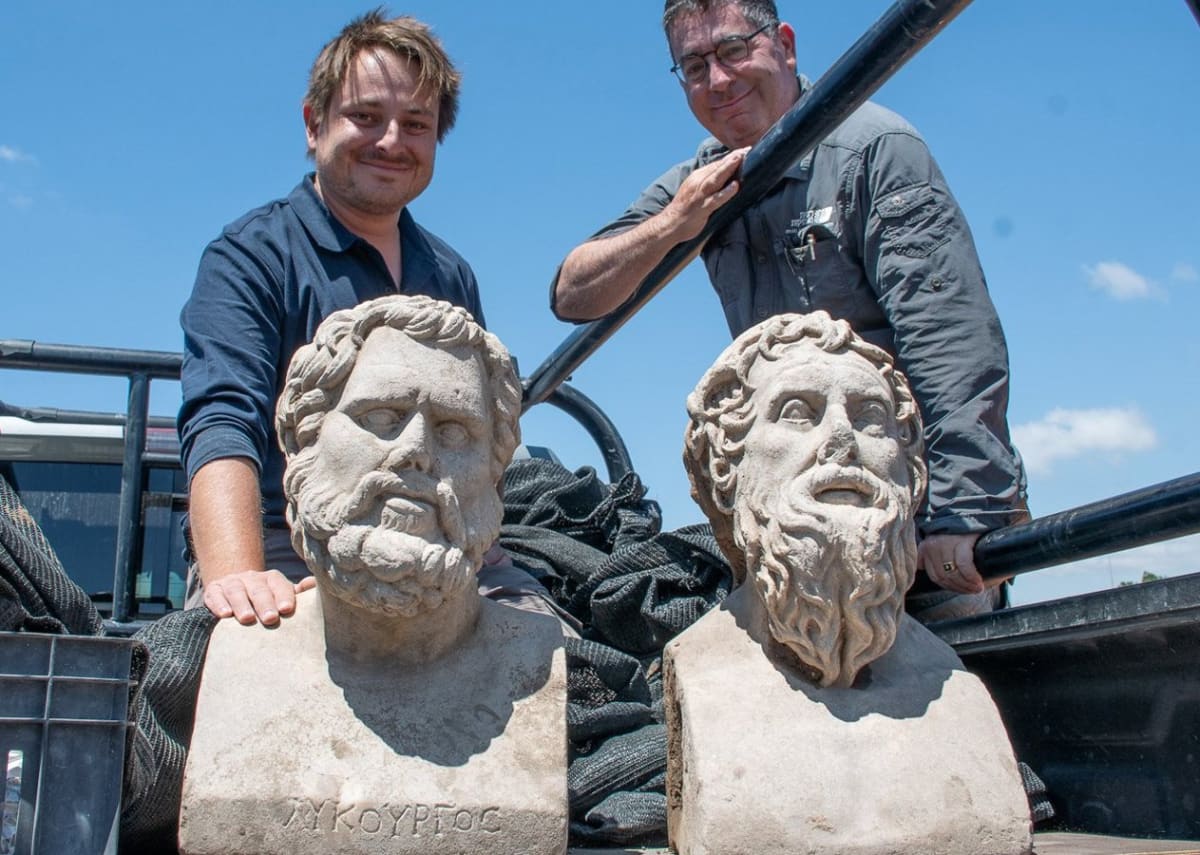
Archaeologists in Israel discovered two pristine Roman marble statues buried face-down in an ancient winepress, sparking mystery about why they were hidden 1,700 years ago. One sculpture bears a Greek inscription naming "Lycurgus," possibly depicting a legendary Spartan lawgiver or famous Athenian statesman.
Sometimes the most extraordinary discoveries happen on the last day of work. Archaeologists excavating near Binyamina in northern Israel uncovered two beautifully preserved Roman marble statues dating back 1,700 years, carefully hidden inside a wine collection vat at an ancient vineyard.
The moment of discovery felt magical. Workers noticed something unusual protruding from the ground and called over Michael Sorotskin, an archaeologist with the Israel Antiquities Authority. "There was an immediate feeling that we had found something unusual," he said. "As the excavation progressed, it became clear that it was not pottery but marble."
The statues emerged slowly from the earth, revealing protomes—sculptures showing the upper portion of the human body. They depict prominent figures from the Greco-Roman world, with one bearing a Greek inscription naming "Lycurgus." Researchers believe this could reference either Lycurgus of Sparta, the legendary lawgiver, or Lycurgus of Athens, a celebrated fourth-century statesman and orator.
The discovery site, uncovered during railway expansion work for Israel's high-speed coastal line, adds to the intrigue. The statues weren't found in their original location but were deliberately placed face-down inside the wine pit after the winepress stopped operating. "At present, we do not know why they were hidden there, although it is possible they were deliberately concealed for protection," said excavation directors Eliran Oren and Avisag Reis.
Previous excavations nearby revealed remains of a Roman bathhouse, suggesting the area once formed part of an affluent suburban estate connected to the ancient port city of Caesarea. Researchers believe these marble masterpieces likely decorated a luxurious villa belonging to one of Caesarea's wealthy residents—people who displayed such sculptures to showcase their cultural sophistication and education.
Why This Inspires
This discovery connects us directly to people who lived nearly two millennia ago. Someone carefully preserved these statues, hiding them for reasons we may never fully understand—perhaps during times of danger, hoping to protect beautiful things for future generations. That act of preservation worked. The sculptures survived 1,700 years underground, emerging in nearly perfect condition.
The find represents the first comparable discovery in Caesarea since the 1990s. "This is a once-in-a-lifetime discovery," said the excavation directors. "The most remarkable finds often appear when you least expect them."
The statues are now undergoing cleaning and conservation in Israel Antiquities Authority laboratories. After their public debut at an archaeological conference in Tel Aviv on June 18, they'll be exhibited throughout the summer, giving everyone a chance to see these ancient masterpieces that someone long ago valued enough to hide.
More Images



Based on reporting by Google: archaeological discovery
This story was written by BrightWire based on verified news reports.
Spread the positivity!
Share this good news with someone who needs it