17,000-Year-Old Cave Art Found After 100 Years of Doubt
Scientists just confirmed that mysterious red markings in a Welsh cave are ancient human art, not natural rock formations. After a century of debate, modern technology proved two early researchers were right all along.
A century-old scientific mystery in Wales just got solved, and it's rewriting what we know about ancient art in the British Isles.
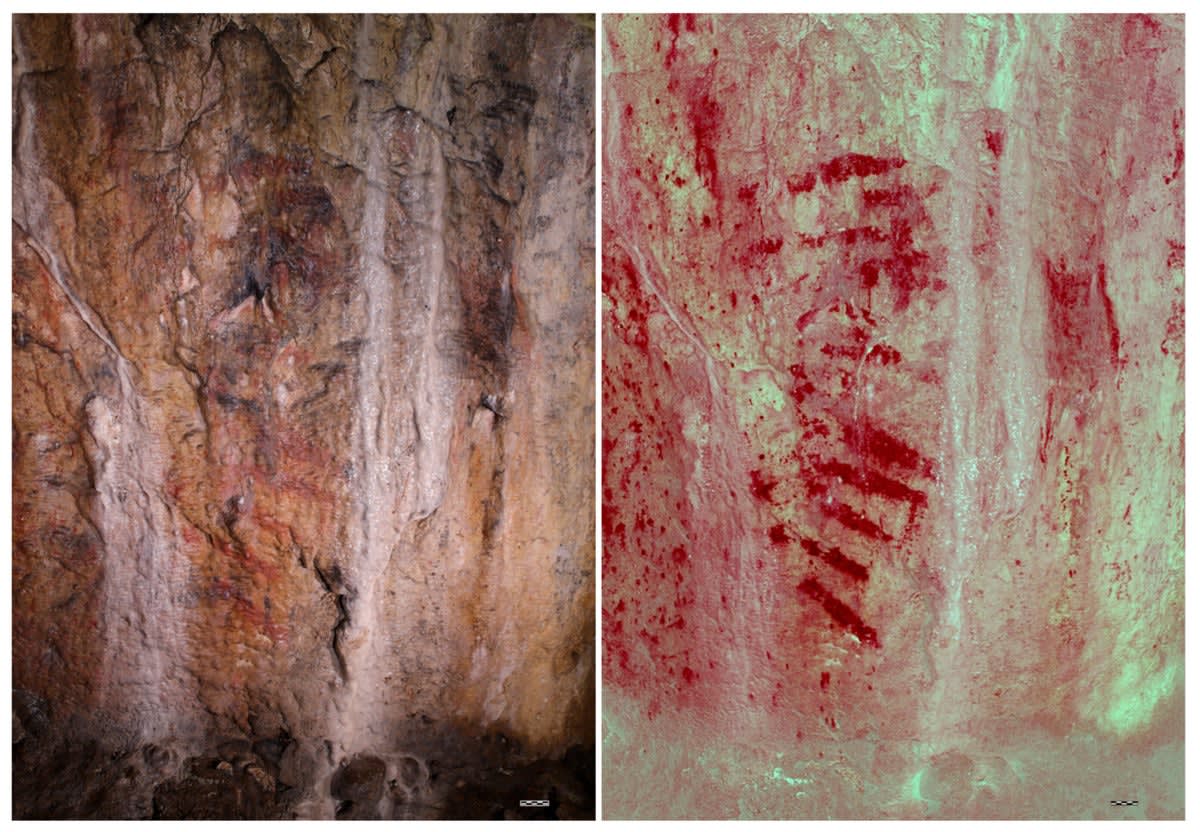
Back in 1912, two researchers exploring Bacon Hole cave near Cardiff discovered red markings on the walls and boldly claimed they were ancient human artwork. The scientific community wasn't convinced, dismissing the lines as natural iron deposits and largely ignoring the site for the next hundred years.
Fast forward to 2024, and a team of archaeologists decided to give those mysterious marks another look. Armed with high-definition cameras, spectroscopes, and color filter technology, they analyzed the pigments and compared them to natural rock formations nearby.
The results were stunning. The red lines were deliberately painted using hematite pigment around 17,000 years ago, and they're arranged in perfectly equal distances from each other. That kind of precision doesn't happen in nature.
The cave itself has a rich history. First excavated in 1850, archaeologists discovered an Iron Age bowl and human-modified bones, proving ancient people once called this place home. What they left behind on the walls tells us they didn't just survive—they created.
The original researchers, William Sollas and Henri Breuil, had theorized these could be the oldest examples of Upper Paleolithic art in the British Isles. Now, more than a century later, modern science has finally backed them up.
Why This Inspires
This discovery reminds us that truth has a way of surfacing, even when it takes a hundred years. Two scientists stuck to their observations despite widespread skepticism, and history proved them right.
It also shows how ancient humans weren't just focused on survival. Even 17,000 years ago, people took time to create something beautiful and meaningful. They left their mark in ways that would last millennia, connecting us across vast stretches of time.
The research team plans further studies to pinpoint the exact age of the artwork and understand more about the people who created it. Every answer opens new questions about how our ancestors lived, thought, and expressed themselves.
Sometimes the most profound discoveries are hiding in plain sight, waiting for the right tools and open minds to reveal them.
More Images
Based on reporting by Google: scientific discovery
This story was written by BrightWire based on verified news reports.
Spread the positivity!
Share this good news with someone who needs it