18-Gram Ring Lets You Touch Virtual Objects
Scientists created a lightweight ring that lets you actually feel virtual objects while wearing VR headsets. The origami-inspired device weighs less than a penny and could transform gaming, medical training, and rehabilitation.
Virtual reality has mastered what we see and hear, but touch has been the missing piece—until now.
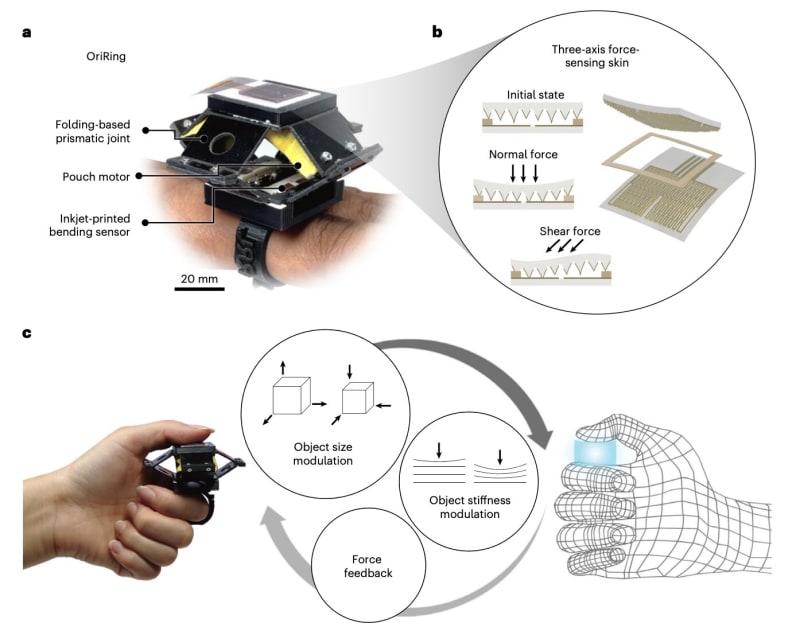
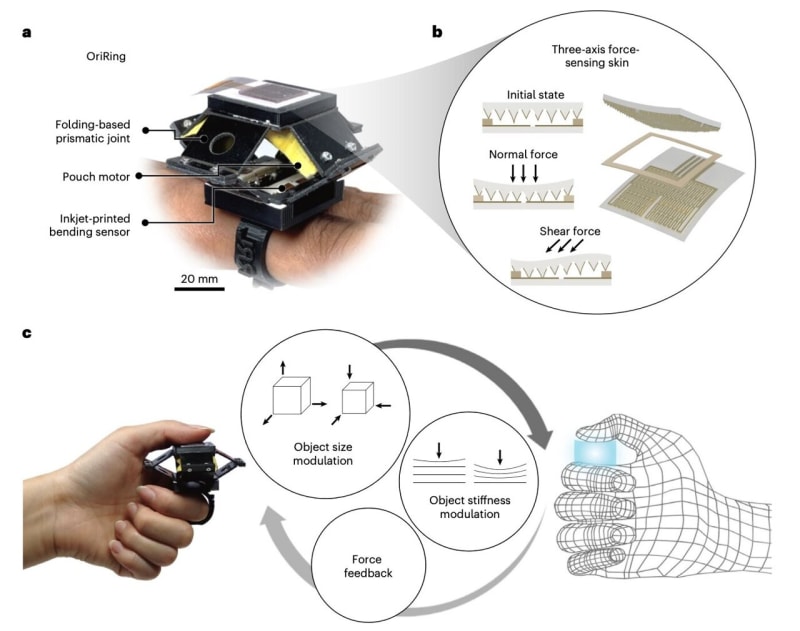
Researchers at Sungkyunkwan University and partner institutions developed OriRing, an 18-gram wearable that lets users physically feel digital objects. The device attaches to your finger and pushes back when you touch something in a virtual world, creating realistic sensations that match what you're experiencing on screen.
The secret lies in its origami-inspired design. Folded geometric structures allow the ring to detect both pressing and sliding forces on your skin, then respond with corresponding tactile feedback. Think of reaching out to touch a virtual ball and actually feeling its firmness and texture through the ring.
The device packs impressive technology into a package lighter than a AA battery. Four sensors change their electrical resistance when pressed or bent, while soft pneumatic actuators use air pressure to move the ring in specific ways. Inkjet-printed flexible sensors track your finger movements, creating a seamless connection between physical and digital worlds.
In testing, the ring delivered force feedback up to 6.5 newtons across three degrees of freedom. That's enough force to create convincing sensations of touching, pressing, and sliding across virtual surfaces. The team published their findings in Nature Electronics, demonstrating how users could feel the size and stiffness of digital objects.
Why This Inspires
This breakthrough opens doors far beyond gaming. Medical students could practice surgical techniques with realistic touch feedback before ever entering an operating room. Physical therapy patients could work with virtual objects that provide precise resistance training. Remote workers could feel textures and materials during virtual design sessions.
The research team envisions their ring becoming part of everyday digital experiences. Future versions could make online shopping more tactile, letting you "feel" fabric textures before buying clothes. Artists could sculpt virtual clay that responds to their touch just like the real thing.
What makes this development particularly exciting is its portability and comfort. Previous haptic devices were bulky and tethered to computers, but OriRing's lightweight design means you can wear it naturally without fatigue. The origami-inspired structure makes it both compact and efficient at transmitting forces.
The technology bridges a gap that's existed since virtual reality began. While graphics and sound have reached stunning realism, touch remained stuck in the past. OriRing changes that equation by adding the physical dimension that makes digital worlds feel truly present.
The device represents more than just better technology—it's about making digital experiences more human. Touch is how we learn about our world from infancy, and bringing that sense into virtual spaces makes them genuinely immersive rather than just visually impressive.
Virtual reality just got a whole lot more real.
More Images


Based on reporting by Phys.org - Technology
This story was written by BrightWire based on verified news reports.
Spread the positivity!
Share this good news with someone who needs it