1940 Discovery Unlocked Window Into Ancient Civilizations
Two exhausted scientists working around the clock in Berkeley stumbled upon carbon-14, a radioactive isotope that would revolutionize how we understand human history. Their breakthrough eventually gave archaeologists the power to date ancient artifacts up to 50,000 years old.
After a grueling 120-hour experiment in February 1940, chemist Martin Kamen was so sleep-deprived and disheveled that police briefly detained him as a murder suspect. Little did those officers know they'd just questioned a man who helped unlock one of science's greatest tools for exploring the past.
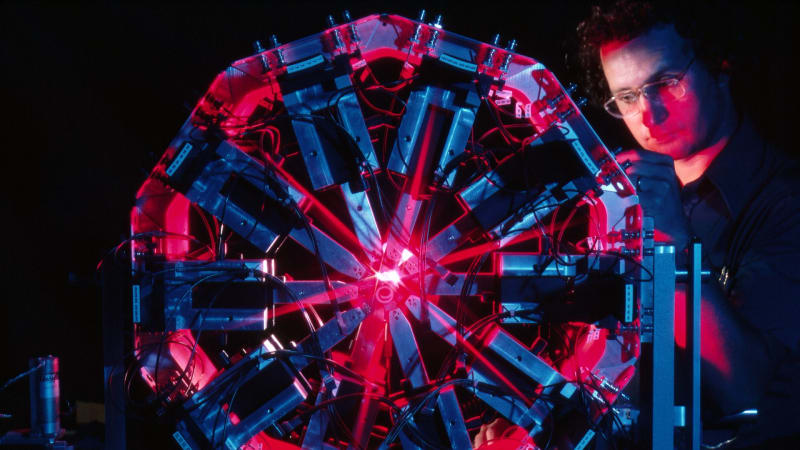
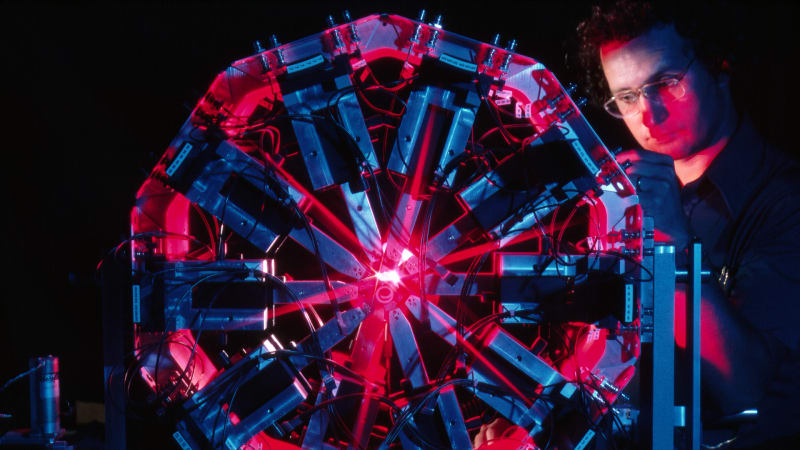
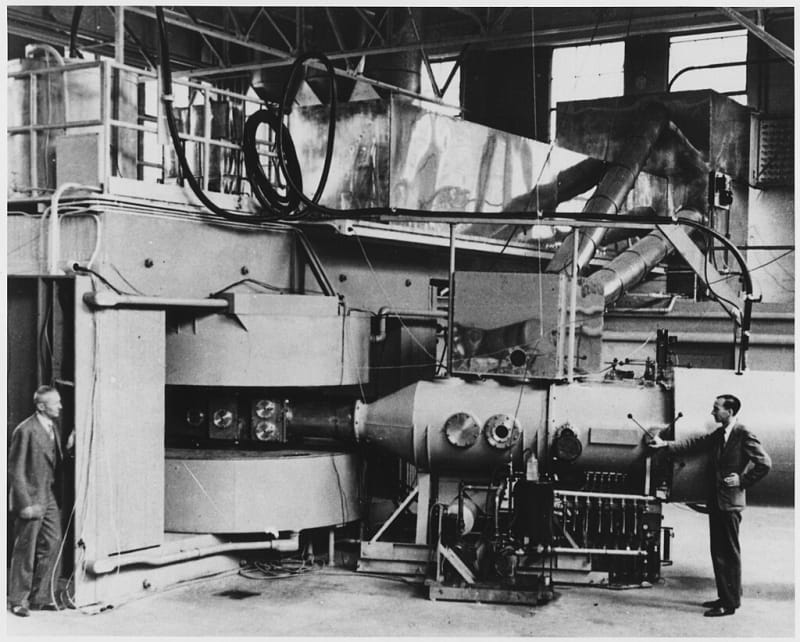
Kamen and his colleague Samuel Ruben had spent over a year searching for carbon-14, a form of carbon that scientists believed existed but thought would be impossible to detect. Working at Berkeley Laboratory under Ernest Lawrence's direction, they placed graphite inside a cyclotron and bombarded it with heavy hydrogen particles for five straight days.
When Kamen finally returned to the lab after his police encounter, Ruben had exciting news: their sample showed faint radioactivity. For the next two weeks, they carefully purified the carbon and measured its properties, discovering something unexpected.
The carbon-14 didn't vanish quickly as predicted. Instead, it had a half-life of thousands of years, making it stable enough to be incredibly useful for research.
The scientists immediately recognized the potential. In their March 1940 paper, they predicted their discovery would prove valuable for chemical, biological, and industrial experiments.
Why This Inspires
The story of carbon-14 shows how breakthroughs often come from persistence through exhaustion and doubt. Kamen and Ruben's dedication through that marathon experiment opened doors they couldn't have imagined.
Nine years later, University of Chicago chemist Willard Libby realized that carbon-14 ratios could reveal the age of ancient objects. His radiocarbon dating technique earned him the 1960 Nobel Prize and transformed archaeology forever.
Today, scientists routinely use their discovery to date ancient skeletons, pottery, and artifacts, revealing stories of civilizations that disappeared millennia ago. Newer techniques built on this foundation help researchers determine where ancient people lived, what they ate, and how they died.
Tragically, both original discoverers faced hardship after their breakthrough. Ruben died in a 1943 lab accident, and Kamen was fired during the Red Scare despite never being found guilty of wrongdoing.
But their legacy endures every time archaeologists carbon-date a discovery, connecting us to ancestors we'd otherwise never know existed.
More Images

Based on reporting by Live Science
This story was written by BrightWire based on verified news reports.
Spread the positivity!
Share this good news with someone who needs it