1949 Whale Song Recording Reveals Ocean's Quieter Past
Scientists discovered the oldest whale song ever recorded, captured in 1949 off Bermuda's coast when oceans were far quieter than today. This rare audio treasure gives researchers a baseline to measure how human noise pollution now affects whale communication and survival.
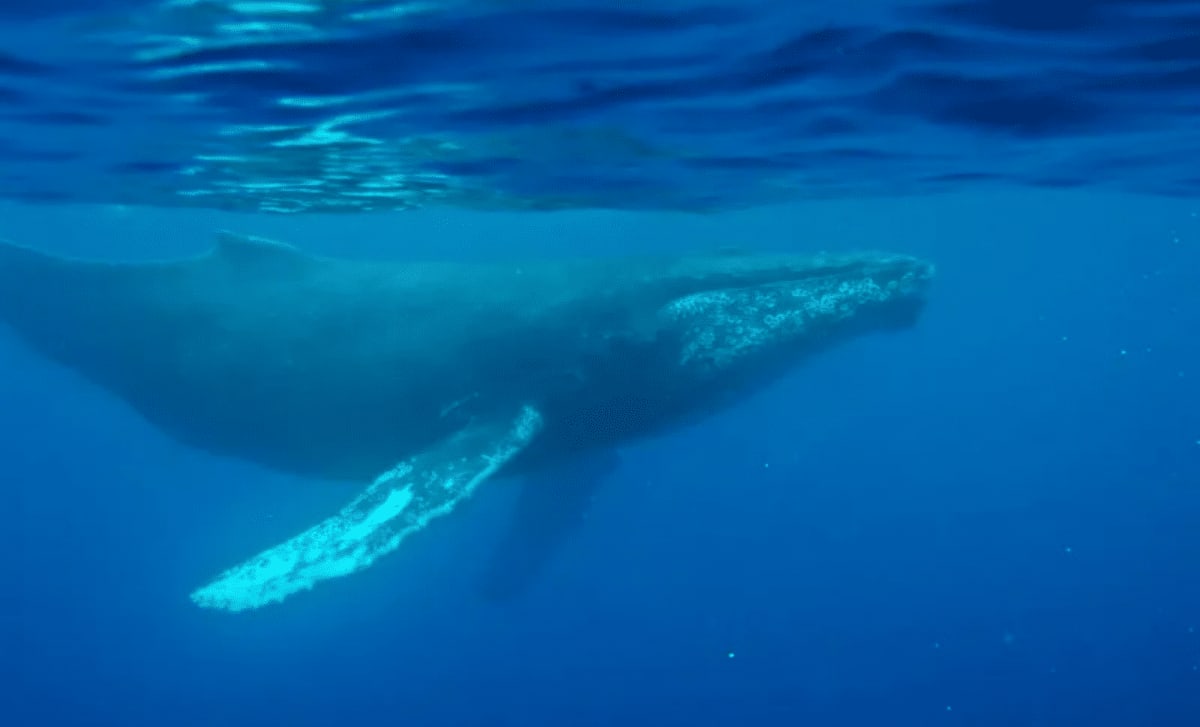
A humpback whale's haunting melody, recorded 75 years ago in the waters near Bermuda, is giving scientists hope for protecting ocean life in our noisy modern world.
Researchers at Woods Hole Oceanographic Institution found the oldest known whale song recording while digitizing historical archives from March 1949. The audio was preserved on durable audograph discs, technology that was cutting-edge at the time but nearly forgotten today.
"As soon as I heard it, it was immediately obvious," said Peter Tyack, a marine bioacoustician at WHOI. "There's no other animal that makes this kind of sequence of sounds."
The recording offers something priceless: a window into what the ocean sounded like before shipping traffic, industrial operations, and underwater construction filled the seas with human noise. In 1949, whales could communicate across vast distances without competing against the rumble of cargo ships or the roar of oil drilling.
Scientists now face a challenge understanding how modern noise pollution affects whale behavior. These marine giants rely on sound for everything from finding food to navigating thousands of miles across open ocean.
"Being able to go back and understand what the underwater soundscape was like decades ago is actually very important to understand the impact of the changes we're making," Tyack explains. Comparing the 1949 recording to modern whale songs will help researchers measure exactly how much harder whales must work to be heard today.
The Ripple Effect
This discovery extends far beyond one lucky recording. WHOI's preservation work has uncovered an entire collection of historical ocean sounds that scientists in the 1940s recorded out of pure curiosity, not knowing what they were documenting.
"These audograph discs survived because of their material and careful preservation," says Ashley Jester, who helped uncover the recording. That preservation happened because archivists decades ago believed these mysterious sounds might matter someday.
They were right. Today's researchers can use these baseline recordings to develop better protection strategies for vulnerable whale populations. When scientists can detect whales through sound in areas where they cannot easily be seen, conservation efforts become far more effective.
The recordings also highlight how much we've changed the ocean environment in less than a century. Understanding that transformation is the first step toward reducing our acoustic footprint and giving whales back their ability to communicate freely.
One curious scientist in 1949 pressed record on sounds they couldn't fully explain, and that simple act of wonder is now helping protect ocean life for generations to come.
More Images


Based on reporting by Google News - Scientists Discover
This story was written by BrightWire based on verified news reports.
Spread the positivity!
Share this good news with someone who needs it