20 Shooting Stars Per Hour: Orionid Meteor Shower Peaks
Fragments of Halley's Comet are lighting up night skies right now, with the best viewing happening October 21-22. You don't need fancy equipment to catch these brilliant shooting stars streaking overhead at 20 per hour.
Nature is putting on a dazzling light show this week, and all you need to see it is a clear night sky and a bit of patience.
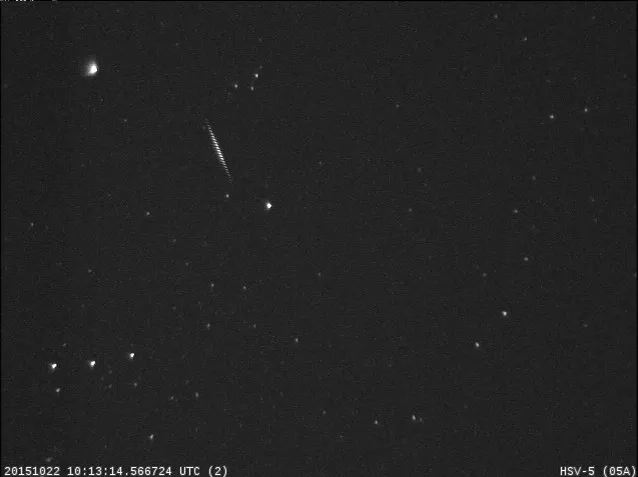
The Orionid meteor shower peaks on October 21 and 22, offering skygazers up to 20 shooting stars per hour. These aren't just any meteors. They're fragments of Halley's Comet burning up as they enter Earth's atmosphere at incredible speeds.
While the comet itself won't return to our skies for decades, it left behind a trail of debris that creates this annual spectacle. The best viewing window is between midnight and dawn on October 22, after the three-quarter moon sets and before sunrise brightens the sky.
What makes these meteors special is their brightness and speed. Some of the fastest ones become "fireballs" as bright as Venus, visible even in less-than-perfect conditions. Occasionally, they leave glowing trails of debris that hang in the sky for several seconds after the meteor passes.
You don't need to find the constellation Orion to enjoy the show, despite the shower's name. The meteors appear throughout the entire sky, so just look up. The event continues through November 7, giving anyone who misses peak viewing plenty of chances to catch a shooting star.
Saturn is also having its moment this month. The planet reached opposition in October, meaning Earth passed between it and the sun. That makes Saturn visible almost all night long, rising in the east around sunset and reaching its highest point near midnight.
On October 24, the moon will pass close to Saturn, making both easy to spot together. Researchers are particularly excited about this viewing opportunity because they can study a bizarre ten-sided atmospheric pattern at Saturn's south pole. Scientists discovered the decagon recently, nearly 50 years after finding a similar hexagon at the north pole.
The month closes with another celestial treat. On October 27 into October 28, the moon will pass near the Pleiades star cluster. These bright stars have fascinated cultures around the world for thousands of years because they're visible from almost anywhere on Earth.
Look east in the evening and watch for a faint cluster of six or seven stars near the moon. Binoculars or a telescope will reveal even more stars in this beautiful grouping.
The Bright Side
These cosmic events remind us that some of the universe's most stunning displays are completely free and accessible to everyone. No tickets required, no special location needed. Just step outside, look up, and let your eyes adjust to the darkness. Whether you're an experienced astronomer or someone who rarely thinks about the night sky, these phenomena connect us to something vast and beautiful beyond our daily routines.
Clear skies mean clear opportunities to witness wonders that have inspired humanity for millennia.
More Images
Based on reporting by Wired
This story was written by BrightWire based on verified news reports.
Play Today’s BrightWire Positive Mini Crossword & Word Game
Keep your mind sharp with our free 5-minute uplifting daily crossword and positivity word puzzle.
Spread the positivity!
Share this good news with someone who needs it

