200 Volunteers Count Pasadena's Homeless to Help Them
Two hundred Pasadena volunteers gave up their evenings and early mornings to count every person experiencing homelessness in their city. Their work will directly shape how millions in federal and state funding gets used to help people get off the streets.
When Christina Kasali put out the call for volunteers to help with Pasadena's homeless count in January, she hoped for a good response. What she got exceeded every expectation: 200 people signed up ahead of schedule, with nearly half participating for the first time.
These volunteers weren't just counting numbers. They were mapping a path forward for their community.
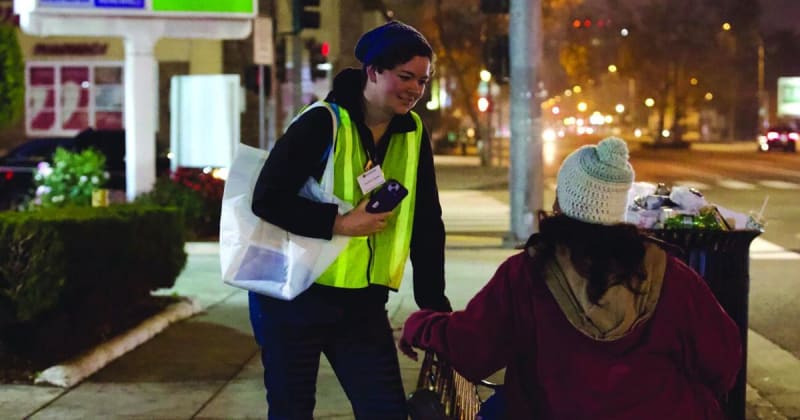
On the evening of January 21 and morning of January 22, teams of five to six people fanned out across 28 zones covering every corner of Pasadena. They worked during the coldest hours, from 8 to 10 p.m. and again from 6 to 8 a.m., to get an accurate snapshot of who needs help.
The annual Point-in-Time Homeless Count does more than satisfy curiosity. Federal, state, and county agencies use this data year-round to decide how to allocate millions in homeless services grants. More volunteers mean better data, which means better help for people who need it most.
Pasadena has been a pioneer in this work since 1992, becoming the first California city and one of the first three in the entire country to conduct a dedicated homeless count. That early leadership continues today with innovative approaches like using GPS-enabled apps to collect real-time data.
But the volunteers didn't just observe. They brought warmth in more ways than one, distributing cold weather kits filled with warm clothing, snacks, and information about available services. The Pasadena Public Health Department and Huntington Health joined the effort, offering flu shots, COVID-19 vaccines, hepatitis A vaccines, and Narcan overdose reversal kits.
The 2025 count found 581 people experiencing homelessness in Pasadena, including 12 directly impacted by the devastating Eaton Fire. Results from this year's count will be available by June 2026.
The Ripple Effect
When 200 neighbors show up to help count their community's most vulnerable members, they're doing more than gathering statistics. They're sending a message that homelessness isn't someone else's problem to solve. The 48% first-time volunteer rate shows that message is spreading.
Those two cold nights in January will shape housing policy, healthcare access, and support services for an entire year. Every person counted represents potential help on the way, funded by grants that depend on accurate data.
The volunteers' work also connects people immediately to resources they might not know exist. A conversation during a count, a flyer handed out with a warm jacket, a vaccine administered on a cold morning—these moments can be turning points.
Kasali summed up what made this year special: "Pasadena residents view homelessness as a critical problem that is deserving of time and attention." In a world that often looks away from difficult problems, 200 people chose to look closer and count every single person as someone worth helping.
More Images




Based on reporting by Google: volunteers help
This story was written by BrightWire based on verified news reports.
Spread the positivity!
Share this good news with someone who needs it