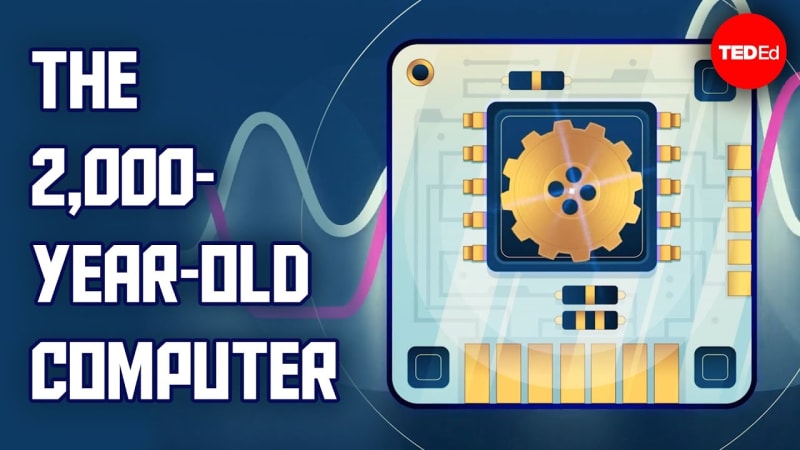
2,000-Year-Old Computer Reveals Ancient Greek Genius
Researchers have finally decoded the Antikythera mechanism, a 2,000-year-old bronze device that calculated planetary movements with stunning accuracy. This ancient Greek "computer" proves our ancestors were far more advanced than we ever imagined.
A rusty hunk of bronze pulled from a shipwreck in 1900 just rewrote what we know about ancient innovation.
Greek divers exploring a 2,000-year-old shipwreck off the coast of Antikythera discovered something extraordinary: a shoebox-sized bronze mechanism packed with intricate gears. For over a century, scientists scratched their heads trying to figure out what it was.
Now they know. This ancient device was the world's first analog computer, designed to predict astronomical events with breathtaking precision.
The Antikythera mechanism could track the movements of the sun, moon, and planets through the zodiac. It predicted eclipses years in advance and even accounted for the irregular orbit of the moon. Ancient Greeks simply turned a crank, and the bronze gears calculated celestial positions that wouldn't be matched in accuracy for another 1,000 years.
Researchers used modern imaging technology to peer inside the corroded fragments. What they found shocked them: at least 30 bronze gears working together in a sophisticated system that required advanced mathematical understanding and precision engineering.
The device was likely created around 100 BCE, possibly on the island of Rhodes. It represents a level of technological sophistication that historians didn't think existed until medieval times.
Why This Inspires
This discovery reminds us that human ingenuity has always found ways to reach for the stars, even without modern tools. Ancient craftspeople created something so advanced that when it was lost to history, humanity wouldn't build anything comparable for a millennium.
The mechanism also shows how much we still have to learn from the past. Every time we assume ancient people were primitive, archaeology proves us wrong with evidence of their brilliance.
Today's researchers continue uncovering new details about how the device worked, using techniques like 3D scanning and computer modeling. Each discovery reveals another layer of ancient Greek genius.
This bronze computer proves that innovation isn't about the era you live in but the curiosity you bring to understanding your world.
Based on reporting by TED-Ed
This story was written by BrightWire based on verified news reports.
Spread the positivity!
Share this good news with someone who needs it