2,000-Year-Old Tamil Names Found in Egyptian Tombs
Swiss researchers discovered Tamil inscriptions from ancient merchants carved into pharaohs' tombs 2,000 years ago, proving two-way trade between India and Egypt. One Tamil trader, Cikai Korran, left his name in eight places across five royal tombs.
Imagine traveling thousands of miles from home, seeing the incredible tombs of Egyptian pharaohs, and carving your name to say "I was here." That's exactly what Tamil traders did 2,000 years ago in the Valley of Kings.
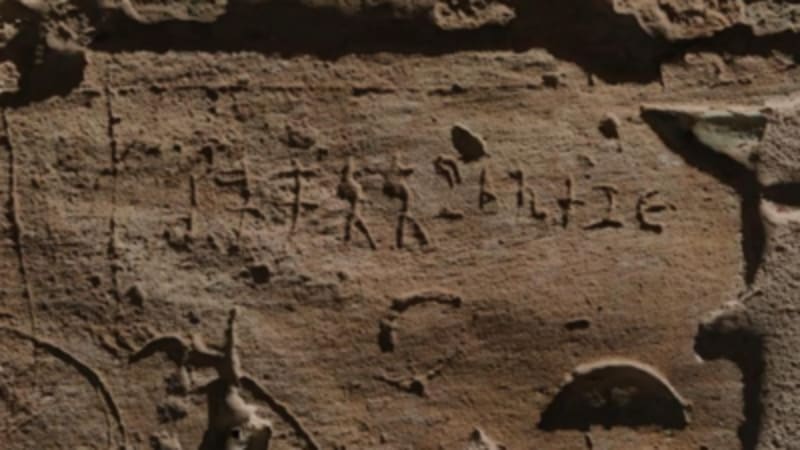
Swiss scholar Ingo Strauch and French researcher Charlotte Schmid recently deciphered ancient Tamil Brahmi inscriptions carved into six royal tombs dating back to 1600 BCE. The discovery proves that ancient Tamil merchants didn't just sail to Egypt for quick trades—they explored deep into the interior, visiting historic sites just like modern tourists.
One trader, Cikai Korran (meaning "crowned leader"), left his mark in eight different spots across five tombs. In one place, he even wrote "Cikai Korran - vara kanta," which translates to "he came and saw." The phrase mirrors Greek inscriptions found nearby, suggesting he read and copied their style.
The researchers found 30 total inscriptions from Indian merchants, with 20 written in Tamil. The rest came from traders speaking Sanskrit, Prakrit, and Gandhari-Kharoshi, showing that merchants from northern and western India also made the journey during the Roman period.
Some of these names appear in other archaeological sites too. Catan, a common South Indian name found on Tomb 8, also shows up in excavations at Berenike, an ancient Red Sea port.
The Ripple Effect
This discovery changes how historians understand ancient global trade. For years, scholars knew Romans came to India for spices and goods through writings by Ptolemy and Pliny. But they couldn't confirm whether Indian merchants sailed west in return.
Senior epigraphist Y Subbarayalu calls this "proof of two-way trade that happened during the Roman period." Tamil traders weren't just passive sellers waiting on the shore—they were active explorers venturing into foreign lands.
More than 2,000 Greek inscriptions cover the Valley of Kings tombs, left by visitors from across the Mediterranean world. But none of those travelers came from as far away as India, making the Tamil merchants' journey even more remarkable.
Professor K Rajan from Tamil Nadu's Department of Archaeology notes the evidence shows Tamil traders reached the interior parts of ancient Egypt, not just coastal trading posts. Archaeologist V Selvakumar suggests they combined business with sightseeing, exploring the area while building trade connections.
These ancient scratches in stone reveal a story of curiosity, ambition, and cultural exchange stretching across continents—reminding us that the urge to explore and connect has always been part of the human spirit.
More Images


Based on reporting by Google News - Researchers Find
This story was written by BrightWire based on verified news reports.
Spread the positivity!
Share this good news with someone who needs it