21 Baby Right Whales Born This Season—A Rare Boom
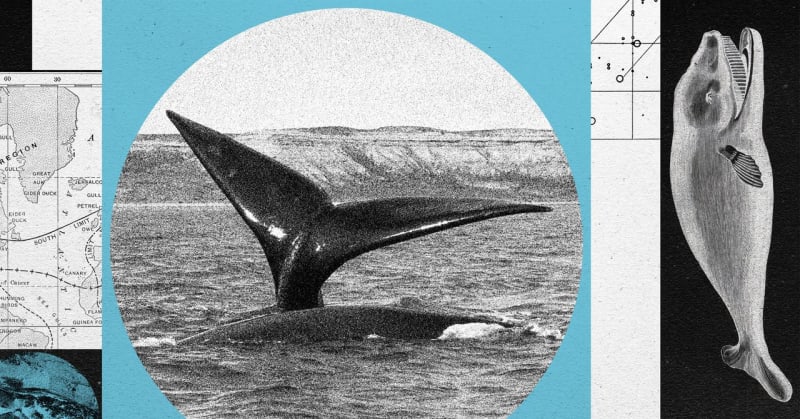
North Atlantic right whales are having their best calving season in decades, with 21 babies documented so far. Among them is Callosity Back's first calf, a whale researcher Julie Albert waited 19 years to see.
After 19 years of waiting, Julie Albert got the New Year's gift she'd been hoping for. Callosity Back, a North Atlantic right whale she first met as a calf in 2007, returned to Florida's coast with a baby of her own.
The whale earned her unique name from rare white tissue markings on her back, making her instantly recognizable among her species. On New Year's Eve, Albert and her team rushed to a beachside hotel pool deck when they heard an unidentified mother and calf had been spotted offshore.
"I've been waiting 19 years to see this mother," Albert says. They watched the pair swim together for hours until darkness fell.
Callosity Back's baby is one of 21 right whale calves born this season, nearly double last year's count of 11. Researchers haven't seen this many calves born so early in a calving season since the 1980s and 1990s, when the population was healthier.
The timing matters because North Atlantic right whales are critically endangered. Only 384 remained in the wild as of 2024, down from thousands before commercial whaling nearly wiped them out centuries ago.
Callosity Back herself was born a survivor. Her mother is one of only two right whales ever documented giving birth in cold northeastern waters, far from the warm southern calving grounds where newborns typically arrive.
Why This Inspires
Phil Hamilton, a senior scientist at the New England Aquarium, admits he's hopeful the calf count might climb even higher. Several females who haven't given birth in three years are currently in the calving grounds.
But the conservationists who know these whales by name understand that 21 babies, while wonderful, doesn't guarantee survival. In 2017, 18 right whales died in just six months from vessel strikes and fishing gear entanglements, showing how quickly fortunes can reverse.
The good news extends beyond births. No right whale deaths were recorded in 2025, though some injuries occurred when whales became tangled in fishing lines.
Researchers track every whale through millions of records and photographs, watching mothers nurse their calves and measuring pregnant females using 3D photo modeling. They're building a detailed picture of a species that could still recover if given the chance.
The emotional weight of this work is real. Albert describes learning about "compassion fatigue" in the right whale community after starting her job, but these tiny victories keep conservationists going.
Twenty-one new lives represent twenty-one reasons to believe a species on the brink might find its way back.
More Images



Based on reporting by Wired
This story was written by BrightWire based on verified news reports.
Spread the positivity!
Share this good news with someone who needs it