21-Year-Old Chef Revives Forgotten Kerala Ingredients
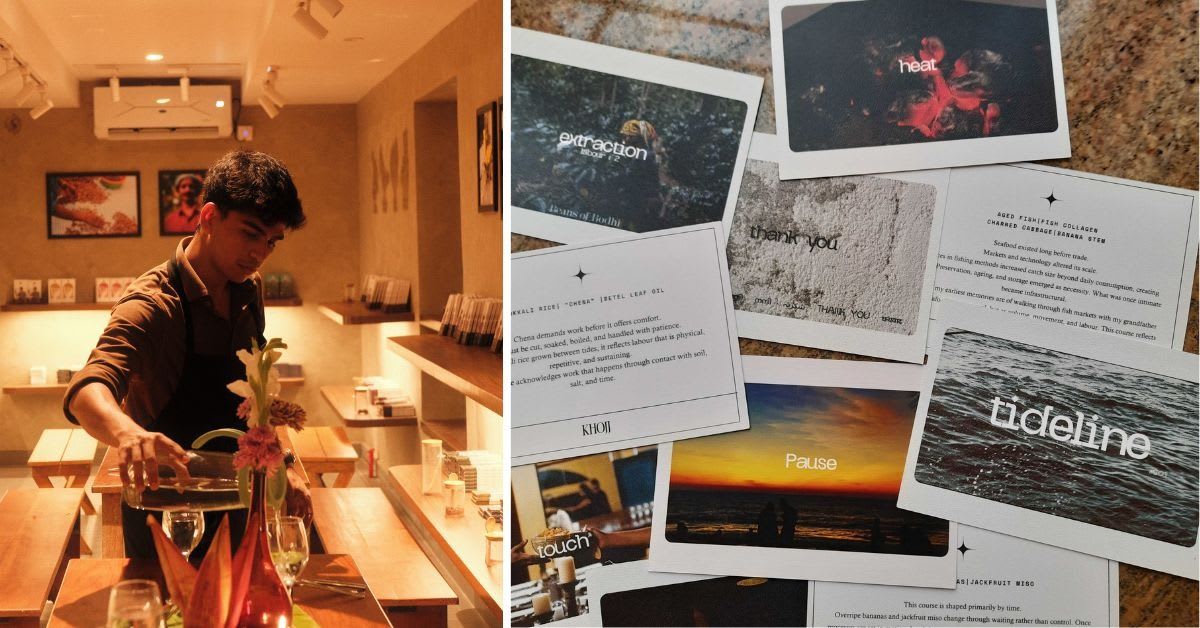
Armaan Essa is transforming forgotten local ingredients into an eight-course tasting menu that tells the story of Fort Kochi's coast and culture. Through his pop-up dinners, he's reintroducing his own community to centuries-old traditions one delicious course at a time.
At 21, Armaan Essa is doing something most chefs twice his age haven't thought of: he's bringing Kerala's forgotten food heritage back to life, one pop-up dinner at a time.
In Fort Kochi, Armaan serves an eight-course meal called Tideline that celebrates ingredients most locals don't even know exist. Picture this: pokkali rice, a salt-tolerant variety that prevents tidal flooding, paired with braised beef cheeks and betel leaf oil. Or a dessert made from discarded cacao husks, served in coconut shell bowls.
The name Tideline captures how Armaan sees his coastal hometown. "When the tide flows in, it brings people, food, and ideas. When it ebbs, it takes traditions away," he explains. His dinners are designed to rescue what the tide has forgotten.
Take pokkali rice, which earned a GI tag in 2008 but remains unknown to most people. This remarkable grain can survive flooding by growing up to 1.5 meters tall and thriving in highly salty water. Out of 85 dinner guests over two months, only a handful had heard of it before tasting Armaan's dishes.
Each course tells a deeper story. The cacao husk pudding honors the invisible labor behind coffee and chocolate production. Armaan uses every part of ingredients that others discard: fish collagen becomes sauce, ginger skin flavors fermented rice water, and aged blackened bananas transform into miso made from jackfruit.
Johann Binny Kuruvilla, founder of The Kochi Heritage Project, says Armaan's work transcends cooking. "The beautiful part about his food is that the experience integrates storytelling into gastronomy," he notes.
Armaan started cooking at 15, learning by making his school lunch. Now through his project Khojj, he's building something bigger than a restaurant. He's collaborating with artists to visually map indigenous ingredients and creating a community around forgotten food traditions.
Why This Inspires
What makes Armaan's work special isn't just the creativity or the flavors. It's that he's showing his entire generation how to value what came before them without making it feel intimidating or out of reach.
He's proving that preserving tradition doesn't mean freezing it in time. By pairing ancestral ingredients with modern techniques, he's making heritage feel alive and relevant to young people who might otherwise ignore it.
At 21, most people are still figuring out who they want to be. Armaan is already helping an entire community remember who they are.
Every plate he serves is both a memory and an invitation: to taste what Kerala's coast has always offered, and to keep those flavors alive for the next generation.
More Images
%2Fenglish-betterindia%2Fmedia%2Fmedia_files%2F2026%2F04%2F15%2Farmaan-6-2026-04-15-16-30-03.jpg)
%2Ffilters%3Aformat(webp)%2Fenglish-betterindia%2Fmedia%2Fmedia_files%2F2026%2F04%2F15%2Farmaan-3-2026-04-15-16-07-47.jpg)
%2Ffilters%3Aformat(webp)%2Fenglish-betterindia%2Fmedia%2Fmedia_files%2F2026%2F04%2F15%2Farmaan-2026-04-15-15-56-31.jpg)
Based on reporting by The Better India
This story was written by BrightWire based on verified news reports.
Spread the positivity!
Share this good news with someone who needs it

