22,000 Women Turn Embroidery Into Income in Rajasthan
In Barmer, Ruma Devi helped transform traditional embroidery skills into paid work for over 22,000 rural women. What began with ten women pooling money for a second-hand sewing machine grew into a movement bringing income and independence to 75 villages.
Ten women in a small Rajasthani village once pooled 100 rupees each to buy a single second-hand sewing machine, hoping the embroidery skills passed down from their grandmothers might finally earn them something. That simple act of pooling resources would eventually change the lives of 22,000 women across Rajasthan.
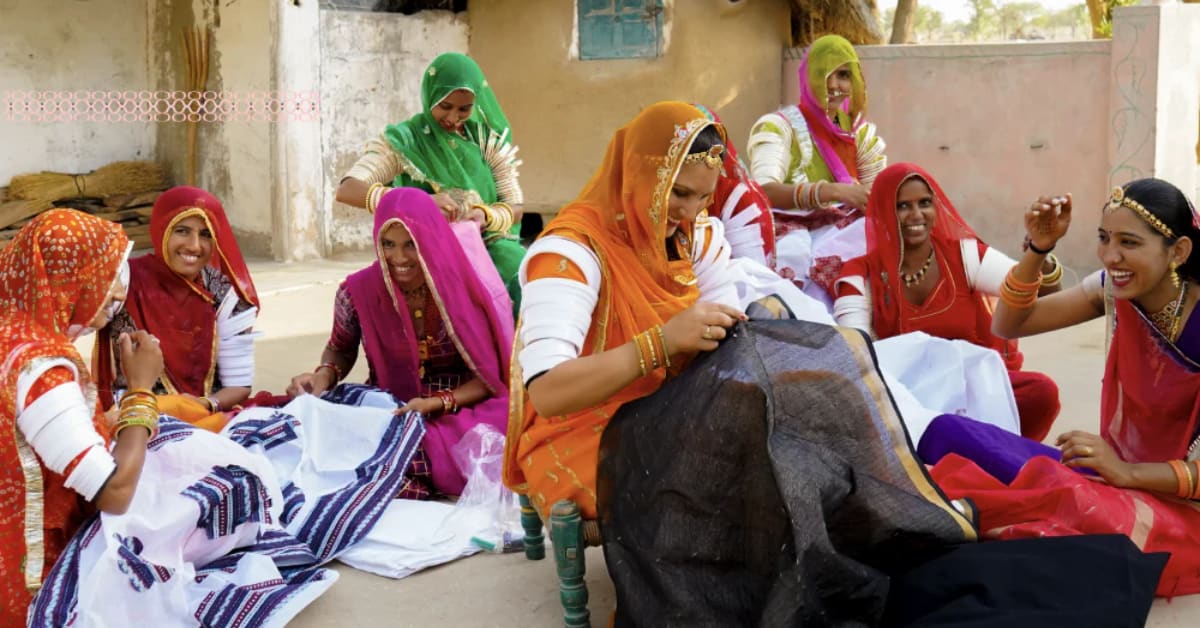
Ruma Devi grew up in Barmer watching women create intricate embroidery, mirror work, and patchwork every single day. The skill was there, refined over generations, but it rarely translated into income. Women stitched for their families and homes, sometimes selling finished pieces to middlemen for pennies.
After losing her mother early and leaving school young, Ruma faced the same constraints as many girls around her. But after marriage, she began asking a different question: what if women came together, stitched collectively, and sold their products directly?
The first steps were hard. In a conservative rural setting, stepping out to work brought serious resistance at home. But Ruma convinced two women to join her, and together they formed a group of ten, buying that first sewing machine and beginning production.
Then came the next challenge: actually selling what they made. "Until then, it was always the men who stepped up to market products," Ruma recalls. The women had to learn everything from scratch, from making bills to packaging products to finding buyers.
A turning point arrived when Ruma connected with Gramin Vikas Evam Chetna Sansthan (GVCS), an organization working with rural communities. Through this platform, she began organizing women into larger groups and linking them with actual buyers.
Traditional embroidery techniques were adapted into garments, bags, and home textiles. As word spread across villages, more women joined. What started with a handful of artisans grew into a network spanning 75 villages and over 22,000 women producing handcrafted pieces rooted in Rajasthani traditions.
The Ripple Effect
For many women, the change showed up quietly at first. Earning their first independent income meant paying for children's education. It meant traveling to exhibitions and speaking to buyers. It meant being included in household decisions for the first time.
The embroidery had always required skill, but now it carried recognition. A woman once seen as simply helping with household work could now call herself an artisan, an earner, someone whose hands brought in money.
Ruma's work has earned her the Nari Shakti Puraskar and invitations to speak at Harvard. But when she talks about success, she points to the women who now earn, travel, and participate in decisions within their households.
In many Rajasthani villages today, embroidery still follows the rhythm of daily life, but for thousands of women, it now also brings income, independence, and a stronger voice at home.
More Images
%2Fenglish-betterindia%2Fmedia%2Fmedia_files%2F2026%2F03%2F20%2Fsriroopa-featured-image-template-2026-03-20-18-17-03.png)
%2Ffilters%3Aformat(webp)%2Fenglish-betterindia%2Fmedia%2Fmedia_files%2F2026%2F03%2F20%2Fapplique-work-1658732259-1754750560-2026-03-20-18-35-45.webp)
%2Ffilters%3Aformat(webp)%2Fenglish-betterindia%2Fmedia%2Fmedia_files%2F2026%2F03%2F20%2Fsriroopa-featured-image-template-2-2026-03-20-18-58-12.png)
Based on reporting by The Better India
This story was written by BrightWire based on verified news reports.
Spread the positivity!
Share this good news with someone who needs it